

-
1 type
صِنْف \ article: a particular thing: an article of clothing. category: a group or division in which each member is like the rest in a certain way; a kind or sort: Fishing may be placed in the category of sport, or in that of earning a living, according to its purpose. class: a group of things of the same kind: Science divides living things into many classes. kind: sort; class: An orange is a kind of fruit. sort: kind: different sorts of fruit. species: a kind, esp. in the scientific grouping of creatures and plants. type: a kind: Men of that type can’t be trusted. Is this a new type of machine?. -
2 switchgear of the draw-out type
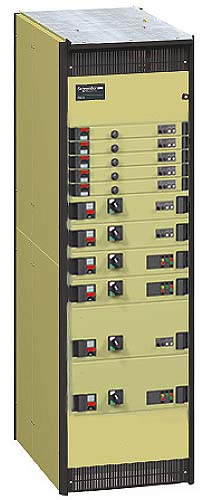
Шкаф с выдвижными блоками
Рис. Schneider Electric
Выдвижной блок
Рис. Schneider ElectricS afety enclosed switchgear of the truck or draw-out type (Figs. 4.113 and 4.114) consists of a steel enclosure mounted on an angle-iron framework. All apparatus which requires attention or inspection is mounted on a truck or draw-out structure.
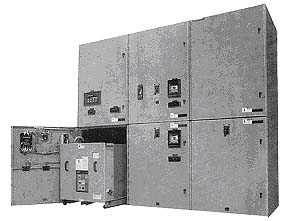
FIGURE 4.113 Draw-out type of safety enclosed vacuum circuit-breaker switchgear
assembly.
[Siemens Energy & Automation, Inc.]
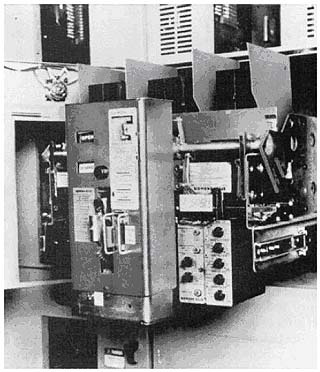
FIGURE 4.114 Draw-out type of vacuum circuit-breaker.
[Siemens Energy & Automation, Inc.]The equipment for each circuit is mounted on either a separate truck, which can easily be rolled out from the rest of the structure, or a metal structure supported on guides so that it can easily be slid in and out from the enclosure (Fig. 4.114).
[American electricians’ handbook]
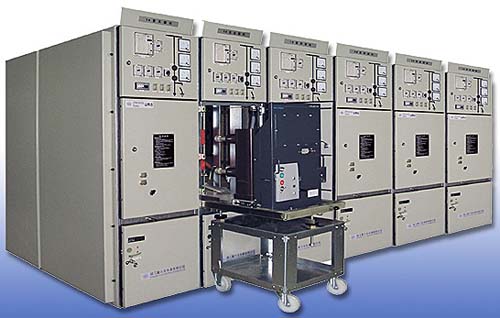
Metal Clad Withdrawable Switchgear
[ http://en.daqo.com/Medium-Voltage-Switchgear-UR4_42.html]
Тематики
- НКУ (шкафы, пульты,...)
Обобщающие термины
EN
Англо-русский словарь нормативно-технической терминологии > switchgear of the draw-out type
-
3 switchgear of the truck type
Шкаф с выдвижными блоками
Рис. Schneider Electric
Выдвижной блок
Рис. Schneider ElectricS afety enclosed switchgear of the truck or draw-out type (Figs. 4.113 and 4.114) consists of a steel enclosure mounted on an angle-iron framework. All apparatus which requires attention or inspection is mounted on a truck or draw-out structure.
FIGURE 4.113 Draw-out type of safety enclosed vacuum circuit-breaker switchgear
assembly.
[Siemens Energy & Automation, Inc.]
FIGURE 4.114 Draw-out type of vacuum circuit-breaker.
[Siemens Energy & Automation, Inc.]The equipment for each circuit is mounted on either a separate truck, which can easily be rolled out from the rest of the structure, or a metal structure supported on guides so that it can easily be slid in and out from the enclosure (Fig. 4.114).
[American electricians’ handbook]
Metal Clad Withdrawable Switchgear
[ http://en.daqo.com/Medium-Voltage-Switchgear-UR4_42.html]
Тематики
- НКУ (шкафы, пульты,...)
Обобщающие термины
EN
Англо-русский словарь нормативно-технической терминологии > switchgear of the truck type
-
4 допечатывать
несовер. - допечатывать;
совер. - допечатать( что-л.)
1) (кончать печатать) finish printing
2) (печатать дополнительно) print in additionБольшой англо-русский и русско-английский словарь > допечатывать
-
5 допечатывать (I) > допечатать (I)
............................................................................................................................................................................................................................................................................................................Русско-персидский словарь > допечатывать (I) > допечатать (I)
-
6 pasar
v.1 to pass.¿me pasas la sal? would you pass me the salt?Pasaron dos horas Two hours went by.Yo paso a María I pass Mary (I overtake Mary)Un carro pasa A car goes byMe pasó una cuchara He=she passed me a spoon (She passed a spoon to me)Por fin pasé! I passed at last!2 to cross.pasar la calle to cross the roadpasé el río a nado I swam across the river3 to go through.pasar un semáforo en rojo to go through a red light4 to pass, to go.pasó por mi lado he passed by my sideel autobús pasa por mi casa the bus goes past o passes in front of my houseel Manzanares pasa por Madrid the Manzanares goes o passes through Madridhe pasado por tu calle I went down your streetpasar de… a… to go o pass from… to…pasar de largo to go by5 to go/come in.pasen por aquí, por favor come this way, please¡pase! come in!6 to go.por ahí no pasa it won't go through there7 to go by.pasaron tres meses three months went by8 to go through, to experience.pasar frío/miedo to be cold/scaredpasarlo bien to enjoy oneself, to have a good timepasarlo mal to have a hard time of itPasé un gran susto I experienced a great scare.9 to show in (llevar adentro).el criado nos pasó al salón the butler showed us into the living room10 to show (Cine).11 to spend (time).pasó dos años en Roma he spent two years in Rome¿dónde vas a pasar las vacaciones? where are you going on holiday?, where are you going to spend your holidays?Yo paso las horas cantando I pass the hours away singing (spend the time...)12 to pop in (ir un momento).pasaré por mi oficina/por tu casa I'll pop into my office/round to your place13 to happen.¿qué pasa aquí? what's going on here?¿qué pasa? what's the matter?¿qué le pasa? what's wrong with him?, what's the matter with him?pase lo que pase whatever happens, come what mayAlgo pasó Something happened=came to pass.14 to be over.ya ha pasado lo peor the worst is over nowpasó la Navidad Christmas is overPasé muy feliz en la fiesta I was very happy at the party.15 to be all right, to be usable.puede pasar it'll do16 to go away.Pasó el mal tiempo the bad weather went away.17 to come in, to step in.El policía pasó The policeman came in.18 to happen to, to occur to.Me pasó algo cómico Something funny happened to me..19 to keep on, to keep, to carry on.Ella pasa bailando todo el tiempo She keeps on dancing all the time.20 to skip, to pass.Pase ese capítulo Skip that chapter,.21 to blow over, to blow itself out, to calm down.La tormenta pasó The storm blew over.* * *1 (ir) to pass, pass by, go2 (tiempo) to pass, go by■ ¡cómo pasa el tiempo! doesn't time fly!3 (entrar) to come in, go in■ pasa, está abierto come in, it's not locked4 (cesar) to pass, cease■ si no se te pasa el dolor, llámame if the pain doesn't go away, call me■ tranquila, que ya ha pasado todo don't worry, it's all over now5 (límite) to exceed (de, -)6 (ocurrir) to happen7 (sufrir) to suffer1 (trasladar) to move, transfer2 (comunicar, dar) to give3 (cruzar) to cross4 (alcanzar) to pass, reach■ pásame la sal, por favor pass me the salt, please5 (aventajar) to surpass, be better than6 (adelantar) to overtake7 (deslizar) to run■ la etiqueta se pasa por aquí y el precio sale en la pantalla you run the tag through here and the price comes up on the screen8 (tolerar) to overlook■ esta vez te la paso, pero que no se repita I'll overlook it this time, but don't let it happen again9 (aprobar) to pass10 (proyectar) to show11 (tiempo - estar) to spend; (- disfrutar, padecer) to have1 (desertar) to pass over (a, to)2 (pudrirse) to go off3 (olvidarse) to forget\pasar de algo familiar not to be bothered about something■ pasa de todo he couldn't care less about anything, he doesn't give a damn about anythingpasar de largo to go pastpasar la página to turn the pagepasar por to pass forpasar por alto to ignorepasar por encima de alguien to go over somebody's headpasarlo bien to have a good time¿qué pasa? what's the matter?, what's wrong?pasar sin to do withoutpasarse de la raya to go too far, overstep the mark* * *verb1) to happen2) pass3) come in, enter4) surpass5) cross6) give7) undergo, suffer8) omit•- pasar por alto
- pasarlo bien
- pasarlo mal
- pasarse* * *Para las expresiones pasar lista, pasar de moda, pasar desapercibido, pasarse de rosca etc, ver la otra entrada1. VERBO INTRANSITIVO1) (=ocurrir)a) [suceso] to happen¿qué pasó? — what happened?
¿pasa algo? — is anything up?, is anything wrong?, is anything the matter?
siempre pasa igual {o} lo mismo — it's always the same
¿qué pasa? — what's happening?, what's going on?, what's up?; [como saludo] how's things? *
¿qué pasa que no entra? — why doesn't she come in?
¿qué pasa contigo? — what's up with you?; [como saludo] * how's it going? *
¿qué ha pasado con ella? — what's become of her?
•
[lo que] pasa es que... — well, you see..., the thing is that...pase lo que pase — whatever happens, come what may
b)pasarle a algn: nunca me pasa nada — nothing ever happens to me
siempre me pasa lo mismo, lo pierdo todo — it's always the same, I keep losing things
tuvo un accidente, pero por suerte no le pasó nada — he had an accident, but fortunately he wasn't hurt
esto te pasa por no hacerme caso — this is what comes of not listening to me, this wouldn't have happened (to you) if you'd listened to me
¿qué te pasa? — what's the matter?
¿qué le pasa a ese? — what's the matter with him?
2) (=cambiar de lugar)a) [objeto]la cuerda pasa de un lado a otro de la calle — the rope goes from one side of the street to the other
•
la foto fue pasando de mano en [mano] — the photo was passed aroundb) [persona] to go3) (=entrar)¡pase! — come in!; [cediendo el paso] after you!
no se puede pasar — you can't go through, you can't go in
•
[hacer] pasar a algn — to show sb in4) (=transitar)¿a qué hora pasa el cartero? — what time does the postman come?
ya ha pasado el tren de las cinco — (=sin hacer parada) the five o'clock train has already gone by; (=haciendo parada) the five o'clock train has already been and gone
¿ha pasado ya el camión de la basura? — have the dustmen been?
•
pasar [de largo] — to go {o} pass by•
pasar [por], el autobús pasa por delante de nuestra casa — the bus goes past our house5) (=acercarse a)•
tengo que pasar [por] el banco — I've got to go to the bankpasar a ({+ infin})pasaré por la tienda mañana — I'll go {o} pop into the shop tomorrow
6) (=cambiar de situación) to go•
pasar a [ser] — to becomeen muy poco tiempo ha pasado a ser un gran profesional — he has become a real professional in a very short space of time
7) (=transcurrir) [tiempo] to pass, go byhan pasado cuatro años — four years have passed {o} gone by
el tiempo pasa deprisa — time passes {o} goes so quickly
¡cómo pasa el tiempo! — how time flies!
8) (=acabar) [problema, situación] to be over; [efectos] to wear off9) (=aceptarse)puede pasar — it's passable, it's OK
que me llames carroza, pase, pero fascista, no — you can call me an old fuddy-duddy if you like, but not a fascist
10) pasar pora) (=atravesar, caber) to go throughel río pasa por la ciudad — the river flows {o} goes through the city
b) (=depender de) to depend onel futuro de la empresa pasa por este acuerdo — the company's future depends on {o} hangs on this agreement
c) (=ser considerado) to pass as•
[hacerse] pasar por — to pass o.s. off as11) [otras formas preposicionales]pasar a ({+ infin}) (=empezar) pasar de (=exceder)no pasan de 60 los que lo tienen — those who have it do not number more than 60, fewer than 60 people have it
•
yo de [ahí] no paso — that's as far as I'm prepared to go•
de [ésta] no pasa — this is the very last timepasar sin•
de [hoy] no pasa que le escriba — I'll write to him this very daytendrá que pasar sin coche — he'll have to get by {o} manage without a car
12) (Naipes) to pass13) esp Esp* (=mostrarse indiferente)•
pasar [de] algo/algn, yo paso de política — I'm not into politicspasa olímpicamente de todo lo que le dicen — he doesn't take the blindest bit of notice of anything they say to him
paso de ti, chaval — I couldn't care less about you, pal
2. VERBO TRANSITIVO1) (=dar, entregar) [gen] to pass; [en una serie] to pass on¿me pasas la sal, por favor? — could you pass (me) the salt, please?
le pasó el sobre — he handed {o} passed her the envelope
2) (=traspasar) [+ río, frontera] to cross; [+ límite] to go beyond3) (=llevar)4) (=hacer atravesar)5) (=colar) to strain6) (=introducir) [+ moneda falsa] to pass (off); [+ contrabando] to smugglehan pasado un alijo de cocaína por la frontera — a consignment of cocaine has been smuggled across the border
7) (=hacer deslizar)pasar la aspiradora por la alfombra — to vacuum the carpet, run the vacuum cleaner over the carpet
8) (=deslizar) to sliple pasó el brazo por los hombros/la cintura — she slipped {o} put her arm around his shoulders/waist
9) (=contagiar) to give10) (=volver) [+ página] to turn11) (=escribir)•
pasar algo a [limpio] — to make a neat {o} fair {o} clean copy of sth•
pasar algo a [máquina] — to type sth up12) (=tragar) (lit) to swallow; (fig) to bear, standno puedo pasar esta pastilla — I can't swallow this pill, I can't get this pill down
no puedo pasar a ese hombre — I can't bear {o} stand that man
13) (=tolerar)14) (=aprobar) [+ examen] to pass15) (=proyectar) [+ película, programa] to show, screen16) (=poner en contacto)te paso con Pedro — [al mismo teléfono] I'll put you on to Pedro; [a distinto teléfono] I'll put you through to Pedro
17) (=realizar)revista 3)•
pasa [consulta] {o} [visita] a unas 700 personas diarias — he sees 700 patients a day18) (=superar)19) (Aut) to pass, overtake20) (=omitir)•
pasar algo por [alto] — to overlook sth21) [+ tiempo] to spendpasarlo ({+ adv})¡que lo pases bien! — have a good time!, enjoy yourself!
22) (=dejar atrás)hemos pasado el aniversario — the anniversary has passed, the anniversary is behind us
ya hemos pasado lo peor — we're over the worst now, the worst is behind us now
23) (=sufrir)24) Cono Sur * (=engañar) to cheat, swindle3.See:PASAR En expresiones temporales ► Se traduce por spend cuando pasar tiene un uso transitivo y queremos indicar un período de tiempo concreto, seguido de la actividad que en ese tiempo se desarrolla, o del lugar: Me pasé la tarde escribiendo cartas I spent the evening writing letters Ha pasado toda su vida en el campo He has spent his whole life in the country ► En cambio, cuando se describe la forma en que se pasa el tiempo mediante un adjetivo, se debe emplear en inglés la construcción have + (a) + ((adjetivo)) + ((sustantivo)): Pasamos una tarde entretenida We had a lovely afternoon Pasamos un rato estupendo jugando al squash We had a fantastic time playing squash la expresión pasar el rato se traduce por pass the time: No sé qué hacer para pasar el rato I don't know what to do to pass the time ► Cuando el uso es intransitivo, pasar se traduce por pass {o} go by. A medida que pasaba el tiempo se deprimía cada vez más As time passed o went by, he became more and more depressed Para otros usos y ejemplos ver la entrada* * *1.verbo intransitivo1)a) ( ir por un lugar) to come/go pastno ha pasado ni un taxi — not one taxi has come/gone past
¿a qué hora pasa el lechero? — what time does the milkman come?
pasar de largo — to go right o straight past
es un vuelo directo, no pasa por Miami — it's a direct flight, it doesn't go via Miami
¿este autobús pasa por el museo? — does this bus go past the museum?
¿el 45 pasa por aquí? — does the number 45 come this way?
pasaba por aquí y... — I was just passing by o I was in the area and...
ni me pasó por la imaginación — it didn't even occur to me, it didn't even cross my mind
b) ( deteniéndose en un lugar)pasar POR algo: ¿podríamos pasar por el banco? can we stop off at the bank?; pase usted por caja please go over to the cashier; pasa un día por casa why don't you drop o come by the house sometime?; pasar A + INF: puede pasar a recogerlo mañana you can come and pick it up tomorrow; pasaremos a verlos — we'll call in o drop in and see them
c) ( atravesar) to crosspasar de un lado a otro — to go o cross from one side to the other
d) (caber, entrar)2)a) (transmitirse, transferirse) corona/título to passuna tradición que pasa de padres a hijos — a tradition that is handed o passed down from generation to generation
b) ( comunicar)te paso con Javier — ( en el mismo teléfono) I'll hand o pass you over to Javier; ( en otro teléfono) I'll put you through to Javier
3) ( entrar - acercándose al hablante) to come in; (- alejándose del hablante) to go inpase, por favor — please, do come in
que pase el siguiente! — next, please!
no pasarán! — (fr hecha) they shall not pass!
¿puedo pasar al baño? — may I use the bathroom please?
¿quién quiere pasar al pizarrón? — (AmL) who's going to come up to the blackboard?
4)a) (cambiar de estado, actividad, tema)pasó del quinto al séptimo lugar — she went o dropped from fifth to seventh place
ahora pasa a tercera — (Auto) now change into third
pasando a otra cosa... — anyway, to change the subject...
pasamos a informar de otras noticias — now, the rest of the news
b) (Educ) to pass¿pasaste? — did you pass?
pasar de curso — to get through o pass one's end-of-year exams
c) ( ser aceptable)no está perfecto, pero puede pasar — it's not perfect, but it'll do
por esta vez (que) pase — I'll let it pass o go this time
5) ( exceder un límite)pasar DE algo: no pases de 100 don't go over 100; no pasó de un desacuerdo it was nothing more than a disagreement; está muy grave, no creo que pase de hoy he's very ill, I don't think he'll last another day; no pasa de los 30 he's not more than 30; no pasamos de nueve empleados — they're only nine of us working there/here
6) pasar pora) ( ser tenido por)pasa por tonto, pero no lo es — he might look stupid, but he isn't
b) (Esp) ( implicar)7) ( transcurrir) tiempo to passpasaron muchos años — many years went by o passed
pasaban las horas y no llegaba — the hours went by o passed and still he didn't come
9) ( arreglárselas) to manage, get bysin electricidad podemos pasar — we can manage o get by without electricity
10) ( suceder) to happenlo que pasa es que... — the thing o the problem is...
pase lo que pase — whatever happens, come what may
¿qué pasó con lo del reloj? — what happened about the watch?
...y aquí no ha pasado nada —...and let's just forget the whole thing
siempre pasa igual or lo mismo — it's always the same
¿pasa algo? — is something the matter?
¿qué pasa? — what's the matter?, what's up? (colloq)
hola, Carlos! ¿qué pasa? — (fam) hi, Carlos! how's things o how's it going? (colloq)
son cosas que pasan — these things happen; (+ me/te/le etc)
¿qué te pasa? — what's the matter with you?
¿qué te pasó en el ojo? — what happened to your eye?
¿qué le pasa a la tele? — what's wrong with the TV?
por suerte a él no le pasó nada — fortunately, nothing happened to him
11) ( experimentar)pasar POR algo — por crisis/mala racha to go through something
12)a) (en naipes, juegos) to passb) (fam) ( rechazando algo)¿vas a tomar postre? - no, yo paso — are you going to have a dessert? - no, I think I'll give it a miss
paso de salir, estoy muy cansada — I don't feel like going out, I'm very tired (colloq)
c) (fam) ( expresando indiferencia)que se las arreglen, yo paso — they can sort it out themselves, it's not my problem
2.paso de él — (esp Esp) I don't give a damn o I couldn't care less what he does (colloq)
pasar vt1)a) ( hacer atravesar)b) ( por la aduana -legalmente) to take through; (- ilegalmente) to smugglec) ( hacer deslizar)a esto hay que pasarle una plancha — this needs a quick iron o run over with the iron
2) (exhibir, mostrar) <película/anuncio> to show3)a) (cruzar, atravesar) < frontera> to cross; <pueblo/ciudad> to go throughb) ( dejar atrás) <edificio/calle> to go pastc) (adelantar, sobrepasar) to overtakepasar A algo — to overtake something, to get past something
está altísimo, ya pasa a su padre — he's really tall, he's already overtaken his father
4) <examen/prueba> to pass5) <página/hoja> to turn6) (fam) ( tolerar)a ese tipo no lo paso — I can't stand o take that guy (colloq)
no podía pasar aquella sopa — I couldn't stomach o eat that soup
pasar por alto — <falta/error> to overlook, forget about; tema/punto to leave out, omit
7) ( transcribir)tendré que pasar la carta — I'll have to write o copy the letter out again
¿me pasas esto a máquina? — could you type this for me?
8) (entregar, hacer llegar)¿me pasas el martillo? — can you pass me the hammer?
9) <gripe/resfriado> to giveme lo pasó a mí — he gave it to me, he passed it on to me
10)a) < tiempo> to spendb) ( con idea de continuidad)11)a) (sufrir, padecer) penalidades/desgracias to go through, to sufferestá pasando una mala racha — he's going through bad times o (BrE) a bad patch
pasé mucho miedo/frío — I was very frightened/cold
b)pasarlo or pasarla bien — to have a good time
3.¿qué tal lo pasaste en la fiesta? — did you have a good time at the party?, did you enjoy the party?
1) pasarse v pron2) ( cambiarse)3)a) ( ir demasiado lejos)nos pasamos, el banco está más arriba — we've gone too far, the bank isn't as far down as this
b) (fam) ( excederse) to go too farse pasó con la sal — he overdid the salt (colloq)
se pasó de listo — he tried to be too clever (colloq)
c) (CS fam) ( lucirse)4)a) peras/tomates to go bad, get overripe; carne/pescado to go off, go bad; leche to go off, go sourb) (recocerse): arroz/pasta to get overcooked5)a) ( desaparecer) efecto to wear off; dolor to go away; (+ me/te/le etc)ya se me pasó el dolor — the pain's gone o eased now
espera a que se le pase el enojo — wait until he's calmed o cooled down
b) ( transcurrir)el año se ha pasado muy rápido — this year has gone very quickly; (+ me/te/le etc)
6) (+ me/te/le etc)a) ( olvidarse)b) ( dejar de notar)c) ( dejar escapar)7) (enf) ( estar)se pasó el domingo durmiendo — he spent the whole of Sunday evening sleeping; ver tb pasar verbo transitivo III 1b y 2b
8) (enf) (fam) (ir)¿podrías pasarte por el mercado? — could you go down to the market?
9) (refl)* * *= hand (over), pass, pass by, pass on, transfer, transmit, turn over + page, hand on, spend, transpire, pass out, turn over, slide over, pass along, get through, can't/couldn't be bothered, go + past, pass down, roll on, pass out, blow over, make + the cut, wear off, hand down.Ex. Eventually, teachers should be able to ' hand the chalk over to the students' and take a back seat.Ex. Examination reveals positions on the cards where the light passes through all the cards in a stack.Ex. The days of needing to change into carpet slippers before going to such an area have thankfully passed by.Ex. If ignored, the problems are only passed on to all the users of the catalog: the public, the reference department, the acquisitions department, and naturally the cataloging department.Ex. Scope notes, on the order hand, may be present in a thesaurus but are unlikely to be transferred to an index.Ex. The system permits the requester to specify up to five potential lending libraries, and the system transmits the requests to these libraries one at a time.Ex. Turn over the page and you will find suggested analyses against which you can check your solution.Ex. Some experts have expressed grave doubts about the durability of contemporary literary and artistic works on paper and hence the possibility of handing on works of culture to future generations.Ex. Any funeral scene in a story inevitably conjures in myself memories of my childhood spent as the son of an undertaker.Ex. The 2nd is the fact that most information seeking transpires with little help from librarians, who have consistently failed to establish themselves as primary information professionals.Ex. At the Closing Session Danish flags were suddenly produced and passed out among the crowd who began waving them enthusiastically.Ex. Then he picked up about 2 cm. of type from the right-hand end of the uppermost line (i.e. the last word or two of the last line) with the thumb and forefinger of his right hand, read it, and dropped the pieces of type one by one into their proper boxes, turning over the old house.Ex. He had greeted her courteously, as was his wont, and had inquired if she minded his smoking; she told him to go ahead and slid over an ashtray.Ex. If the head of reference services does not pass along the information to the staff the reference librarians, by being uninformed, will undoubtedly not make as good an impression on the important city managers.Ex. I think that the so-called average person often exhibits a great deal of heroism in getting through an ordinary day.Ex. Consider for example, a teacher who doesn't change his password (ever!) or can't be bothered to log out, all the firewalls and antivirus programs in the world will not protect a school's network.Ex. Unfortunately, its conclusions are completely pedestrian, rarely going past the fact that there were old people in England in the late Middle Ages.Ex. The knowledge that has been passed down from generation to generation by sentient beings on this planet for aeons and aeons is quite impossible to fully comprehend.Ex. But to make matters worse, and as the drought rolls on, it is very likely that it won't rain again until October or November.Ex. Put a set of premises into such a device and turn the crank, and it will readily pass out conclusion after conclusion.Ex. During the bulk of that time, your liberal leaders grandly sat, waiting for various things to blow over.Ex. Naturally, the recruiters whose people were not chosen for the job wanted feedback as to why their candidates did not make the cut.Ex. We're all familiar with the idea of novelty value and how it wears off with time.Ex. A hunting guide while still in his teens, he learned his woodcraft first hand, absorbing lore handed down to him from his father.----* a medida que pasaba el tiempo = as time passed (by), as time went by.* a medida que pasa el tiempo = as time goes by, as time passes (by).* a medida que pasa + Expresión Temporal = as + Expresión Temporal + go by.* a medida que + pasar + el año = as the year + wear on.* a medida que + pasar + el día = as the day + wear on.* ayudar a pasar por = get + Nombre + through.* cada día que pasa = each passing day.* conforme + pasar + el año = as the year + wear on.* conforme + pasar + el día = as the day + wear on.* dejar pasar = pass up, forego [forgo], let through.* dejar pasar a Alguien = let + Alguien + by.* dejar pasar Algo = put + Nombre + behind.* dejar pasar una oportunidad = forego + opportunity, miss + opportunity, pass up + opportunity, miss + chance.* desde..., pasando por..., hasta... = from..., through..., to....* día que pasa = passing day.* esa época ya pasó hace tiempo = that time is long past.* haber pasado por aquí antes = have been down this road before.* hacer a Alguien pasar vergüenza = embarrass.* hacer que Alguien las pase canutas = give + Nombre + a run for + Posesivo + money.* hacérselas pasar canutas a Alguien = have + Nombre + jump through the hoops.* hacérselas pasarlas canutas a Alguien = push + Nombre + to the edge.* hacérselas pasar negras a Alguien = have + Nombre + jump through the hoops.* hacerse pasar por = masquerade as, impersonate.* las cosas no pasan así como así = everything happens for a reason (and a purpose).* las cosas no pasan así porque sí = everything happens for a reason (and a purpose).* las cosas sólo pasan una vez = lightning never strikes twice.* lo que tenga que pasar, que pase = que sera sera, what's meant to be, will be, whatever will be, will be.* lugar donde pasar el rato = hang out.* no dejar pasar = keep out.* no dejar pasar la oportunidad = ride + the wave.* no pasar mucho tiempo antes de que + Subjuntivo = be not long before + Indicativo.* pasando a = moving on to.* pasar a = go on to, move on to, proceed to, shunt into, switch over, switch to, step onto, spill over into.* pasar a Alguien lo mismo que a = suffer + the fate of.* pasar a Alguien lo que a = suffer + the fate of.* pasar a cosas más agradables = on a happier note.* pasar a la clandestinidad = go into + hiding.* pasar a la era de = move into + the age of.* pasar a la historia = history in the making, go down in + history.* pasar a la historia como = go down as, go down in + history as, go down in + the history books as, go down in + the annals of history as.* pasar a la página + Número = turn to + page + Número.* pasar a la posteridad = go down to + posterity.* pasar a la posteridad como = go down to + posterity as.* pasar Algo a Alguien = turn + Algo + over to + Alguien.* pasar algo inesperado = things + take a turn for the unexpected.* pasar algún tiempo en = have + a turn at.* pasar al olvido = blow over.* pasar a los anales de la historia = go down in + history.* pasar a los anales de la historia como = go down in + history as, go down in + the history books as, go down in + the annals of history as.* pasar al primer plano = take + centre stage.* pasar al siguiente año fiscal = roll over.* pasar al siguiente nivel = move it up + a gear, take it up + a gear, notch it up + a gear, take it up + a notch, crank it up + a notch, crank it up + a gear, move it up + a notch.* pasar a mejor vida = bite + the dust, give up + the ghost.* pasar año(s) antes de que = be year(s) before.* pasar a ocupar el puesto de Alguien = step into + the shoes of, stand in + Posesivo + shoes.* pasar aprietos = feel + the pinch.* pasar apuros = struggle, pass through + adversity, have + a thin time, be under strain, bear + hardship, be hard pressed, feel + the pinch, have + a hard time, the wolves + be + at the door, have + a tough time.* pasar apuros económicos = lead + a precarious existence.* pasar a ser = become, develop into.* pasar a ser el centro de atención = come into + focus, take + centre stage.* pasar a ser inconcebible = render + inconceivable.* pasar a toda velocidad = whiz.* pasar a una situación económica más confortable = improve + Posesivo + lot.* pasar a vida mejor = lay + Nombre + low.* pasar casi rozando = skim.* pasar como una bala = whiz.* pasar de = get beyond.* pasar de... a... = proceed from... to..., move from... to....* pasar de... a = switch from... to..., go from... to..., swing between... and..., grow from... into/to.* pasar de contrabando = smuggle.* pasar de generación en generación = pass down from + generation to generation.* pasar de largo = bypass [by-pass].* pasar de largo rápidamente = race + past.* pasar de moda = drop out of + vogue, go out of + fashion, go out of + favour, go out of + date, go out of + vogue, fall out of + vogue, go out of + style, pass away, obsolesce, drop out of + circulation.* pasar desapercibido = be unnoticeable, go + unnoticed, lie + unnoticed, remain + unnoticed, slip by + unnoticed, become + unnoticeable, go + unrecognised, be an invisible fly on the wall, go + unnoted, lie + forgotten, sneak under + the radar.* pasar de una persona a otra = pass around.* pasar de uno a otro = change back and forth.* pasar de un sitio a otro = travel.* pasar dificultades = struggle, be under strain, bear + hardship, have + a difficult time, experience + difficult times, pass through + difficult times, face + difficult times.* pasar el invierno = winter, overwinter.* pasar el mochuelo = pass + the bucket.* pasar el muerto = pass + the bucket.* pasar el platillo = pass + the bucket (around).* pasar el rato = hang out.* pasar el rato con = kick + it with.* pasar el rato con los amigos = hang out with + Posesivo + friends.* pasar el relevo a = hand + the reins over to.* pasar el testigo = pass (on) + the torch, pass (on) + the baton.* pasar el tiempo = pass + the time, hang around, spend + Posesivo + days, hang about, hang out.* pasar el tiempo libre = spend + Posesivo + leisure, spend + Posesivo + leisure time.* pasar + Expresión Temporal = elapse + Expresión Temporal, go by + Expresión Temporal.* pasar hambre = suffer from + hunger, go + hungry, starve.* pasar hojas = page (through), turn + pages, flip + pages.* pasar hojas hacia atrás = page + backward.* pasar hojas hacia delante = page + forward.* pasar inadvertidamente = slip, creep + past, sneak + past.* pasar inadvertido = be unnoticeable, escape + notice, go + unnoticed, lie + unnoticed, remain + unnoticed, slip by + unnoticed, become + unnoticeable, go + unrecognised, go + unnoted, sneak under + the radar.* pasar la antorcha = hand over + the torch.* pasar la luna de miel = honeymoon.* pasar la noche = spend + the night, stay overnight.* pasar la página = turn over + page.* pasar la pantalla = scroll.* pasar la pelota = pass + the buck.* pasar la prueba = pass + muster.* pasarlas canutas = jump through + hoops, have + a devil of a time, be to hell and back.* pasarlas negras = jump through + hoops, have + a devil of a time.* pasarlas putas = jump through + hoops, be to hell and back.* pasar las riendas del poder a = hand + the reins over to.* pasar las vacaciones = vacation.* pasar llevando = take through.* pasarlo a lo grande = have + a ball, have + a whale of a time.* pasarlo bien = have + fun, be a great time.* pasarlo bomba = be a great time, have + a whale of a time.* pasarlo canutas intentando Hacer Algo = have + a heck of a time + trying.* pasarlo en grande = have + a ball, have + a whale of a time.* pasarlo genial = have + a whale of a time.* pasarlo mal = have + a thin time, have + a difficult time, experience + difficult times, pass through + difficult times, face + difficult times.* pasarlo muy mal = have + a tough time, have + a hard time.* pasarlo pipa = have + a whale of a time.* pasar los días = spend + Posesivo + days.* pasar miseria = the wolves + be + at the door.* pasar mucho tiempo antes de que = be a long time before.* pasar + Nombre + a = turn + Nombre + over to.* pasar penurias = suffer from + deprivation.* pasar poco a poco = slide into.* pasar por = cross, pass through, reach down, step through, go by, go through, pass for, pass across, run + Nombre + through + Nombre, make + Posesivo + way through, run through.* pasar por alto = bypass [by-pass], gloss over, miss, obviate, overlook, short-circuit [shortcircuit], skip over, leapfrog, pass + Nombre/Pronombre + by, flout, close + the door on, skip.* pasar por alto la autoridad de Alguien = go over + Posesivo + head.* pasar por alto rápidamente = race + past.* pasar por aquí = come by.* pasar por delante de = make + Posesivo + way past.* pasar por el acoso de = run + the gauntlet of.* pasar por el infierno = be to hell and back.* pasar por el lado de = make + Posesivo + way past.* pasar por encima = pass over.* pasar por encima de la cabeza = go over + Posesivo + head.* pasar por la mitad de = cut through.* pasar por muchas dificultades = be to hell and back.* pasar por un período de = go through + a period of.* pasar por un proceso de = go through + a process of.* pasar privaciones = suffer from + deprivation.* pasar rápidamente = run through, sweep by, sweep, flash across.* pasar rápidamente a = snap to.* pasar rápidamente por encima de = sweep across, swing over.* pasar registros a disco = transfer + records + to disc.* pasar revista = review.* pasarse = come by, drop in, overshoot, step over + the edge, go + overboard, go + too far.* pasarse Algo por el culo = not give a shit.* pasarse Algo por el forro = flout.* pasarse Algo por la entrepierna = not give a shit.* pasarse con = act + fresh with.* pasar sed = go + thirsty.* pasarse de = overstep.* pasarse de + Adjetivo = be too + Adjetivo + by half.* pasarse de la raya = cross + the line.* pasarse del límite = overrun [over-run].* pasárselo bien = have + a good time, have + a great time.* pasárselo en grande = enjoy + every minute of, love + every minute of it.* pasárselo fabuloso = have + a good time, have + a great time, have + a whale of a time.* pasárselo la mar de bien = have + a whale of a time, have + a great time.* pasárselo pipa = have + a great time.* pasarse por = drop by, stop by, mosey.* pasar sin = get along without, forego [forgo], do without, live without.* pasar sin Alguien = spare + Nombre Personal.* pasar sin comodidades = rough it.* pasar sin ser visto = sneak + past, sneak through, sneak under + the radar, go + unnoticed.* pasar + Tiempo = spend + time, spend + Tiempo.* pasar tiempo haciendo Algo = do + stint at.* pasar una crisis = face + crisis.* pasar una prueba = endure + ordeal, pass + a test, stand up.* pasar una prueba de sobra = pass with + flying colours.* pasar una tarjeta por un lector electrónico = swipe.* pasar un buen rato = disport + Reflexivo.* pasar un cuestionario = administer + questionnaire, carry out + questionnaire.* pasar un rato = say + hi.* pasar zumbando = whiz.* pase lo que pase = come what may, come rain or shine, rain or shine, come hell or high water.* por pasar el rato = (just) for the fun of (doing) it, (just) for the hell of (doing) it.* ¿Qué pasa? = What's up?.* que pasaba = passing.* que pasa desapercibido = inconspicuous.* ¿qué pasa si... ? = what if... ?.* que pase lo que tenga que pasar = que sera sera, whatever will be, will be, what's meant to be, will be.* quien no malgasta no pasa necesidades = waste not, want not.* sin haber pasado por la calandria = uncalendered.* ¡tener + que pasar por encima de + Posesivo + cadáver! = over + Posesivo + dead body.* tiempo + pasar = time + march on.* todavía no ha pasado lo mejor = the best is yet to come.* tratar de pasar desapercibido = keep + a low profile, lie + low.* tratar de pasar inadvertido = keep + a low profile, lie + low.* ver lo que pasa = take it from there/here.* * *1.verbo intransitivo1)a) ( ir por un lugar) to come/go pastno ha pasado ni un taxi — not one taxi has come/gone past
¿a qué hora pasa el lechero? — what time does the milkman come?
pasar de largo — to go right o straight past
es un vuelo directo, no pasa por Miami — it's a direct flight, it doesn't go via Miami
¿este autobús pasa por el museo? — does this bus go past the museum?
¿el 45 pasa por aquí? — does the number 45 come this way?
pasaba por aquí y... — I was just passing by o I was in the area and...
ni me pasó por la imaginación — it didn't even occur to me, it didn't even cross my mind
b) ( deteniéndose en un lugar)pasar POR algo: ¿podríamos pasar por el banco? can we stop off at the bank?; pase usted por caja please go over to the cashier; pasa un día por casa why don't you drop o come by the house sometime?; pasar A + INF: puede pasar a recogerlo mañana you can come and pick it up tomorrow; pasaremos a verlos — we'll call in o drop in and see them
c) ( atravesar) to crosspasar de un lado a otro — to go o cross from one side to the other
d) (caber, entrar)2)a) (transmitirse, transferirse) corona/título to passuna tradición que pasa de padres a hijos — a tradition that is handed o passed down from generation to generation
b) ( comunicar)te paso con Javier — ( en el mismo teléfono) I'll hand o pass you over to Javier; ( en otro teléfono) I'll put you through to Javier
3) ( entrar - acercándose al hablante) to come in; (- alejándose del hablante) to go inpase, por favor — please, do come in
que pase el siguiente! — next, please!
no pasarán! — (fr hecha) they shall not pass!
¿puedo pasar al baño? — may I use the bathroom please?
¿quién quiere pasar al pizarrón? — (AmL) who's going to come up to the blackboard?
4)a) (cambiar de estado, actividad, tema)pasó del quinto al séptimo lugar — she went o dropped from fifth to seventh place
ahora pasa a tercera — (Auto) now change into third
pasando a otra cosa... — anyway, to change the subject...
pasamos a informar de otras noticias — now, the rest of the news
b) (Educ) to pass¿pasaste? — did you pass?
pasar de curso — to get through o pass one's end-of-year exams
c) ( ser aceptable)no está perfecto, pero puede pasar — it's not perfect, but it'll do
por esta vez (que) pase — I'll let it pass o go this time
5) ( exceder un límite)pasar DE algo: no pases de 100 don't go over 100; no pasó de un desacuerdo it was nothing more than a disagreement; está muy grave, no creo que pase de hoy he's very ill, I don't think he'll last another day; no pasa de los 30 he's not more than 30; no pasamos de nueve empleados — they're only nine of us working there/here
6) pasar pora) ( ser tenido por)pasa por tonto, pero no lo es — he might look stupid, but he isn't
b) (Esp) ( implicar)7) ( transcurrir) tiempo to passpasaron muchos años — many years went by o passed
pasaban las horas y no llegaba — the hours went by o passed and still he didn't come
9) ( arreglárselas) to manage, get bysin electricidad podemos pasar — we can manage o get by without electricity
10) ( suceder) to happenlo que pasa es que... — the thing o the problem is...
pase lo que pase — whatever happens, come what may
¿qué pasó con lo del reloj? — what happened about the watch?
...y aquí no ha pasado nada —...and let's just forget the whole thing
siempre pasa igual or lo mismo — it's always the same
¿pasa algo? — is something the matter?
¿qué pasa? — what's the matter?, what's up? (colloq)
hola, Carlos! ¿qué pasa? — (fam) hi, Carlos! how's things o how's it going? (colloq)
son cosas que pasan — these things happen; (+ me/te/le etc)
¿qué te pasa? — what's the matter with you?
¿qué te pasó en el ojo? — what happened to your eye?
¿qué le pasa a la tele? — what's wrong with the TV?
por suerte a él no le pasó nada — fortunately, nothing happened to him
11) ( experimentar)pasar POR algo — por crisis/mala racha to go through something
12)a) (en naipes, juegos) to passb) (fam) ( rechazando algo)¿vas a tomar postre? - no, yo paso — are you going to have a dessert? - no, I think I'll give it a miss
paso de salir, estoy muy cansada — I don't feel like going out, I'm very tired (colloq)
c) (fam) ( expresando indiferencia)que se las arreglen, yo paso — they can sort it out themselves, it's not my problem
2.paso de él — (esp Esp) I don't give a damn o I couldn't care less what he does (colloq)
pasar vt1)a) ( hacer atravesar)b) ( por la aduana -legalmente) to take through; (- ilegalmente) to smugglec) ( hacer deslizar)a esto hay que pasarle una plancha — this needs a quick iron o run over with the iron
2) (exhibir, mostrar) <película/anuncio> to show3)a) (cruzar, atravesar) < frontera> to cross; <pueblo/ciudad> to go throughb) ( dejar atrás) <edificio/calle> to go pastc) (adelantar, sobrepasar) to overtakepasar A algo — to overtake something, to get past something
está altísimo, ya pasa a su padre — he's really tall, he's already overtaken his father
4) <examen/prueba> to pass5) <página/hoja> to turn6) (fam) ( tolerar)a ese tipo no lo paso — I can't stand o take that guy (colloq)
no podía pasar aquella sopa — I couldn't stomach o eat that soup
pasar por alto — <falta/error> to overlook, forget about; tema/punto to leave out, omit
7) ( transcribir)tendré que pasar la carta — I'll have to write o copy the letter out again
¿me pasas esto a máquina? — could you type this for me?
8) (entregar, hacer llegar)¿me pasas el martillo? — can you pass me the hammer?
9) <gripe/resfriado> to giveme lo pasó a mí — he gave it to me, he passed it on to me
10)a) < tiempo> to spendb) ( con idea de continuidad)11)a) (sufrir, padecer) penalidades/desgracias to go through, to sufferestá pasando una mala racha — he's going through bad times o (BrE) a bad patch
pasé mucho miedo/frío — I was very frightened/cold
b)pasarlo or pasarla bien — to have a good time
3.¿qué tal lo pasaste en la fiesta? — did you have a good time at the party?, did you enjoy the party?
1) pasarse v pron2) ( cambiarse)3)a) ( ir demasiado lejos)nos pasamos, el banco está más arriba — we've gone too far, the bank isn't as far down as this
b) (fam) ( excederse) to go too farse pasó con la sal — he overdid the salt (colloq)
se pasó de listo — he tried to be too clever (colloq)
c) (CS fam) ( lucirse)4)a) peras/tomates to go bad, get overripe; carne/pescado to go off, go bad; leche to go off, go sourb) (recocerse): arroz/pasta to get overcooked5)a) ( desaparecer) efecto to wear off; dolor to go away; (+ me/te/le etc)ya se me pasó el dolor — the pain's gone o eased now
espera a que se le pase el enojo — wait until he's calmed o cooled down
b) ( transcurrir)el año se ha pasado muy rápido — this year has gone very quickly; (+ me/te/le etc)
6) (+ me/te/le etc)a) ( olvidarse)b) ( dejar de notar)c) ( dejar escapar)7) (enf) ( estar)se pasó el domingo durmiendo — he spent the whole of Sunday evening sleeping; ver tb pasar verbo transitivo III 1b y 2b
8) (enf) (fam) (ir)¿podrías pasarte por el mercado? — could you go down to the market?
9) (refl)* * *= hand (over), pass, pass by, pass on, transfer, transmit, turn over + page, hand on, spend, transpire, pass out, turn over, slide over, pass along, get through, can't/couldn't be bothered, go + past, pass down, roll on, pass out, blow over, make + the cut, wear off, hand down.Ex: Eventually, teachers should be able to ' hand the chalk over to the students' and take a back seat.
Ex: Examination reveals positions on the cards where the light passes through all the cards in a stack.Ex: The days of needing to change into carpet slippers before going to such an area have thankfully passed by.Ex: If ignored, the problems are only passed on to all the users of the catalog: the public, the reference department, the acquisitions department, and naturally the cataloging department.Ex: Scope notes, on the order hand, may be present in a thesaurus but are unlikely to be transferred to an index.Ex: The system permits the requester to specify up to five potential lending libraries, and the system transmits the requests to these libraries one at a time.Ex: Turn over the page and you will find suggested analyses against which you can check your solution.Ex: Some experts have expressed grave doubts about the durability of contemporary literary and artistic works on paper and hence the possibility of handing on works of culture to future generations.Ex: Any funeral scene in a story inevitably conjures in myself memories of my childhood spent as the son of an undertaker.Ex: The 2nd is the fact that most information seeking transpires with little help from librarians, who have consistently failed to establish themselves as primary information professionals.Ex: At the Closing Session Danish flags were suddenly produced and passed out among the crowd who began waving them enthusiastically.Ex: Then he picked up about 2 cm. of type from the right-hand end of the uppermost line (i.e. the last word or two of the last line) with the thumb and forefinger of his right hand, read it, and dropped the pieces of type one by one into their proper boxes, turning over the old house.Ex: He had greeted her courteously, as was his wont, and had inquired if she minded his smoking; she told him to go ahead and slid over an ashtray.Ex: If the head of reference services does not pass along the information to the staff the reference librarians, by being uninformed, will undoubtedly not make as good an impression on the important city managers.Ex: I think that the so-called average person often exhibits a great deal of heroism in getting through an ordinary day.Ex: Consider for example, a teacher who doesn't change his password (ever!) or can't be bothered to log out, all the firewalls and antivirus programs in the world will not protect a school's network.Ex: Unfortunately, its conclusions are completely pedestrian, rarely going past the fact that there were old people in England in the late Middle Ages.Ex: The knowledge that has been passed down from generation to generation by sentient beings on this planet for aeons and aeons is quite impossible to fully comprehend.Ex: But to make matters worse, and as the drought rolls on, it is very likely that it won't rain again until October or November.Ex: Put a set of premises into such a device and turn the crank, and it will readily pass out conclusion after conclusion.Ex: During the bulk of that time, your liberal leaders grandly sat, waiting for various things to blow over.Ex: Naturally, the recruiters whose people were not chosen for the job wanted feedback as to why their candidates did not make the cut.Ex: We're all familiar with the idea of novelty value and how it wears off with time.Ex: A hunting guide while still in his teens, he learned his woodcraft first hand, absorbing lore handed down to him from his father.* a medida que pasaba el tiempo = as time passed (by), as time went by.* a medida que pasa el tiempo = as time goes by, as time passes (by).* a medida que pasa + Expresión Temporal = as + Expresión Temporal + go by.* a medida que + pasar + el año = as the year + wear on.* a medida que + pasar + el día = as the day + wear on.* ayudar a pasar por = get + Nombre + through.* cada día que pasa = each passing day.* conforme + pasar + el año = as the year + wear on.* conforme + pasar + el día = as the day + wear on.* dejar pasar = pass up, forego [forgo], let through.* dejar pasar a Alguien = let + Alguien + by.* dejar pasar Algo = put + Nombre + behind.* dejar pasar una oportunidad = forego + opportunity, miss + opportunity, pass up + opportunity, miss + chance.* desde..., pasando por..., hasta... = from..., through..., to....* día que pasa = passing day.* esa época ya pasó hace tiempo = that time is long past.* haber pasado por aquí antes = have been down this road before.* hacer a Alguien pasar vergüenza = embarrass.* hacer que Alguien las pase canutas = give + Nombre + a run for + Posesivo + money.* hacérselas pasar canutas a Alguien = have + Nombre + jump through the hoops.* hacérselas pasarlas canutas a Alguien = push + Nombre + to the edge.* hacérselas pasar negras a Alguien = have + Nombre + jump through the hoops.* hacerse pasar por = masquerade as, impersonate.* las cosas no pasan así como así = everything happens for a reason (and a purpose).* las cosas no pasan así porque sí = everything happens for a reason (and a purpose).* las cosas sólo pasan una vez = lightning never strikes twice.* lo que tenga que pasar, que pase = que sera sera, what's meant to be, will be, whatever will be, will be.* lugar donde pasar el rato = hang out.* no dejar pasar = keep out.* no dejar pasar la oportunidad = ride + the wave.* no pasar mucho tiempo antes de que + Subjuntivo = be not long before + Indicativo.* pasando a = moving on to.* pasar a = go on to, move on to, proceed to, shunt into, switch over, switch to, step onto, spill over into.* pasar a Alguien lo mismo que a = suffer + the fate of.* pasar a Alguien lo que a = suffer + the fate of.* pasar a cosas más agradables = on a happier note.* pasar a la clandestinidad = go into + hiding.* pasar a la era de = move into + the age of.* pasar a la historia = history in the making, go down in + history.* pasar a la historia como = go down as, go down in + history as, go down in + the history books as, go down in + the annals of history as.* pasar a la página + Número = turn to + page + Número.* pasar a la posteridad = go down to + posterity.* pasar a la posteridad como = go down to + posterity as.* pasar Algo a Alguien = turn + Algo + over to + Alguien.* pasar algo inesperado = things + take a turn for the unexpected.* pasar algún tiempo en = have + a turn at.* pasar al olvido = blow over.* pasar a los anales de la historia = go down in + history.* pasar a los anales de la historia como = go down in + history as, go down in + the history books as, go down in + the annals of history as.* pasar al primer plano = take + centre stage.* pasar al siguiente año fiscal = roll over.* pasar al siguiente nivel = move it up + a gear, take it up + a gear, notch it up + a gear, take it up + a notch, crank it up + a notch, crank it up + a gear, move it up + a notch.* pasar a mejor vida = bite + the dust, give up + the ghost.* pasar año(s) antes de que = be year(s) before.* pasar a ocupar el puesto de Alguien = step into + the shoes of, stand in + Posesivo + shoes.* pasar aprietos = feel + the pinch.* pasar apuros = struggle, pass through + adversity, have + a thin time, be under strain, bear + hardship, be hard pressed, feel + the pinch, have + a hard time, the wolves + be + at the door, have + a tough time.* pasar apuros económicos = lead + a precarious existence.* pasar a ser = become, develop into.* pasar a ser el centro de atención = come into + focus, take + centre stage.* pasar a ser inconcebible = render + inconceivable.* pasar a toda velocidad = whiz.* pasar a una situación económica más confortable = improve + Posesivo + lot.* pasar a vida mejor = lay + Nombre + low.* pasar casi rozando = skim.* pasar como una bala = whiz.* pasar de = get beyond.* pasar de... a... = proceed from... to..., move from... to....* pasar de... a = switch from... to..., go from... to..., swing between... and..., grow from... into/to.* pasar de contrabando = smuggle.* pasar de generación en generación = pass down from + generation to generation.* pasar de largo = bypass [by-pass].* pasar de largo rápidamente = race + past.* pasar de moda = drop out of + vogue, go out of + fashion, go out of + favour, go out of + date, go out of + vogue, fall out of + vogue, go out of + style, pass away, obsolesce, drop out of + circulation.* pasar desapercibido = be unnoticeable, go + unnoticed, lie + unnoticed, remain + unnoticed, slip by + unnoticed, become + unnoticeable, go + unrecognised, be an invisible fly on the wall, go + unnoted, lie + forgotten, sneak under + the radar.* pasar de una persona a otra = pass around.* pasar de uno a otro = change back and forth.* pasar de un sitio a otro = travel.* pasar dificultades = struggle, be under strain, bear + hardship, have + a difficult time, experience + difficult times, pass through + difficult times, face + difficult times.* pasar el invierno = winter, overwinter.* pasar el mochuelo = pass + the bucket.* pasar el muerto = pass + the bucket.* pasar el platillo = pass + the bucket (around).* pasar el rato = hang out.* pasar el rato con = kick + it with.* pasar el rato con los amigos = hang out with + Posesivo + friends.* pasar el relevo a = hand + the reins over to.* pasar el testigo = pass (on) + the torch, pass (on) + the baton.* pasar el tiempo = pass + the time, hang around, spend + Posesivo + days, hang about, hang out.* pasar el tiempo libre = spend + Posesivo + leisure, spend + Posesivo + leisure time.* pasar + Expresión Temporal = elapse + Expresión Temporal, go by + Expresión Temporal.* pasar hambre = suffer from + hunger, go + hungry, starve.* pasar hojas = page (through), turn + pages, flip + pages.* pasar hojas hacia atrás = page + backward.* pasar hojas hacia delante = page + forward.* pasar inadvertidamente = slip, creep + past, sneak + past.* pasar inadvertido = be unnoticeable, escape + notice, go + unnoticed, lie + unnoticed, remain + unnoticed, slip by + unnoticed, become + unnoticeable, go + unrecognised, go + unnoted, sneak under + the radar.* pasar la antorcha = hand over + the torch.* pasar la luna de miel = honeymoon.* pasar la noche = spend + the night, stay overnight.* pasar la página = turn over + page.* pasar la pantalla = scroll.* pasar la pelota = pass + the buck.* pasar la prueba = pass + muster.* pasarlas canutas = jump through + hoops, have + a devil of a time, be to hell and back.* pasarlas negras = jump through + hoops, have + a devil of a time.* pasarlas putas = jump through + hoops, be to hell and back.* pasar las riendas del poder a = hand + the reins over to.* pasar las vacaciones = vacation.* pasar llevando = take through.* pasarlo a lo grande = have + a ball, have + a whale of a time.* pasarlo bien = have + fun, be a great time.* pasarlo bomba = be a great time, have + a whale of a time.* pasarlo canutas intentando Hacer Algo = have + a heck of a time + trying.* pasarlo en grande = have + a ball, have + a whale of a time.* pasarlo genial = have + a whale of a time.* pasarlo mal = have + a thin time, have + a difficult time, experience + difficult times, pass through + difficult times, face + difficult times.* pasarlo muy mal = have + a tough time, have + a hard time.* pasarlo pipa = have + a whale of a time.* pasar los días = spend + Posesivo + days.* pasar miseria = the wolves + be + at the door.* pasar mucho tiempo antes de que = be a long time before.* pasar + Nombre + a = turn + Nombre + over to.* pasar penurias = suffer from + deprivation.* pasar poco a poco = slide into.* pasar por = cross, pass through, reach down, step through, go by, go through, pass for, pass across, run + Nombre + through + Nombre, make + Posesivo + way through, run through.* pasar por alto = bypass [by-pass], gloss over, miss, obviate, overlook, short-circuit [shortcircuit], skip over, leapfrog, pass + Nombre/Pronombre + by, flout, close + the door on, skip.* pasar por alto la autoridad de Alguien = go over + Posesivo + head.* pasar por alto rápidamente = race + past.* pasar por aquí = come by.* pasar por delante de = make + Posesivo + way past.* pasar por el acoso de = run + the gauntlet of.* pasar por el infierno = be to hell and back.* pasar por el lado de = make + Posesivo + way past.* pasar por encima = pass over.* pasar por encima de la cabeza = go over + Posesivo + head.* pasar por la mitad de = cut through.* pasar por muchas dificultades = be to hell and back.* pasar por un período de = go through + a period of.* pasar por un proceso de = go through + a process of.* pasar privaciones = suffer from + deprivation.* pasar rápidamente = run through, sweep by, sweep, flash across.* pasar rápidamente a = snap to.* pasar rápidamente por encima de = sweep across, swing over.* pasar registros a disco = transfer + records + to disc.* pasar revista = review.* pasarse = come by, drop in, overshoot, step over + the edge, go + overboard, go + too far.* pasarse Algo por el culo = not give a shit.* pasarse Algo por el forro = flout.* pasarse Algo por la entrepierna = not give a shit.* pasarse con = act + fresh with.* pasar sed = go + thirsty.* pasarse de = overstep.* pasarse de + Adjetivo = be too + Adjetivo + by half.* pasarse de la raya = cross + the line.* pasarse del límite = overrun [over-run].* pasárselo bien = have + a good time, have + a great time.* pasárselo en grande = enjoy + every minute of, love + every minute of it.* pasárselo fabuloso = have + a good time, have + a great time, have + a whale of a time.* pasárselo la mar de bien = have + a whale of a time, have + a great time.* pasárselo pipa = have + a great time.* pasarse por = drop by, stop by, mosey.* pasar sin = get along without, forego [forgo], do without, live without.* pasar sin Alguien = spare + Nombre Personal.* pasar sin comodidades = rough it.* pasar sin ser visto = sneak + past, sneak through, sneak under + the radar, go + unnoticed.* pasar + Tiempo = spend + time, spend + Tiempo.* pasar tiempo haciendo Algo = do + stint at.* pasar una crisis = face + crisis.* pasar una prueba = endure + ordeal, pass + a test, stand up.* pasar una prueba de sobra = pass with + flying colours.* pasar una tarjeta por un lector electrónico = swipe.* pasar un buen rato = disport + Reflexivo.* pasar un cuestionario = administer + questionnaire, carry out + questionnaire.* pasar un rato = say + hi.* pasar zumbando = whiz.* pase lo que pase = come what may, come rain or shine, rain or shine, come hell or high water.* por pasar el rato = (just) for the fun of (doing) it, (just) for the hell of (doing) it.* ¿Qué pasa? = What's up?.* que pasaba = passing.* que pasa desapercibido = inconspicuous.* ¿qué pasa si... ? = what if... ?.* que pase lo que tenga que pasar = que sera sera, whatever will be, will be, what's meant to be, will be.* quien no malgasta no pasa necesidades = waste not, want not.* sin haber pasado por la calandria = uncalendered.* ¡tener + que pasar por encima de + Posesivo + cadáver! = over + Posesivo + dead body.* tiempo + pasar = time + march on.* todavía no ha pasado lo mejor = the best is yet to come.* tratar de pasar desapercibido = keep + a low profile, lie + low.* tratar de pasar inadvertido = keep + a low profile, lie + low.* ver lo que pasa = take it from there/here.* * *pasar [A1 ]■ pasar (verbo intransitivo)A1 por un lugar2 deteniéndose en un lugar3 caber, entrarB1 transmitirse, transferirse2 comunicarC entrarD1 cambiar de estado, actividad, tema2 Educación3 indicando aceptabilidadE exceder un límiteF1 pasar por: ser tenido por2 pasar por: implicarA1 transcurrir2 terminarB arreglárselasSentido III ocurrir, sucederA1 en naipes, juegos2 rechazando una invitaciónB expresando indiferencia■ pasar (verbo transitivo)A1 hacer atravesar2 pasar por la aduana3 hacer recorrerB exhibir, mostrarC1 cruzar, atravesar2 adelantar, sobrepasarD aprobar: examenE dar la vuelta aF tolerar, admitirG transcribirH engañarA entregar, hacer llegarB contagiarA pasar: tiempo, día etcB1 sufrir, padecer2 pasarlo bien/mal■ pasarse (verbo pronominal)A cambiarseB1 ir demasiado lejos2 excederse3 lucirseC1 pasarse: comestibles2 CocinaA desaparecerB «tiempo»C olvidarseA enfático: con idea de continuidadB enfático: irC reflexivoviA1 (por un lugar) to come/go pastno ha pasado ni un taxi not one taxi has come/gone by o come/gone pastpasó un coche a toda velocidad a car passed at top speed, a car came/went past at top speed, a car shot o sped past¿a qué hora pasa el lechero? what time does the milkman come?no aparques aquí, que no pueden pasar otros coches don't park here, other cars won't be able to get pastno dejan pasar a nadie they're not letting anyone throughno dejes pasar esta oportunidad don't miss this chancepasar de largo to go right o straight pastel autobús venía completo y pasó de largo the bus was full and didn't stop o went right o straight past without stoppingpasó de largo sin siquiera saludar she went right o straight past o ( colloq) she sailed past without even saying hellopasar POR algo to go THROUGH sthal pasar por la aduana when you go through customsprefiero no pasar por el centro I'd rather not go through the city centerel Tajo pasa por Aranjuez the Tagus flows through Aranjuezhay un vuelo directo, no hace falta pasar por Miami there's a direct flight so you don't have to go via Miami¿este autobús pasa por el museo? does this bus go past the museum?¿el 45 pasa por aquí? does the number 45 come this way/stop here?pasamos justo por delante de su casa we went right past her housepasaba por aquí y se me ocurrió hacerte una visita I was just passing by o I was in the area and I thought I'd drop in and see youni me pasó por la imaginación que fuese a hacerlo it didn't even occur to me o it didn't even cross my mind that she would do itel país está pasando por momentos difíciles these are difficult times for the country2 (deteniéndose en un lugar) pasar POR:¿podríamos pasar por el supermercado? can we stop off at the supermarket?de camino tengo que pasar por la oficina I have to drop in at o stop by the office on the waypase usted por caja please go over to the cashierpasa un día por casa why don't you drop o come by the house sometime?pasar A + INF:puede pasar a recogerlo mañana you can come and pick it up tomorrowpasaremos a verlos de camino a casa we'll drop by o stop by and see them on the way home, we'll call in o drop in and see them on the way home3(caber, entrar): no creo que pase por la puerta, es demasiado ancho I don't think it'll go through o I don't think we'll get it through the door, it's too wideesta camiseta no me pasa por la cabeza I can't get this T-shirt over my headB1(transmitirse, transferirse): la humedad ha pasado a la habitación de al lado the damp has gone through to the room next doorel título pasa al hijo mayor the title passes o goes to the eldest sonla carta ha ido pasando de mano en mano the letter has been passed around (to everyone)2(comunicar): te paso con Javier (en el mismo teléfono) I'll let you speak to Javier, I'll hand o pass you over to Javier; (en otro teléfono) I'll put you through to JavierC (entrar — acercándose al hablante) to come in; (— alejándose del hablante) to go inpasa, no te quedes en la puerta come (on) in, don't stand there in the doorway¿se puede? — pase may I come in? — yes, please do¡que pase el siguiente! next, please!ha llegado el señor Díaz — hágalo pasar Mr Díaz is here — show him in please¡no pasarán! ( fr hecha); they shall not pass!pueden pasar al comedor you may go through into the dining room¿puedo pasar al baño? may I use the bathroom please?¿quién quiere pasar al pizarrón? ( AmL); who's going to come up to the blackboard?D1 (cambiar de estado, actividad, tema) pasar ( DE algo) A algo:en poco tiempo ha pasado del anonimato a la fama in a very short space of time she's gone o shot from obscurity to famepasó del quinto al séptimo lugar she went o dropped from fifth to seventh placeahora pasa a tercera ( Auto) now change into thirdpasa a la página 98 continued on page 98pasando a otra cosa … anyway, to change the subject …pasar A + INF:el equipo pasa a ocupar el primer puesto the team moves into first placepasó a formar parte del equipo en julio she joined the team in Julymás tarde pasó a tratar la cuestión de los impuestos later he went on to deal with the question of taxespasamos a informar de otras noticias de interés now, the rest of the news2 ( Educación):Daniel ya pasa a tercero Daniel will be starting third grade next semester ( AmE), Daniel will be going into the third year next term ( BrE)si pasas de curso te compro una bicicleta if you get through o pass your end-of-year exams, I'll buy you a bicycle3(indicando aceptabilidad): no está perfecto, pero puede pasar it's not perfect, but it'll dopor esta vez (que) pase, pero que no se repita I'll let it pass o go this time, but don't let it happen againE (exceder un límite) pasar DE algo:no pases de 100 don't go over 100fue un pequeño desacuerdo pero no pasó de eso it was nothing more than a slight disagreement, we/they had a slight disagreement, but it was nothing more than thatestuvo muy cortés conmigo pero no pasó de eso he was very polite, but no moretengo que escribirle, de hoy no pasa I must write to him today without failestá muy grave, no creo que pase de hoy he's very ill, I don't think he'll last another dayyo diría que no pasa de los 30 I wouldn't say he was more than 30al principio no pasábamos de nueve empleados there were only nine of us working there/here at the beginningno pasan de ser palabras vacías they are still nothing but empty words o still only empty words1(ser tenido por): pasa por tonto, pero no lo es he might look stupid, but he isn'tpodrían pasar por hermanas they could pass for sistersse hacía pasar por médico he passed himself off as a doctorse hizo pasar por mi padre he pretended to be my father2 (implicar) to lie inla solución pasa por la racionalización de la industria the solution lies in the rationalization of the industryA «tiempo»1(transcurrir): ya han pasado dos horas y aún no ha vuelto it's been two hours now and she still hasn't come back¡cómo pasa el tiempo! doesn't time fly!por ti no pasan los años you look as young as everpasaban las horas y no llegaba the hours went by o passed and still he didn't come2(terminar): menos mal que el invierno ya ha pasado thank goodness winter's overya ha pasado lo peor the worst is over nowno llores, ya pasó don't cry, it's all right now o it's all over nowB(arreglárselas): ¿compro más o podemos pasar con esto? shall I buy some more or can we get by on o make do with this?sin electricidad podemos pasar, pero sin agua no we can manage o do without electricity but not without waterSentido III (ocurrir, suceder) to happendéjame que te cuente lo que pasó let me tell you what happenedclaro que me gustaría ir, lo que pasa es que estoy cansada of course I'd like to go, only I'm really tired o it's just that I'm really tiredlo que pasa es que el jueves no voy a estar the thing is o the problem is I won't be here on Thursdayiré pase lo que pase I'm going whatever happens o come what may¿qué pasó con lo del reloj? what happened about the watch?ahora se dan la mano y aquí no ha pasado nada now just shake hands and let's forget the whole thingen este pueblo nunca pasa nada nothing ever happens in this townsiempre pasa igual or lo mismo it's always the same¿qué pasa? ¿por qué estás tan serio? what's up o what's the matter? why are you looking so serious?se lo dije yo ¿pasa algo? I told him, what of it o what's it to you? ( colloq), I told him, do you have a problem with that? ( colloq)no te hagas mala sangre, son cosas que pasan don't get upset about it, these things happen(+ me/te/le etc): ¿qué te ha pasado en el ojo? what have you done to your eye?, what's happened to your eye?¿qué le pasará a Ricardo que tiene tan mala cara? I wonder what's up with o what's the matter with Ricardo? he looks terrible ( colloq)¿qué te pasa que estás tan callado? why are you so quiet?¿qué le pasa a la lavadora que no centrifuga? why isn't the washing machine spinning?no sé qué me pasa I don't know what's wrong o what's the matter with meeso le pasa a cualquiera that can happen to anybodyel coche quedó destrozado pero a él no le pasó nada the car was wrecked but he escaped unhurtA1 (en naipes, juegos) to passpaso, no tengo tréboles pass o I can't go, I don't have any clubs2 ( fam)(rechazando una invitación, una oportunidad): tómate otra — no, gracias, esta vez paso have another one — no thanks, I'll skip this one o I'll pass on this round ( colloq)¿vas a tomar postre? — no, yo paso are you going to have a dessert? — no, I think I'll give it a miss o no, I couldn'tpasar DE algo:esta noche paso de salir, estoy muy cansada I don't feel like going out tonight, I'm very tired ( colloq)B ( fam)(expresando indiferencia): que se las arreglen, yo paso they can sort it out themselves, it's not my problem o I don't want anything to do with itpasar DE algo:pasa ampliamente de lo que diga la gente she couldn't give a damn about o she couldn't care less what people say ( colloq)paso mucho de política I couldn't give a damn about politics ( colloq)mis padres pasan de mí my parents couldn't care less what I do/what happens to me■ pasarvtA1 (hacer atravesar) pasar algo POR algo:pasar la salsa por un tamiz put the sauce through a sieve, sieve the saucepasé la piña por la licuadora I put the pineapple through the blender, I liquidized o blended the pineapplepasa el cordón por este agujero thread the shoelace through this hole2(por la aduana): ¿cuántas botellas de vino se puede pasar? how many bottles of wine are you allowed to take through?los pillaron intentando pasar armas they were caught trying to smuggle o bring in arms3ven aquí, que te voy a pasar un peine come here and let me give your hair a quick comb o let me put a comb through your hairpásale un trapo al piso give the floor a quick wipe, wipe the floor downpasarlo primero por harina first dip it in floura esto hay que pasarle una plancha this needs a quick iron o ( colloq) a quick once-over o run over with the ironB (exhibir, mostrar) ‹película/anuncio› to showlas chicas que pasaron los modelos the girls who modeled the dressesC1 (cruzar, atravesar) ‹frontera› to crosspasaron el río a nado they swam across the riveresa calle la pasamos hace rato we went past o we passed that street a while back¿ya hemos pasado Flores? have we been through Flores yet?2 (adelantar, sobrepasar) to overtakea ver si podemos pasar a este camión why don't we overtake o get past o pass this truck?está altísimo, ya pasa a su padre he's really tall, he's already overtaken his fatherD (aprobar) ‹examen/prueba› to passE (dar la vuelta a) ‹página/hoja› to turnF ( fam)(tolerar, admitir): esto no te lo paso I'm not letting you get away with thisel profesor no te deja pasar ni una the teacher doesn't let you get away with anythinga ese tipo no lo paso or no lo puedo pasar I can't stand o take that guy ( colloq)yo el Roquefort no lo paso I can't stand Roquefort, I hate Roquefortno podía pasar aquella sopa grasienta I couldn't stomach o eat that greasy souppasar por alto ‹falta/error› to overlook, forget about; (olvidar, omitir) to forget, leave out, omit, overlookG(transcribir): tendré que pasar la carta I'll have to write o copy the letter out again¿me pasas esto a máquina? could you type this for me?se cree que me va a pasar a mí he thinks he can put one over on meA(entregar, hacer llegar): cuando termines el libro, pásaselo a Miguel when you finish the book, pass it on to Miguel¿me pasas el martillo? can you pass me the hammer?¿han pasado ya la factura? have they sent the bill yet?, have they billed you/us yet?le pasó el balón a Gómez he passed the ball to Gómezel padre le pasa una mensualidad she gets a monthly allowance from her father, her father gives her a monthly allowanceB (contagiar) ‹gripe/resfriado› to givese lo pasé a toda la familia I gave it to o passed it on to the whole familyA ‹tiempo› to spendvamos a pasar las Navidades en casa we are going to spend Christmas at homefuimos a Toledo a pasar el día we went to Toledo for the dayB1(sufrir, padecer): pasaron muchas penalidades they went through o suffered a lot of hardshippasé mucho miedo I was very frightened¿pasaste frío anoche? were you cold last night?pasamos hambre en la posguerra we went hungry after the warno sabes las que pasé yo con ese hombre you've no idea what I went through with that man2pasarlo or pasarla bien/mal: lo pasa muy mal con los exámenes he gets very nervous o ( colloq) gets in a real state about exams¿qué tal lo pasaste en la fiesta? did you have a good time at the party?, did you enjoy the party?■ pasarseA(cambiarse): pasarse al enemigo/al bando contrario to go over to the enemy/to the other sidequeremos pasarnos a la otra oficina we want to move to the other officeB1(ir demasiado lejos): nos hemos pasado, el banco está más arriba we've gone too far, the bank isn't as far down as thisnos pasamos de estación/parada we missed o went past our station/stop2 ( fam) (excederse) to go too faresta vez te has pasado you've gone too far this timeno te pases que no estoy para bromas that's enough o don't push your luck ( colloq), I'm not in the mood for jokesse pasaron con los precios they charged exorbitant prices, the prices they charged were way over the top o way out of line ( colloq)se pasó con la sal he put too much salt in it, he overdid the salt ( colloq)pasarse DE algo:se pasó de listo he tried to be too clever ( colloq)te pasas de bueno you're too kind for your own good3(CS fam) (lucirse): ¡te pasaste! esto está riquísimo you've excelled yourself! this is really delicious ( colloq)se pasó con ese gol that was a fantastic goal he scored ( colloq)C1 «peras/tomates» to go bad, get overripe; «carne/pescado» to go off, go bad; «leche» to go off, go sourestos plátanos se están pasando these bananas are starting to go bad o to get overripe2 ( Cocina):se va a pasar el arroz the rice is going to spoil o get overcookedno lo dejes pasar de punto don't let it overcookSentido II (+ me/te/le etc)A(desaparecer): ya se me pasó el dolor the pain's gone o eased nowespera a que se le pase el enojo wait until he's calmed o cooled downhasta que se le pase la fiebre until her temperature goes downB«tiempo»: sus clases se me pasan volando her classes seem to go so quicklyse me pasaron las tres horas casi sin enterarme the three hours flew by almost without my realizingC(olvidarse): lo siento, se me pasó totalmente I'm sorry, I completely forgot o it completely slipped my mindse me pasó su cumpleaños I forgot his birthdayA ( enfático)(con idea de continuidad): se pasa meses sin ver a su mujer he goes for months at a time o he goes months without seeing his wife, he doesn't see his wife for months on endse pasa hablando por teléfono ( AmL); he's always on the telephoneme pasé toda la noche estudiando I was up all night studyinges capaz de pasarse el día entero sin probar bocado he can quite easily go the whole day without having a thing to eat¿podrías pasarte por el mercado? could you go down to the market?, could you pop o nip down to the market? ( BrE colloq)C ( reflexivo):se pasó la mano por el pelo he ran his fingers through his hairni siquiera tuve tiempo de pasarme un peine I didn't even have time to run a comb through my hair o ( BrE) to give my hair a comb* * *
pasar ( conjugate pasar) verbo intransitivo
1
◊ no ha pasado ni un taxi not one taxi has come/gone past;
los otros coches no podían pasar the other cars weren't able to get past;
no dejan pasar a nadie they're not letting anyone through;
pasar de largo to go right o straight past;
pasar por la aduana to go through customs;
es un vuelo directo, no pasa por Miami it's a direct flight, it doesn't go via Miami;
¿este autobús pasa por el museo? does this bus go past the museum?;
pasamos por delante de su casa we went past her house;
pasaba por aquí y … I was just passing by o I was in the area and …b) ( deteniéndose en un lugar):◊ ¿podríamos pasar por el banco? can we stop off at the bank?;
pasa un día por casa why don't you drop o come by the house sometime?;
puede pasar a recogerlo mañana you can come and pick it up tomorrow
[ humedad] to go through from one side to the otherd) ( caber):
2 ( entrar — acercándose al hablante) to come in;
(— alejándose del hablante) to go in;◊ pase, por favor please, do come in;
¡que pase el siguiente! next, please!;
haga pasar al Sr Díaz show Mr Díaz in please
3
b) ( comunicar):
( en otro teléfono) I'll put you through to Javier
4a) (Educ) to pass;◊ pasar de curso to get through o pass one's end-of-year examsb) ( ser aceptable):◊ no está perfecto, pero puede pasar it's not perfect, but it'll do;
por esta vez, (que) pase I'll let it pass o go this time
5
a) ( ser tenido por):
ver tb hacerse II 3
( suceder) to happen;
lo que pasa es que… the thing o the problem is …;
pase lo que pase whatever happens, come what may;
siempre pasa igual or lo mismo it's always the same;
¿qué pasa? what's the matter?, what's up? (colloq);
¿qué te pasa? what's the matter with you?;
¿qué te pasó en el ojo? what happened to your eye?;
¿qué le pasa a la tele? what's wrong with the TV?;
eso le pasa a cualquiera that can happen to anybody;
no le pasó nada nothing happened to him
1 ( transcurrir) [tiempo/años] to pass, go by;◊ pasaron muchos años many years went by o passed;
ya han pasado dos horas it's been two hours now;
un año pasa muy rápido a year goes very quickly;
¡cómo pasa el tiempo! doesn't time fly!
2 ( cesar) [crisis/mal momento] to be over;
[ efecto] to wear off;
[ dolor] to go away
3 ( arreglárselas) pasar sin algo to manage without sth
verbo transitivo
1
‹pueblo/ciudad› to go through
2a) ( hacer atravesar) pasar algo POR algo to put sth through sth;
(— ilegalmente) to smuggle
3 ( hacer recorrer):
pásale un trapo al piso give the floor a quick wipe;
hay que pasarle una plancha it needs a quick iron
4 (exhibir, mostrar) ‹película/anuncio› to show
5 ‹examen/prueba› to pass
6 ‹página/hoja› to turn;
‹tema/punto› to leave out, omit
1 (entregar, hacer llegar):
¿me pasas el martillo? can you pass me the hammer?
2 ( contagiar) to give, to pass on
1
fuimos a Toledo a pasar el día we went to Toledo for the dayb) ( con idea de continuidad):
pasa todo el día al teléfono she spends all day on the phone
◊ ¿qué tal lo pasaste en la fiesta? did you have a good time at the party?, did you enjoy the party?;
lo pasé mal I didn't enjoy myself
2 (sufrir, padecer) ‹penalidades/desgracias› to go through, to suffer;◊ pasé mucho miedo/frío I was very frightened/cold
pasarse verbo pronominal
1 ( cambiarse):
2
esta vez te has pasado (fam) you've gone too far this time
¿podrías pasarte por el mercado? could you go down to the market?
3
[carne/pescado] to go off, go bad;
[ leche] to go off, go sour
1
[ dolor] to go away;
(+ me/te/le etc)◊ ya se me pasó el dolor the pain's gone o eased now;
espera a que se le pase el enojo wait until he's calmed o cooled downb) ( transcurrir):
ver tb pasar verbo transitivo III 1
2 (+ me/te/le etc)a) ( olvidarse):
b) ( dejar escapar):
pasar
I verbo transitivo
1 to pass
2 (trasladar) to move
3 (dar) to pass, give: no me pasó el recado, he didn't give me the message
4 (hojas de libro) to turn
5 (el tiempo, la vida) to spend, pass
6 (soportar, sufrir) to suffer, endure: está pasando una crisis personal, she's going through a personal crisis
pasamos sed y calor, we suffered thirst and heat
7 (río, calle, frontera) to cross
8 (tragar) to swallow
9 (tolerar, aguantar) to bear
10 (introducir) to insert, put through
11 (un examen, una eliminatoria) to pass
12 Cine to run, show: este sábado pasan Ben Hur, they're putting Ben Hur on this Saturday
II verbo intransitivo
1 to pass: ¿a qué hora pasa el tren?, what time does the train pass?
Cervantes pasó por aquí, Cervantes passed this way
ya pasó, it has already passed
pasar de largo, to go by (without stopping)
2 (entrar) to come in
3 (ser tolerable) to be acceptable: no está mal, puede pasar, it isn't bad, it will do
4 (exceder) to surpass: no pases de los 70 km/h, don't exceed 70 km/h
5 (a otro asunto) to go on to
pasar a ser, to become
6 (tiempo) to pass, go by
7 (arreglarse, apañarse) pasar sin, to do without: puedo pasar sin coche, I can manage without a car
8 fam (no tener interés, prescindir) pasa de lo que digan, don't mind what they say
paso de ir al cine, I'll give the cinema a miss
9 (suceder) to happen: ¿qué pasa?, what's going on?
¿qué le pasa?, what's the matter with him?
pase lo que pase, whatever happens o come what may
♦ Locuciones: pasar algo a limpio, to make a fair copy of sthg
pasarlo bien/mal, to have a good/difficult time
pasar por, to put up with: paso por que me digas que estoy gorda, pero no pienso tolerar que me amargues cada comida, I can handle you calling me fat, but I'm not having you ruin every single meal for me
pasar por alto, to overlook: pasaré por alto esa observación, I'll just ignore that remark
' pasar' also found in these entries:
Spanish:
achicharrarse
- ahorrar
- amarga
- amargo
- aro
- blanca
- blanco
- bondad
- cabalgata
- cadáver
- calor
- cocerse
- colar
- desapercibida
- desapercibido
- desfilar
- deslizar
- entretenerse
- historia
- inadvertida
- inadvertido
- inri
- mayor
- meneo
- noche
- penalidad
- posibilidad
- privación
- rato
- relámpago
- revista
- rozar
- salvar
- suceder
- superar
- suplantar
- suprimir
- tamiz
- tener
- tesorería
- tirarse
- torniquete
- trago
- verter
- vestidura
- vicaría
- vida
- vivir
- adiós
- alcanzar
English:
ask in
- bootleg
- bring in
- brush
- buck
- by
- call
- clamber
- clear
- come
- come by
- come on to
- decide on
- discount
- do without
- drag
- dread
- drive-through
- elapse
- embarrassment
- envisage
- envision
- fashion
- fill in
- fly
- fore
- gallop past
- get by
- get on to
- get onto
- get past
- get through
- gloss over
- go
- go along
- go by
- go on
- go out
- go through
- go under
- graze
- hand on
- hang out
- happen
- have
- hibernate
- hideous
- holiday
- Hoover
- hungry
* * *♦ vt1. [dar, transmitir] to pass;[noticia, aviso] to pass on;¿me pasas la sal? would you pass me the salt?;pásame toda la información que tengas give me o let me have all the information you've got;no se preocupe, yo le paso el recado don't worry, I'll pass on the message to him;páseme con el encargado [al teléfono] could you put me through to o could I speak to the person in charge?;le paso (con él) [al teléfono] I'll put you through (to him);Valdez pasó el balón al portero Valdez passed the ball (back) to the keeper;pasan sus conocimientos de generación en generación they pass down their knowledge from one generation to the next;el Estado le pasa una pensión she gets a pension from the State;pasar harina por un cedazo to sieve flour;pasar leche por el colador to strain milk;pasa la cuerda por ese agujero pass the rope through this hole;hay que pasar las maletas por la máquina de rayos X your luggage has to go through the X-ray machine;pase las croquetas por huevo coat the croquettes with egg;pasar el cepillo por el suelo to scrub the floor;pasa un paño por la mesa give the table a wipe with a cloth;se dedican a pasar tabaco de contrabando/inmigrantes ilegales por la frontera they smuggle tobacco/illegal immigrants across the borderme has pasado el resfriado you've given me your cold3. [cruzar] to cross;pasar la calle/la frontera to cross the road/border;pasé el río a nado I swam across the river4. [rebasar, sobrepasar] [en el espacio, tiempo] to go through;¿hemos pasado ya la frontera? have we gone past o crossed the border yet?;pasar un semáforo en rojo to go through a red light;al pasar el parque gire a su izquierda once you're past the park, turn left, turn left after the park;cuando el automóvil pase los primeros cinco años debe ir a revisión the car should be serviced after five years;ya ha pasado los veinticinco he's over twenty-five now;mi hijo me pasa ya dos centímetros my son is already two centimetres taller than me5. [adelantar] [corredores, vehículos] to overtake;pasa a esa furgoneta en cuanto puedas overtake that van as soon as you canhay que pasar todos estos libros al estudio we have to take all these books through to the study, we have to move all these books to the study7. [conducir adentro] to show in;el criado nos pasó al salón the butler showed us into the living-room8. [hacer avanzar] [páginas de libro] to turn;[hojas sueltas] to turn over;pasar página to make a fresh start9. [mostrar] [película, diapositivas, reportaje] to show10. [emplear] [tiempo] to spend;pasó dos años en Roma he spent two years in Rome;¿dónde vas a pasar las vacaciones? where are you going on holiday o US vacation?, where are you going to spend your holidays o US vacation?;pasé la noche trabajando I worked all night, I spent the whole night working;he pasado muy buenos ratos con él I've had some very good times with him11. [experimentar] to go through, to experience;pasar frío/miedo to be cold/scared;¿has pasado la varicela? have you had chickenpox?;¿qué tal lo has pasado? did you have a nice time?, did you enjoy yourselves?;pasarlo bien to enjoy oneself, to have a good time;¡que lo pases bien! have a nice time!, enjoy yourself!;lo hemos pasado muy mal últimamente we've had a hard time of it recently;Fampasarlas canutas to have a rough time12. [superar] to pass;muy pocos pasaron el examen/la prueba very few people passed the exam/test;hay que pasar un reconocimiento médico you have to pass a medical;no pasamos la eliminatoria we didn't get through the tieque me engañes no te lo paso I'm not going to let you get away with cheating me;este profesor no te deja pasar (ni) una you can't get away with anything with this teacher;pasar algo por alto [adrede] to pass over sth;[sin querer] to miss sth outyo te lo paso a máquina I'll type it up for you;pasar un documento Esp [m5] al ordenador o Am [m5] a la computadora to type o key a document (up) on the computerestán siempre tratando de pasarte con el vuelto they always try to short-change you o diddle you over the change♦ vi1. [ir, moverse] to pass, to go;vimos pasar a un hombre corriendo we saw a man run past;¿cuándo pasa el camión de la basura? when do the Br dustmen o US garbage collectors come?;deja pasar a la ambulancia let the ambulance past;¿me deja pasar, por favor? may I come past, please?;pasó por mi lado he passed by my side;he pasado por tu calle I went down your street;el autobús pasa por mi casa the bus passes in front of o goes past my house;¿qué autobuses pasan por aquí? which buses go past here?, which buses can you catch from here?;el Támesis pasa por Londres the Thames flows through London;yo sólo pasaba por aquí I was just passing by;pasaba por allí y entré a saludar I was in the area, so I stopped by to say hello;pasar de largo to go straight by2. [entrar] to go/come in;pasen por aquí, por favor come this way, please;lo siento, no se puede pasar sorry, you can't go in there/come in here;pasamos a un salón muy grande we entered a very large living-room;¿puedo pasar? may I come in?;¿puedo pasar al cuarto de baño? can I use the bathroom?;hazlos pasar show them in;RPpasar al pizarrón to go/come to the blackboard4. [acercarse, ir un momento] to pop in;pasaré por mi oficina/por tu casa I'll pop into my office/round to your place;pasa por la farmacia y compra aspirinas pop into the Br chemist's o US pharmacy and buy some aspirin;pasé a verla al hospital I dropped in at the hospital to see her;pase a por el vestido o [m5] a recoger el vestido el lunes you can come and pick the dress up on Monday5. [suceder] to happen;¿qué pasa aquí? what's going on here?;¿qué pasa? [¿qué ocurre?] what's the matter?;Fam [al saludar a alguien] how's it going?; Méx Fam¿qué pasó? [¿qué tal?] how's it going?;¿qué pasa con esas cervezas? where have those beers got to?, what's happened to those beers?;no te preocupes, no pasa nada don't worry, it's OK;aquí nunca pasa nada nothing ever happens here;¿qué le pasa? what's wrong with him?, what's the matter with him?;¿le pasó algo al niño? did something happen to the child?;¿qué te pasa en la pierna? what's wrong with your leg?;eso te pasa por mentir that's what you get for lying;lo que pasa es que… the thing is…;pase lo que pase whatever happens, come what may;siempre pasa lo mismo, pasa lo de siempre it's always the same;dense la mano y aquí no ha pasado nada shake hands and just forget the whole thing (as if it had never happened)6. [terminar] to be over;pasó la Navidad Christmas is over;ya ha pasado lo peor the worst is over now;cuando pase el dolor when the pain passes o stops;la tormenta ya ha pasado the storm is over now;el efecto de estos fármacos pasa enseguida these drugs wear off quickly7. [transcurrir] to go by;pasaron tres meses three months went by;cuando pase un rato te tomas esta pastilla take this tablet after a little while;¡cómo pasa el tiempo! time flies!8. [cambiar]pasar de… a… [de lugar, estado, propietario] to go o pass from… to…;pasamos del último puesto al décimo we went (up) from last place to tenth;pasa de la depresión a la euforia she goes from depression to euphoria;pasó a formar parte del nuevo equipo he joined the new team;pasar a [nueva actividad, nuevo tema] to move on to;pasemos a otra cosa let's move on to something else;ahora pasaré a explicarles cómo funciona esta máquina now I'm going to explain to you how this machine works;Alicia pasa a (ser) jefa de personal Alicia will become personnel manager;9. [ir más allá, sobrepasar]si pasas de 160, vibra el volante if you go faster than 160, the steering wheel starts to vibrate;yo creo que no pasa de los cuarenta años I doubt she's older than forty;no pasó de ser un aparatoso accidente sin consecuencias the accident was spectacular but no-one was hurt10. [conformarse, apañarse]pasar (con/sin algo) to make do (with/without sth);tendrá que pasar sin coche she'll have to make do without a car;¿cómo puedes pasar toda la mañana sólo con un café? how can you last all morning on just a cup of coffee?;no sabe pasar sin su familia he can't cope without his family11. [experimentar]hemos pasado por situaciones de alto riesgo we have been in some highly dangerous situations¡yo por ahí no paso! I draw the line at that!13. [ser considerado]pasa por ser uno de los mejores tenistas del momento he is considered to be one of the best tennis players around at the moment;hacerse pasar por alguien/algo to pretend to be sb/sth, to pass oneself off as sb/sthpaso de política I'm not into politics;¡ése pasa de todo! he couldn't care less about anything!;15. [en naipes] to passpor esta vez pase, pero que no vuelva a ocurrir I'll overlook it this time, but I don't want it to happen again* * *I v/t1 pass;pasar la mano por run one’s hand through2 el tiempo spend;para pasar el tiempo (in order) to pass the time;pasarlo bien have a good time;¡que lo pases bien!, ¡a pasarlo bien! enjoy yourself!, have fun o a good time!4 problemas, dificultades experienceovertake7 TELEC:le paso al Sr. Galvez I’ll put you through to Mr. Galvez8:pasar algo a máquina type sthII v/i1 ( suceder) happen;¿qué ha pasado? what’s happened?;¿qué pasa? what’s happening?, what’s going on?;¿qué te pasa? what’s the matter?;pase lo que pase whatever happens, come what may;ya ha pasado lo peor the worst is over;en el viaje nos pasó de todo fam just about everything happened on that trip, it was a very eventful trip2 en juegos pass3:¡pasa!, ¡pase usted! come in!;pasé a visitarla I dropped by to see her;pasar por go by;pasa por aquí come this way;pasé por la tienda I stopped off at the shop;pasaré por tu casa I’ll drop by your house4:dejar pasar oportunidad miss5 fam:pasar de alguien not want anything to do with s.o.;paso de ir al gimnasio I can’t be bothered to go to the gym6:pasar de los 60 años be over 60 (years old);pasar de moda go out of fashion;hacerse pasar por pass o.s. off as;poder pasar sin algo be able to get by o to manage without sth;puede pasar it’s OK, it’ll do* * *pasar vi1) : to pass, to go by, to come by2) : to come in, to enter¿se puede pasar?: may we come in?3) : to happen¿qué pasa?: what's happening?, what's going on?4) : to manage, to get by5) : to be over, to end6)pasar de : to exceed, to go beyond7)pasar por : to pretend to bepasar vt1) : to pass, to give¿me pasas la sal?: would you pass me the salt?2) : to pass (a test)3) : to go over, to cross4) : to spend (time)5) : to tolerate6) : to go through, to suffer7) : to show (a movie, etc.)8) : to overtake, to pass, to surpass9) : to pass over, to wipe uppasarlo bien orpasarla bien : to have a good timepasarlo mal orpasarla mal : to have a bad time, to have a hard timepasar por alto : to overlook, to omit* * *pasar vb¡pase! come in!2. (transcurrir) to pass / to go by4. (andar, moverse) to pass / to go past¿por dónde pasa el autobús? which way does the bus go?¿a qué hora pasa el tren? what time's the train?6. (cruzar) to cross¿me pasas la sal? can you pass the salt?8. (llevar, mover) to move9. (sufrir) to be / to have10. (aprobar) to pass11. (deslizar)12. (terminar) to be over13. (arreglárselas) to manage / to get by14. (ocurrir) to happen¿qué te ha pasado? what happened to you?¿qué pasa? what's going on? / what's the matter?15. (cambiar) to change / to go16. (exceder) to be overpasar / pasar de algo not to care / not to be bothered -
7 de
prep.1 of.el coche de mi padre/mis padres my father's/parents' cares de ella it's hersla pata de la mesa the table legLa casa de mi padre The house of my father [My father's house]2 from (procedencia, distancia).salir de casa to leave homesoy de Bilbao I'm from Bilbaode la playa al apartamento hay 100 metros it's 100 meters from the beach to the apartment3 (made) of (materia).un vaso de plástico a plastic cupun reloj de oro a gold watch4 about (asunto).hablábamos de ti we were talking about youlibros de historia history books5 as.trabaja de bombero he works as a fireman6 from (time) (since).trabaja de nueve a cinco she works from nine to fivede madrugada early in the morninga las cuatro de la tarde at four in the afternoontrabaja de noche y duerme de día he works at night and sleeps during the day7 with (causa, modo).morirse de hambre to die of hungerllorar de alegría to cry with joyde una patada with a kickde una sola vez in one gode tres en tres three at a time8 if.de ir a verte, sería este domingo if I do visit you, it'll be this Sundayde no ser por ti, me hubiese hundido if it hadn't been for you, I wouldn't have made it9 to.Está ansiosa de obtener ese trabajo She is anxious to have that job.f.1 letter d.2 SD, standard deviation.3 ED, dose of erythema, erythema dose.* * *de————————de1 (posesión, pertenencia) of2 (procedencia, origen) from3 (descripción) with■ la niña de ojos castaños the girl with dark eyes, the dark-eyed girl4 (tema) of, on, about5 (materia) made of, of6 (contenido) of7 (uso) for8 (oficio) by, as9 (modo) on, in, as10 (tiempo) at, by, in■ de día by day, during the day12 (precio) at13 (medida) measuring14 (causa) with, because of, of15 (agente) by16 (con superlativo) in, of17 (suposición) if18 (en una aposición) of* * *prep.1) of2) from3) in, at4) than5) by* * *PREPOSITION1) [relación] ofla carretera de Valencia — the Valencia road, the road to Valencia
2) [pertenencia]la señora de Pérez — Pérez's wife, Mrs Pérez
3) [característica, material]este modelo es de electricidad — this model uses electricity, this is an electric model
ese tío del sombrero — that chap with o in the hat
4) [contenido]una copa de vino — [llena] a glass of wine; [vacía] a wine glass
5) [origen, distancia, espacio temporal] fromde... a...los de Madrid son los mejores — the ones from Madrid are the best, the Madrid ones are the best
6) [causa]7) [manera]de... en...8) (=respecto de)estar mejor de salud — to be in better health, be better
9) [tema] aboutun libro de biología — a biology book, a book on o about biology
10) [uso]11) [cantidad, medida, valor]12) [con horas y fechas]a las siete de la mañana — at seven o'clock in the morning, at seven a.m.
son las dos de la tarde — it's two o'clock in the afternoon, it's two p.m.
el 3 de mayo — 3 May ( leído May the third {o}2} the third of May)
13) [tiempo]14) [proporción]15) [uso partitivo] of¡había una de gente! — * there were loads of people there! *
16) [autoría] byun libro de Cela — a book by Cela, a book of Cela's
17) [como complemento agente] byel rey entró seguido de su séquito — the king entered, followed by his entourage
18) [en aposición a sustantivos o adjetivos]el bueno/pobre de Pedro — good/poor old Pedro
19) [en comparaciones] thanmás/menos de siete — more/less than seven
más de 500 personas — more than o over 500 people
20) [con superlativos] inel más caro de la tienda/mundo — the most expensive in the shop/world
21) + infinser de ({+ infin}8})sería de desear que actualizaran su información — it would be desirable for them to update their information
22) [dependiente de formas verbales]de esto se deduce que... — from this it can be deduced that...
¿qué esperabas de él? — what did you expect from him?
se sirvió de sus amigos para salir de un mal trago — he turned to his friends to help him through a difficult patch
23) [uso condicional] ifde haberlo sabido no habría venido — if I had known, I wouldn't have come
de no ser así — if it were not so, were it not so
* * *I1) (en relaciones de pertenencia, posesión)la casa de mis padres/de la actriz — my parents'/the actress's house
no es de él/de ella/de ellos — it isn't his/hers/theirs
su padre de usted — (frml) your father
es un amigo de mi hijo/de la familia — he's a friend of my son's/the family
2)a) ( introduciendo un nombre en aposición) ofb) ( con apellidos)[de is also part of certain surnames like de León and de la Peña]Sra. Mónica Ortiz de Arocena — ≈Mrs Mónica Arocena
los señores de Díaz — (frml) Mr and Mrs Díaz
las señoritas de Paz — (frml) the Misses Paz (frml)
c) ( en exclamaciones)ay de mí! — (liter) woe is me! (liter)
3) (expresando procedencia, origen, tiempo) fromes de Bogotá — she's/she comes from Bogotá
la literatura de ese período — the literature of o from that period
de... a... — from... to...
4) (al especificar material, contenido, composición)una inyección de morfina — an injection of morphine, a morphine injection
5) (expresando causa, modo)de dos en dos or (CS) de a dos — two at a time
de a poco/de a uno — (CS) little by little/one by one
6)a) (introduciendo cualidades, características)¿de qué color lo quiere? — what color do you want it?
la chica de azul/del abrigo rojo — the girl in blue/in the red coat
b) ( refiriéndose a una etapa en la vida) as7) (indicando uso, destino, finalidad)¿qué hay de postre? — what's for dessert?
8)a) (al definir, especificar)¿qué tal vamos de tiempo? — how are we doing for time?
es fácil/difícil de pronunciar — it's easy/difficult to pronounce
b) ( sentido partitivo) of¿quién de ustedes fue? — which (one) of you was it?
9) ( con sentido ponderativo)lo encontré de viejo...! — he seemed so old!
qué de coches! — (fam) what a lot of cars!
10)a) ( con cifras)pagan un interés del 15% — they pay 15% interest o interest at 15%
b) ( en comparaciones de cantidad) thancuesta más de £100 — it costs more than o over £100
pesa menos de un kilo — it weighs less than o under a kilo
un número mayor/menor de 29 — a number over/under 29
c) ( con un superlativo)12) ( en calidad de) as13) (en expresiones de estado, actividad)estamos de limpieza general/fiesta — we're spring-cleaning/having a party
14) ( en oraciones pasivas) by15) ( con sentido condicional)a)de + inf: de haberlo sabido, habría venido antes if I had known o had I known, I would have come earlier; de no ser así no será considerada — otherwise it will not be considered
b)ser de + inf — (expresando necesidad, inevitabilidad)
IIes de esperar que... — it is to be hoped that...
* * *= across, in respect for, of, off, out of, from, featuring.Ex. This arrangement may facilitate browsing across different kinds of materials.Ex. The author of a document is the person or organisation responsible for its creation, that is, the writer of a text, the illustrator in respect for illustrations and others responsible for the intellectual content of a work.Ex. These institutes brought together some of the most influential people in the field.Ex. Having entered the next state and a highway off the turnpike, he was amazed by the extraordinary flatness of the land, especially in contrast to the hilly terrain he had grown up with back home.Ex. However, out of the enormous abundance of information produced, only 50% is new while the rest is redundant.Ex. From the analysis of some 5760 questions, Wilkinson and Miller developed a 'step approach' to differentiate reference questions according to how many judgmental steps were required to answer them.Ex. The exhibition also contains a group of ink drawings featuring self-portraits and portraits inspired by classical sculpture.----* abogado de oficio = legal aid.* actuar de otro modo = do + otherwise.* alabanza de boquilla = lip service.* alabar de boquilla = give + lip service.* autorizado de antemano = pre-authorised [pre-authorized, -USA].* cambiar de una vez a otra = change from + time to time, vary + from time to time.* comenzar de nuevo = start + all over again.* de... a = through.* de abajo hacia arriba = bottom-up.* de abolengo = well-born.* de abordo = in-flight.* de absorción = absorptive.* de acá para allá = back and forth, to and fro.* de acceso público = publicly accessible.* de acceso rápido = fast-access.* de acceso restringido = closed access.* de acción = action-centered.* de acompañante = in tow.* de actitud = attitudinal.* de actuación = for action.* de actualidad = topical.* de acuerdo = okay, granted, all right, in concert, in agreement, okeydokey! [okidoki], in consort.* de acuerdo a = according to.* de acuerdo con = according to, as far as + Nombre + be + concerned, consistent with, in harmony with, in accordance with, in concert with, in keeping with, in line with, in step with, in tune with, by, pursuant to, in concurrence with, based on, in agreement with, as far as + Sujeto + Verbo, in consonance with, in accord with, judging by, to judge by, in conformity with, in + Posesivo + view, judging from.* de acuerdo con el tema = thematically.* de acuerdo con este documento = hereunder.* de acuerdo con esto = accordingly.* de acuerdo con la búsqueda de cadenas de caracteres = on a string search basis.* de acuerdo con la estación del año = seasonally.* de acuerdo con la ley = according to law.* de acuerdo con la tendencia hacia = in the trend towards.* de acuerdo con + Nombre = going on + Nombre.* de acuerdo con + Posesivo + opinión = in + Posesivo + view, in + Posesivo + opinion.* de acuerdo con + Posesivo + parecer = in + Posesivo + view, in + Posesivo + opinion.* de acuerdo con + Posesivo + bolsillo = according to + Posesivo + pocket.* de acuerdo con + Pronombre = in + Posesivo + opinion, in + Posesivo + opinion.* de adaptación = adaptive.* de †frica = African.* de Africa occidental = West African.* de agua = water-based.* de aguas profundas = deep-sea.* de ahí = therefrom.* de ahí que = hence.* de ahora en adelante = from now on, from this point on.* de Alaska = Alaskan.* de Albania = Albanian.* de alcance estatal = nationwide [nation-wide].* de alcance nacional = nationwide [nation-wide].* de alcohol = spirit-based.* de alguna forma = in one way or another, one way or another.* de alguna manera = in some sense, in some way, somehow, in any sense, some way.* de alguna otra forma = in any other way.* de algún modo = in any way [in anyway], somehow, after a fashion, in some form, some way.* de algún modo + Adjetivo = otherwise + Adjetivo.* de algún modo u otro = of some sort.* de algún tiempo a esta parte = for some time now.* de algún tipo = of some description.* de algún tipo u otro = of some sort.* de alta alcurnia = well-born.* de alta cuna = well-born.* de alta densidad = high-density.* de alta energía = high energy.* de alta fidelidad = hi-fi.* de alta mar = offshore, sea-going, ocean-going.* de alta potencia = high power.* de alta presión = high-pressured, high-pressure.* de alta productividad = high-performance.* de alta resistencia = heavy-duty.* de alta tecnología = high-tech, high-technology.* de alta tensión = heavy-current.* de alta velocidad = high-speed.* de alto abolengo = well-born.* de alto ahorro energético = energy-saving.* de alto nivel = of a high order, high level [high-level], high-powered.* de alto rango = high-ranking, highly placed.* de alto rendimiento = high-performance, heavy-duty.* de altos vuelos = high-flying, high-powered.* de alto voltaje = high-voltage.* de altura = high, top-notch.* de altura regulable = height-adjustable.* de aluvión = alluvial.* de ámbito estatal = statewide [state-wide].* de amplio alcance = broad in scope.* de antaño = of old, age-old, old-time, of yore, of olden days, of yesteryear, bygone, gone by.* de antemano = in advance (of), beforehand.* de antes de la guerra = pre-war [prewar].* de antigua generación = low-end.* de antiguo = from time immemorial.* de apariencia = cosmetic.* de apariencia engañosa = meretricious.* de aplicación específica = special-purpose.* de aplicación específica a un equipo de ordenador = hardware-based.* de aplicación general = general-purpose, of general application.* de apoyo = enabling, supportive.* de aprovechamiento = exploitative.* de aquel entonces = of that day.* de aquí para allá = back and forth.* de aquí te espero = tremendous, enormous, humongous [humungous], gianormous.* de Arabia Saudí = Saudi Arabian.* de archivo = archival, archive.* de armas tomar = redoubtable.* de arranque = bootable.* de arriba abajo = from top to bottom, from head to toe, from head to foot.* de arriba hacia abajo = top-down.* de ascendencia + Adjetivo = of + Adjetivo + descent.* de asesoramiento = consultative.* de aspecto = looking.* de aspecto antiguo = old-face.* de aspecto complicado = complicated-looking.* de aspecto delgado = lean-looking.* de aspecto digno = dignified.* de aspecto impresionante = impressive-looking.* de aspecto nuevo = new-looking.* de aspecto poco profesional = botched-up.* de aspecto profesional = professional-looking.* de aspecto ruinoso = run-down.* de aspecto solemne = dignified.* de atención básica = preattentive.* de atención primaria = preattentive.* de atrás = rear.* de atrás para adelante = back and forth.* de aupa = royal.* de autodesprecio = self-deprecating.* de autogestión = self-managing.* de autoprotección = self-protective.* de autosuficiencia = self-satisfied.* de baja calidad = poor in detail, low-grade [lowgrade], low-quality, third rate [third-rate], low-end, trashy [trashier -comp., trashiest -sup.].* de baja intensidad = low-intensity [low intensity].* de baja ralea = ignoble.* de bajísima calidad = shoddy.* de bajo consumo = low energy.* de bajo contenido en grasas = low fat.* de bajo crecimiento = low-growing.* de bajo nivel = lower-level, low-level.* de bajo precio = low-priced.* de bajo riesgo = low-risk.* de balde = for free.* de barrio = neighbourhood-based.* de base popular = grassroots [grass-roots].* de bienvenida = salutatory.* de boca en boca = word-of-mouth, by word of mouth.* de bodas = bridal.* de Boole = Boolean.* de bote en bote = packed to capacity, choc-a-block, chock-full, densely packed, packed, packed to the rafters.* de broma = humorously, teasingly.* de bronce = brass.* de buena calidad = good-quality.* de buena disposición = good-natured.* de buena fama = of good repute.* de buena fe = bona fide, in good faith.* de buena manera = good-humouredly, good-humoured.* de buena reputación = of good repute.* de buenas = on good terms.* de buenas a primeras = right off the bat, suddenly, without warning, all of a sudden, just like that.* de buena vecindad = neighbourly [neighborly, -USA].* de buena voluntad = in good faith.* de buen corazón = kind-hearted, good-hearted, big-hearted.* de buen grado = willing, good-humouredly, good-humoured, good-naturedly.* de buen gusto = tasteful.* de buen humor = good-humouredly, good-humoured, in good humour.* de buenos modales = well-mannered.* de buen vecino = neighbourly [neighborly, -USA].* de buen ver = good looking.* de bulla y corriendo = in a rush.* de caballo = huge, humongous [humungous], massive, gianormous.* de cabo a rabo = lock, stock and barrel, from head to toe, from head to foot.* de cachondeo = teasingly.* de cada día = day to day [day-to-day].* de cada + Número + veces + Número = Número + times out of + Número.* de caderas anchas = wide-hipped.* de cajón = no-brainer.* de calidad = authoritative, qualitative, quality, well-made, high-end, quality assured, value-added.* de calidad inferior = low-grade [lowgrade], substandard [sub-standard], low-end.* de calidad superior = best-quality, top quality.* de camino = on the way, while we're at it.* de camino a = en route for, on + Posesivo + way to, en route to.* de campo = free-range.* de campos fijos = fixed-field.* de campus = campus-wide [campuswide].* de capa caída = at a low ebb, in (the) doldrums.* de capa y espada = cloak-and-dagger.* de capital importancia = momentous, of cardinal importance.* de cara a = face-to-face [face to face], facing.* de carácter = in character.* de carácter público = state-owned, government-owned, state-run, government-run, publicly owned [publicly-owned], publicly supported, publicly held.* de carne = meaty [meatier -comp., meatiest -sup.].* de carne y hueso = flesh-and-blood.* de castigo = punitive.* de casualidad = by accident, by a fluke, by chance, accidentally, by a stroke of (good) luck, by luck.* de causas desconocidas = idiopathic.* de cerámica = ceramic.* de cerca = at close range, at close quarters.* de chiripa = by a fluke, by a stroke of (good) luck, by chance, by luck.* de cierto tipo = of a sort, of sorts.* de cinco años = five yearly [five-yearly].* de cinco días de duración = five-day.* de cinco estrellas = 5-star [five-star].* de cinco meses de duración = five-month-long.* de civil = in plain clothes.* de clasificación = classificatory.* de clausura = cloistered.* de clausura de congreso = end-of-conference.* de cobre = cupric.* de cojones = badass.* de colegas = collegial, buddying.* de Colombia = Colombian.* de color = coloured [colored, -USA], non-white [nonwhite], full-colour, in colour.* de color crema = creamy [creamier -comp., creamiest -sup.], creamy [creamier -comp., creamiest -sup.], cream-coloured.* de color de bronce = brassy.* de colores = full-colour, multi-colour [multi-color -USA].* de colores vivos = colourful [colorful, -USA].* de colorines = brightly coloured.* de color marroncillo = brownish tinged.* de color rojo = red-coloured.* de color rosa = rose-coloured.* de color verde botella = bottle green.* de color verde oscuro = bottle green.* de color y textura parecidos al carbón = carbonaceous.* de comienzos de + Expresión Temporal = earliest + Expresión Temporal.* de cómo = as to how.* de compañeros = collegial.* de complicidad = knowing.* de comportamiento = behavioural [behavioral, -USA].* de comportamiento impecable = prim and proper.* de conceptos = concept-based.* de conceptos múltiples = multiple-concept.* de conducta = behavioural [behavioral, -USA].* de confianza = reliable, trusted, trusting, reputable.* de confirmación = confirmatory.* de conformidad con = in compliance with, in keeping with.* de conformidad con eso = accordingly.* de conífera = coniferous.* de construcción básica = brick and frame.* de construcción sólida = solidly-built.* de consulta fácil = scannable.* de consulta mediante órdenes = command-based.* de consumo = consumptive.* de contenido enriquecido = content-enriched.* de contrabando = bootleg.* de contrapunto = contrapuntal.* de Corea = Korean.* de Corea del Sur = South Korean.* de corral = free-range.* de corta duración = short term [short-term].* de corte + Adjetivo = of a + Adjetivo + nature.* de cosecha propia = home-grown [home grown/homegrown].* de costa a costa = coast-to-coast.* de coste cero = zero-cost.* de costumbre = usual, usually.* de creación = authorial.* de crecimiento continuo = steadily growing.* de crecimiento más rápido = fastest-growing.* de crecimiento rápido = fast-growing, fast-evolving.* de cría intensiva = battery-caged.* de crianza intensiva = battery-caged.* de Crimea = Crimean.* de cristal = glass.* de crucial importancia = crucially important.* de cualquier forma = in any event, in any way [in anyway], in any case, in any way at all.* de cualquier forma posible = in any and all ways.* de cualquier manera = anyhow, higgledy-piggledy, willy-nilly, in any way at all, in any way [in anyway].* de cualquier modo = however, either way.* de cualquier tipo = in any way [in anyway], in all forms.* de cuando en cuando = every once in a while, every so often, every now and then, every now and again.* de cuatro días de duración = four-day.* de cuatro estrellas = four-star.* de Cuba = Cuban.* de cuerpo largo = long-bodied.* de deficiente calidad = poor-quality, of poor quality.* de delante hacia atrás = front to back, fore and aft.* de densidad doble = double-density.* de dentro hacia fuera = inside outwards.* de derechas = right-wing.* de derecho = de jure [iure].* de derecho pero no de hecho = in name only.* de desarrollo = developmental.* de desarrollo autónomo = self-evolving.* de desarrollo rápido = fast-evolving.* de descargo = exonerating, exculpatory.* de desconexión = cut-off.* de descubrimiento reciente = newly-discovered.* de desecho = discarded.* de desempate = tie-breaker [tiebreaker], tie-breaking [tiebreaking].* de desguace = written-off.* de despedida = valedictory.* de día = in the daytime, during the daytime, during daytime.* de día a día = from day to day.* de diámetro = in diameter.* de diario = everyday.* de día y de noche = day and night, night and day.* de diesel = diesel-powered.* de diferente modo = differently.* de diferentes niveles = multi-tiered [multitiered], multi-tier [multitier].* de diferentes tonalidades de gris = grey scale [gray scale].* de difícil solución = intractable.* de dinero = well-to-do, well-off.* de dirección = directorial, administrative.* de diseño abierto = open-plan, open-planned.* de diversa índole = kaleidoscopic, of one type or another, of one sort or another, of one kind or another.* de diversos tipos = of one type or another, of one sort or another, of one kind or another.* de diverso tipo = of one type or another, of one sort or another, of one kind or another.* de doble cara = double-hinged, double-sided.* de doble filo = double-edged.* de doble hoja = double-hinged.* de doble sentido = double-edged, two-way.* de doble uso = dual-use.* de dolor = in pain.* de dominio público = publicly owned [publicly-owned].* de donde = whence, whence, from whence.* ¿de dónde si no...? = where else...?, where else...?.* de dos caras = two-sided, two-faced.* de dos días de duración = two-day [2-day].* de dos en dos = two at a time.* de dos letras = two-letter.* de dos niveles = two-tier.* de dos páginas = two-page.* de dos partidos políticos = bipartisan [bi-partisan].* de dos patas = two-legged.* de dos piernas = two-legged.* de dos pies = two-legged.* de dos plantas = two-storey [two-story].* de dos tonalidades = bitonal.* de dos tonos = bitonal.* de dos volúmenes = two-volume.* de duelo = in mourning.* de duración limitada = timebound [time-bound].* de Ecuador = Ecuadorian.* de edad = elderly.* de edad avanzada = over the hill.* de edad escolar = school-age.* de edad mediana = middle-aged.* de edad universitaria = college-age.* de elaboración de políticas = policy-forming.* de ello = thereof, therefrom.* de ellos = theirs.* de embalsamar = embalming.* de emisor a receptor = downstream.* de encaje = lacy.* de enmienda = amendatory.* de ensueño = dream-like [dreamlike], picture-perfect.* de entonces = of the day.* de entreguerras = interwar.* de entre los nuestros = in our ranks.* de entretenimiento = recreational.* de envergadura = heavy lifting.* de época = vintage.* de epopeya = epic.* de esa época = of the period.* de escándalo = outrageous.* de ese modo = in doing so, in this,, thereby.* de eso = thereof.* de espaldas anchas = broad-shouldered.* de especial importancia = of particular note.* de espíritu cívico = public-spirited.* de espíritu comunitario = public-spirited.* de espíritu libre = free-spirited.* de esta forma = in this fashion, in this manner, in this way.* de esta manera = in this fashion, in this manner, in this way.* de este modo = accordingly, by so doing, by this means, in so doing, in this fashion, in this manner, thereby, this way, thus, this way round, in this way, by doing so, in these ways, this is how, in doing so.* de este modo, de esta forma, de esta manera = in this way.* de esto, de lo otro y de lo de más allá = about this and that and everything else.* de Estonia = Estonian.* de esto y de lo otro = about this and that.* de estructura de acero = steel-framed.* de estructura de madera = timber-framed.* de Europa del Este = Eastern European.* de Europa Occidental = Western-European, West European.* de evaluación = evaluative.* de éxito = successful.* de éxito asegurado = sure-fire [surefire].* de éxito garantizado = sure-fire [surefire].* de éxito seguro = sure-fire [surefire].* de expansión = expanded.* de explotación = exploitative.* de extensión = in length.* de extensión normal = standard-length.* de extremada urgencia = serious.* de fabricación casera = homemade.* de fácil acceso = easily available, over the counter, handy.* de fácil alcance para = within easy reach of.* de fácil manejo = liftable.* de facto = de facto.* de fama = of note.* de fama internacional = of international renown.* de fama mundial = world-renowned, internationally renowned, world-renown.* de felpa = plush.* de fiar = legit.* de fichas = card-based.* de fijación de normas = standard(s) setting.* de final de año = end-year.* de final de mes = end-of-the-month.* de finales del siglo XIX y principios del XX = turn-of-the-century.* de fin de año = end of the year.* de fin de milenio = millennial.* de forma = in form.* de forma abrumadora = overwhelmingly.* de forma aceptable = adequately, acceptably.* de forma adecuada = adequately, fitly, appropriately.* de forma alternada = in alternating fashion.* de forma alternativa = alternatively.* de forma anónima = anonymously.* de forma aplastante = overwhelmingly.* de forma apreciable = markedly.* de forma apropiada = properly, fitly, appropriately.* de forma audible = audibly.* de forma autónoma = autonomously.* de forma caprichosa = capriciously.* de formación = formative.* de forma clara = clearly.* de forma cognitiva = cognitively.* de forma colegiada = collegially.* de forma combinada = in combination.* de forma competitiva = competitively.* de forma complemenetaria = complimentarily.* de forma completa = in full.* de forma completa, en su totalidad, completamente, por extenso = in full.* de forma concisa = concisely.* de forma conjunta con = in partnership with.* de forma considerable = considerably.* de forma continuada = continuously.* de forma cuadrada = squarish, square-shaped.* de forma deductiva = deductively.* de forma desastrosa = disastrously.* de forma deshonesta = dishonestly.* de forma diferente = differently shaped.* de forma digital = digitally.* de forma divertida = funnily.* de forma económica = cost-effectively.* de forma errática = erratically.* de forma escandalosa = outrageously.* de forma especulativa = speculatively.* de forma estructurada = in a structured fashion.* de forma exquisita = exquisitely.* de forma extraña = oddly, funnily.* de forma federal = federally.* de forma general = widely, bulk.* de forma global = holistically.* de forma graciosa = funnily.* de forma gratis = on a complimentary basis.* de forma gratuita = on a complimentary basis.* de forma grotesca = grotesquely.* de forma heterogénea = heterogeneously [heterogenously].* de forma heurística = heuristically.* de forma humorística = in a humorous vein.* de forma imaginativa = imaginatively.* de forma indirecta = circuitous route.* de forma inesperada = out of the blue, like a bolt out of the blue, like a bolt from the blue.* de forma innata = innately.* de forma irregular = erratically.* de forma lamentable = miserably.* de forma lógica = in a meaningful way.* de forma mágica = magically.* de forma mecánica = mechanically.* de forma mordaz = pungently.* de forma mordaz, mordazmente, con sarcasmo = pungently.* de forma muy parecida a = in much the same way as.* de forma muy similar a = in much the same way as.* de forma negativa = in a negative light.* de forma neutral = neutrally.* de forma notoria = markedly.* de forma opcional = optionally.* de forma óptima = optimally.* de forma personalizada = on a one-to-one basis.* de forma poco ética = unethically.* de forma poco imaginativa = unimaginatively.* de forma poco profesional = unprofessionally.* de forma poco razonable = unreasonably.* de forma positiva = in a positive light, constructively.* de forma práctica = pragmatically.* de forma precisa = precisely.* de forma provocativa = provocatively.* de forma puntual = occasionally, when necessary.* de forma que = in ways that.* de forma que resulta más fácil de entender = in digestible form.* de forma rara = oddly, funnily.* de forma recíproca = reciprocally.* de forma rentable = cost-effectively.* de forma residual = residually.* de forma ridícula = grotesquely.* de forma saludable = healthily.* de forma sana = healthily.* de forma significativa = to any significant extent, to a significant extent.* de forma sistemática = in a systematic fashion.* de forma sofisticada = sophisticatedly.* de forma subconsciente = subconsciously.* de forma sublime = subliminally.* de forma suscinta = in brief.* de forma terapéutica = therapeutically.* de forma tosca = in crude form.* de forma trágica = tragically.* de fotograma completo = full-frame.* de fotograma doble = half-frame.* de frente = head-on, frontal.* de fuera = outside, off-side.* de fuera de la ciudad = out-of-town.* de fuerza = forceful.* de funcionamiento = operating, operational.* de fundamental importancia = of prime importance, critically important.* de gala = gala.* de Galileo = Galilean.* de Gambia = Gambian.* de gas = gas-powered.* de generación a generación = from generation to generation.* de generación en generación = from generation to generation.* de geofísica = geophysical.* de gestión = managerial, back-office.* de gestión del museo = curatorial.* de Glasgow = Glaswegian.* de golpe = in one lump, all at once, all at once.* de grado básico = junior grade.* de gran ahorro energético = energy-saving.* de gran belleza = scenic.* de gran calibre = high-calibre.* de gran calidad = high-quality, high-grade [high grade], high-calibre.* de gran capacidad = large-capacity, high capacity.* de gran colorido = brightly coloured.* de gran corazón = big-hearted.* de gran efecto = wide-reaching.* de gran éxito comercial = high selling.* de gran formato = oversized, oversize.* de gran impacto = high impact [high-impact].* de gran influencia = seminal.* de granja = free-range.* de gran lucidez = clear-sighted.* de gran lujo = top-class.* de gran potencia = high-powered.* de gran repercusión = far-reaching, wide-reaching, far-ranging.* de gran talento = talented.* de gran valor = highly valued, highly valuable.* de gran valor histórico = of great historical value.* de gran venta = high selling.* de guardia = on duty, duty + Profesión, on call.* de guasa = teasingly.* de habla afrikaans = Afrikaans-speaking.* de habla alemana = German-speaking.* de habla francesa = French-speaking.* de habla inglesa = English-speaking.* de habla portuguesa = Portuguese-speaking.* de hace años = of years ago.* de hace muchos años = long-standing.* de hace mucho tiempo = age-old, long-lost.* de hace siglos = of yore.* de hace varios siglos = centuries-old.* de hasta + Número = of up to + Número.* de hecho = actually, as a matter of fact, as it happened, de facto, in actual fact, in effect, in fact, indeed, in point of fact, in actuality, as it happens, as it is, effectively, for all intents and purposes, to all intents and purposes, for that matter.* de hierbas = herbal.* de hierro = iron, ferric.* de higos a brevas = once in a blue moon.* de hoja caduca = deciduous.* de hoja perenne = evergreen.* de hojas largas = long-leaved.* de Homero = Homeric.* de hongos = fungal.* de horticultura = horticultural.* de hoy = present-day.* de hoy día = of today.* de hoy en adelante = as from today.* de hoy en día = of today.* de huelga = striking.* de humor = funny [funnier -comp., funniest -sup.].* de ida y vuelta = return, round-trip.* de ideas afines = like-minded.* de igual a igual = as a peer.* de igual forma = in like manner, in a like manner, in like fashion, in like vein.* de igual longitud = of equal length.* de igual manera = by the same token, in like fashion, in like manner, in like vein, in equal measure(s).* de igual modo = alike, equally, in like fashion, in like manner, in like vein.* de igual modo que = just as, just as well... as..., along the lines of, on the lines (of).* de igual + Nombre = equally + Adjetivo.* de ilusiones vive el hombre = We are such stuff as dreams are made on.* de imitación = copycat.* de importancia = of note, of consequence.* de importancia creciente = of growing importance.* de importancia crucial = crucially important.* de importancia fundamental = critically important.* de improviso = unawares, spur-of-the-moment, on the spur of the moment, unexpectedly.* de incalculable valor = priceless.* de incógnito = incognito.* de inferior calidad = low-end, sub-par.* de inflexión = inflexional [inflectional].* de inmediato = immediately.* de inspiración = inspirational.* de interés especial = of particular concern, special-interest.* de intereses similares = of like interest.* de interés general = general-interest, of general interest.* de interés humano = human interest.* de interés periodístico = newsworthy.* de investigación = exploratory.* de isótopos = isotopic.* de izquierdas = left-wing, leftist, lefty.* de jabón = soapy [soapier -comp., soapiest -sup.].* de jarana = out on the town, a (late) night out on the town.* de juerga = out on the town, a (late) night out on the town.* de Kenia = Kenyan.* de la "a" a la "zeta" = a to z [a/z o a-z].* de la adolescencia = teenage.* de la alcaldía = mayoral.* de la cabeza a los pies = from head to foot, from head to toe.* de la cara = facial.* de la Ceca a la Meca = from pillar to post.* de la clase blanca, protestante y anglosajona americana = WASPish.* de la cóclea = cochlear.* de la columna vertebral = spinal.* de la comedia = comedic.* de la corteza = crustal, cortical.* de la cría de aves = avicultural.* de la duramadre = dural.* de la edad media = dark-age.* de la embajada = ambassadorial.* de la época = of the time(s), of the day.* de la época isabelina = Elizabethan.* de la época victoriana = Victorian.* de la espina dorsal = spinal.* de la extensión de un libro = book-length.* de la fama al olvido = riches to rags.* de la forma más difícil = the hard way.* de la forma más fácil = the easy way .* de la fortuna a la pobreza = riches to rags.* de la fóvea = foveal.* de la gama alta = high-end.* de la gama baja = low-end.* de la gama inferior = low-end.* de la guerra = wartime [wart-time].* de la hipótesis = hypothesised [hypothesized, -USA].* de la localidad = locally based [locally-based].* de la malaria = malarial.* de la mama = mammary.* de la mandíbula inferior = mandibular.* de la mandíbula superior = maxillar, maxillary.* de la manera normal = in the normal manner.* de la mañana = a.m. (latín - ante meridiam), in the morning.* de la máquina y el hombre = human-machine.* de la marina = marine.* de la mejor forma posible = to the best of + Posesivo + abili.* * *I1) (en relaciones de pertenencia, posesión)la casa de mis padres/de la actriz — my parents'/the actress's house
no es de él/de ella/de ellos — it isn't his/hers/theirs
su padre de usted — (frml) your father
es un amigo de mi hijo/de la familia — he's a friend of my son's/the family
2)a) ( introduciendo un nombre en aposición) ofb) ( con apellidos)[de is also part of certain surnames like de León and de la Peña]Sra. Mónica Ortiz de Arocena — ≈Mrs Mónica Arocena
los señores de Díaz — (frml) Mr and Mrs Díaz
las señoritas de Paz — (frml) the Misses Paz (frml)
c) ( en exclamaciones)ay de mí! — (liter) woe is me! (liter)
3) (expresando procedencia, origen, tiempo) fromes de Bogotá — she's/she comes from Bogotá
la literatura de ese período — the literature of o from that period
de... a... — from... to...
4) (al especificar material, contenido, composición)una inyección de morfina — an injection of morphine, a morphine injection
5) (expresando causa, modo)de dos en dos or (CS) de a dos — two at a time
de a poco/de a uno — (CS) little by little/one by one
6)a) (introduciendo cualidades, características)¿de qué color lo quiere? — what color do you want it?
la chica de azul/del abrigo rojo — the girl in blue/in the red coat
b) ( refiriéndose a una etapa en la vida) as7) (indicando uso, destino, finalidad)¿qué hay de postre? — what's for dessert?
8)a) (al definir, especificar)¿qué tal vamos de tiempo? — how are we doing for time?
es fácil/difícil de pronunciar — it's easy/difficult to pronounce
b) ( sentido partitivo) of¿quién de ustedes fue? — which (one) of you was it?
9) ( con sentido ponderativo)lo encontré de viejo...! — he seemed so old!
qué de coches! — (fam) what a lot of cars!
10)a) ( con cifras)pagan un interés del 15% — they pay 15% interest o interest at 15%
b) ( en comparaciones de cantidad) thancuesta más de £100 — it costs more than o over £100
pesa menos de un kilo — it weighs less than o under a kilo
un número mayor/menor de 29 — a number over/under 29
c) ( con un superlativo)12) ( en calidad de) as13) (en expresiones de estado, actividad)estamos de limpieza general/fiesta — we're spring-cleaning/having a party
14) ( en oraciones pasivas) by15) ( con sentido condicional)a)de + inf: de haberlo sabido, habría venido antes if I had known o had I known, I would have come earlier; de no ser así no será considerada — otherwise it will not be considered
b)ser de + inf — (expresando necesidad, inevitabilidad)
IIes de esperar que... — it is to be hoped that...
* * *= across, in respect for, of, off, out of, from, featuring.Ex: This arrangement may facilitate browsing across different kinds of materials.
Ex: The author of a document is the person or organisation responsible for its creation, that is, the writer of a text, the illustrator in respect for illustrations and others responsible for the intellectual content of a work.Ex: These institutes brought together some of the most influential people in the field.Ex: Having entered the next state and a highway off the turnpike, he was amazed by the extraordinary flatness of the land, especially in contrast to the hilly terrain he had grown up with back home.Ex: However, out of the enormous abundance of information produced, only 50% is new while the rest is redundant.Ex: From the analysis of some 5760 questions, Wilkinson and Miller developed a 'step approach' to differentiate reference questions according to how many judgmental steps were required to answer them.Ex: The exhibition also contains a group of ink drawings featuring self-portraits and portraits inspired by classical sculpture.* abogado de oficio = legal aid.* actuar de otro modo = do + otherwise.* alabanza de boquilla = lip service.* alabar de boquilla = give + lip service.* autorizado de antemano = pre-authorised [pre-authorized, -USA].* cambiar de una vez a otra = change from + time to time, vary + from time to time.* comenzar de nuevo = start + all over again.* de... a = through.* de abajo hacia arriba = bottom-up.* de abolengo = well-born.* de abordo = in-flight.* de absorción = absorptive.* de acá para allá = back and forth, to and fro.* de acceso público = publicly accessible.* de acceso rápido = fast-access.* de acceso restringido = closed access.* de acción = action-centered.* de acompañante = in tow.* de actitud = attitudinal.* de actuación = for action.* de actualidad = topical.* de acuerdo = okay, granted, all right, in concert, in agreement, okeydokey! [okidoki], in consort.* de acuerdo a = according to.* de acuerdo con = according to, as far as + Nombre + be + concerned, consistent with, in harmony with, in accordance with, in concert with, in keeping with, in line with, in step with, in tune with, by, pursuant to, in concurrence with, based on, in agreement with, as far as + Sujeto + Verbo, in consonance with, in accord with, judging by, to judge by, in conformity with, in + Posesivo + view, judging from.* de acuerdo con el tema = thematically.* de acuerdo con este documento = hereunder.* de acuerdo con esto = accordingly.* de acuerdo con la búsqueda de cadenas de caracteres = on a string search basis.* de acuerdo con la estación del año = seasonally.* de acuerdo con la ley = according to law.* de acuerdo con la tendencia hacia = in the trend towards.* de acuerdo con + Nombre = going on + Nombre.* de acuerdo con + Posesivo + opinión = in + Posesivo + view, in + Posesivo + opinion.* de acuerdo con + Posesivo + parecer = in + Posesivo + view, in + Posesivo + opinion.* de acuerdo con + Posesivo + bolsillo = according to + Posesivo + pocket.* de acuerdo con + Pronombre = in + Posesivo + opinion, in + Posesivo + opinion.* de adaptación = adaptive.* de frica = African.* de Africa occidental = West African.* de agua = water-based.* de aguas profundas = deep-sea.* de ahí = therefrom.* de ahí que = hence.* de ahora en adelante = from now on, from this point on.* de Alaska = Alaskan.* de Albania = Albanian.* de alcance estatal = nationwide [nation-wide].* de alcance nacional = nationwide [nation-wide].* de alcohol = spirit-based.* de alguna forma = in one way or another, one way or another.* de alguna manera = in some sense, in some way, somehow, in any sense, some way.* de alguna otra forma = in any other way.* de algún modo = in any way [in anyway], somehow, after a fashion, in some form, some way.* de algún modo + Adjetivo = otherwise + Adjetivo.* de algún modo u otro = of some sort.* de algún tiempo a esta parte = for some time now.* de algún tipo = of some description.* de algún tipo u otro = of some sort.* de alta alcurnia = well-born.* de alta cuna = well-born.* de alta densidad = high-density.* de alta energía = high energy.* de alta fidelidad = hi-fi.* de alta mar = offshore, sea-going, ocean-going.* de alta potencia = high power.* de alta presión = high-pressured, high-pressure.* de alta productividad = high-performance.* de alta resistencia = heavy-duty.* de alta tecnología = high-tech, high-technology.* de alta tensión = heavy-current.* de alta velocidad = high-speed.* de alto abolengo = well-born.* de alto ahorro energético = energy-saving.* de alto nivel = of a high order, high level [high-level], high-powered.* de alto rango = high-ranking, highly placed.* de alto rendimiento = high-performance, heavy-duty.* de altos vuelos = high-flying, high-powered.* de alto voltaje = high-voltage.* de altura = high, top-notch.* de altura regulable = height-adjustable.* de aluvión = alluvial.* de ámbito estatal = statewide [state-wide].* de amplio alcance = broad in scope.* de antaño = of old, age-old, old-time, of yore, of olden days, of yesteryear, bygone, gone by.* de antemano = in advance (of), beforehand.* de antes de la guerra = pre-war [prewar].* de antigua generación = low-end.* de antiguo = from time immemorial.* de apariencia = cosmetic.* de apariencia engañosa = meretricious.* de aplicación específica = special-purpose.* de aplicación específica a un equipo de ordenador = hardware-based.* de aplicación general = general-purpose, of general application.* de apoyo = enabling, supportive.* de aprovechamiento = exploitative.* de aquel entonces = of that day.* de aquí para allá = back and forth.* de aquí te espero = tremendous, enormous, humongous [humungous], gianormous.* de Arabia Saudí = Saudi Arabian.* de archivo = archival, archive.* de armas tomar = redoubtable.* de arranque = bootable.* de arriba abajo = from top to bottom, from head to toe, from head to foot.* de arriba hacia abajo = top-down.* de ascendencia + Adjetivo = of + Adjetivo + descent.* de asesoramiento = consultative.* de aspecto = looking.* de aspecto antiguo = old-face.* de aspecto complicado = complicated-looking.* de aspecto delgado = lean-looking.* de aspecto digno = dignified.* de aspecto impresionante = impressive-looking.* de aspecto nuevo = new-looking.* de aspecto poco profesional = botched-up.* de aspecto profesional = professional-looking.* de aspecto ruinoso = run-down.* de aspecto solemne = dignified.* de atención básica = preattentive.* de atención primaria = preattentive.* de atrás = rear.* de atrás para adelante = back and forth.* de aupa = royal.* de autodesprecio = self-deprecating.* de autogestión = self-managing.* de autoprotección = self-protective.* de autosuficiencia = self-satisfied.* de baja calidad = poor in detail, low-grade [lowgrade], low-quality, third rate [third-rate], low-end, trashy [trashier -comp., trashiest -sup.].* de baja intensidad = low-intensity [low intensity].* de baja ralea = ignoble.* de bajísima calidad = shoddy.* de bajo consumo = low energy.* de bajo contenido en grasas = low fat.* de bajo crecimiento = low-growing.* de bajo nivel = lower-level, low-level.* de bajo precio = low-priced.* de bajo riesgo = low-risk.* de balde = for free.* de barrio = neighbourhood-based.* de base popular = grassroots [grass-roots].* de bienvenida = salutatory.* de boca en boca = word-of-mouth, by word of mouth.* de bodas = bridal.* de Boole = Boolean.* de bote en bote = packed to capacity, choc-a-block, chock-full, densely packed, packed, packed to the rafters.* de broma = humorously, teasingly.* de bronce = brass.* de buena calidad = good-quality.* de buena disposición = good-natured.* de buena fama = of good repute.* de buena fe = bona fide, in good faith.* de buena manera = good-humouredly, good-humoured.* de buena reputación = of good repute.* de buenas = on good terms.* de buenas a primeras = right off the bat, suddenly, without warning, all of a sudden, just like that.* de buena vecindad = neighbourly [neighborly, -USA].* de buena voluntad = in good faith.* de buen corazón = kind-hearted, good-hearted, big-hearted.* de buen grado = willing, good-humouredly, good-humoured, good-naturedly.* de buen gusto = tasteful.* de buen humor = good-humouredly, good-humoured, in good humour.* de buenos modales = well-mannered.* de buen vecino = neighbourly [neighborly, -USA].* de buen ver = good looking.* de bulla y corriendo = in a rush.* de caballo = huge, humongous [humungous], massive, gianormous.* de cabo a rabo = lock, stock and barrel, from head to toe, from head to foot.* de cachondeo = teasingly.* de cada día = day to day [day-to-day].* de cada + Número + veces + Número = Número + times out of + Número.* de caderas anchas = wide-hipped.* de cajón = no-brainer.* de calidad = authoritative, qualitative, quality, well-made, high-end, quality assured, value-added.* de calidad inferior = low-grade [lowgrade], substandard [sub-standard], low-end.* de calidad superior = best-quality, top quality.* de camino = on the way, while we're at it.* de camino a = en route for, on + Posesivo + way to, en route to.* de campo = free-range.* de campos fijos = fixed-field.* de campus = campus-wide [campuswide].* de capa caída = at a low ebb, in (the) doldrums.* de capa y espada = cloak-and-dagger.* de capital importancia = momentous, of cardinal importance.* de cara a = face-to-face [face to face], facing.* de carácter = in character.* de carácter público = state-owned, government-owned, state-run, government-run, publicly owned [publicly-owned], publicly supported, publicly held.* de carne = meaty [meatier -comp., meatiest -sup.].* de carne y hueso = flesh-and-blood.* de castigo = punitive.* de casualidad = by accident, by a fluke, by chance, accidentally, by a stroke of (good) luck, by luck.* de causas desconocidas = idiopathic.* de cerámica = ceramic.* de cerca = at close range, at close quarters.* de chiripa = by a fluke, by a stroke of (good) luck, by chance, by luck.* de cierto tipo = of a sort, of sorts.* de cinco años = five yearly [five-yearly].* de cinco días de duración = five-day.* de cinco estrellas = 5-star [five-star].* de cinco meses de duración = five-month-long.* de civil = in plain clothes.* de clasificación = classificatory.* de clausura = cloistered.* de clausura de congreso = end-of-conference.* de cobre = cupric.* de cojones = badass.* de colegas = collegial, buddying.* de Colombia = Colombian.* de color = coloured [colored, -USA], non-white [nonwhite], full-colour, in colour.* de color crema = creamy [creamier -comp., creamiest -sup.], creamy [creamier -comp., creamiest -sup.], cream-coloured.* de color de bronce = brassy.* de colores = full-colour, multi-colour [multi-color -USA].* de colores vivos = colourful [colorful, -USA].* de colorines = brightly coloured.* de color marroncillo = brownish tinged.* de color rojo = red-coloured.* de color rosa = rose-coloured.* de color verde botella = bottle green.* de color verde oscuro = bottle green.* de color y textura parecidos al carbón = carbonaceous.* de comienzos de + Expresión Temporal = earliest + Expresión Temporal.* de cómo = as to how.* de compañeros = collegial.* de complicidad = knowing.* de comportamiento = behavioural [behavioral, -USA].* de comportamiento impecable = prim and proper.* de conceptos = concept-based.* de conceptos múltiples = multiple-concept.* de conducta = behavioural [behavioral, -USA].* de confianza = reliable, trusted, trusting, reputable.* de confirmación = confirmatory.* de conformidad con = in compliance with, in keeping with.* de conformidad con eso = accordingly.* de conífera = coniferous.* de construcción básica = brick and frame.* de construcción sólida = solidly-built.* de consulta fácil = scannable.* de consulta mediante órdenes = command-based.* de consumo = consumptive.* de contenido enriquecido = content-enriched.* de contrabando = bootleg.* de contrapunto = contrapuntal.* de Corea = Korean.* de Corea del Sur = South Korean.* de corral = free-range.* de corta duración = short term [short-term].* de corte + Adjetivo = of a + Adjetivo + nature.* de cosecha propia = home-grown [home grown/homegrown].* de costa a costa = coast-to-coast.* de coste cero = zero-cost.* de costumbre = usual, usually.* de creación = authorial.* de crecimiento continuo = steadily growing.* de crecimiento más rápido = fastest-growing.* de crecimiento rápido = fast-growing, fast-evolving.* de cría intensiva = battery-caged.* de crianza intensiva = battery-caged.* de Crimea = Crimean.* de cristal = glass.* de crucial importancia = crucially important.* de cualquier forma = in any event, in any way [in anyway], in any case, in any way at all.* de cualquier forma posible = in any and all ways.* de cualquier manera = anyhow, higgledy-piggledy, willy-nilly, in any way at all, in any way [in anyway].* de cualquier modo = however, either way.* de cualquier tipo = in any way [in anyway], in all forms.* de cuando en cuando = every once in a while, every so often, every now and then, every now and again.* de cuatro días de duración = four-day.* de cuatro estrellas = four-star.* de Cuba = Cuban.* de cuerpo largo = long-bodied.* de deficiente calidad = poor-quality, of poor quality.* de delante hacia atrás = front to back, fore and aft.* de densidad doble = double-density.* de dentro hacia fuera = inside outwards.* de derechas = right-wing.* de derecho = de jure [iure].* de derecho pero no de hecho = in name only.* de desarrollo = developmental.* de desarrollo autónomo = self-evolving.* de desarrollo rápido = fast-evolving.* de descargo = exonerating, exculpatory.* de desconexión = cut-off.* de descubrimiento reciente = newly-discovered.* de desecho = discarded.* de desempate = tie-breaker [tiebreaker], tie-breaking [tiebreaking].* de desguace = written-off.* de despedida = valedictory.* de día = in the daytime, during the daytime, during daytime.* de día a día = from day to day.* de diámetro = in diameter.* de diario = everyday.* de día y de noche = day and night, night and day.* de diesel = diesel-powered.* de diferente modo = differently.* de diferentes niveles = multi-tiered [multitiered], multi-tier [multitier].* de diferentes tonalidades de gris = grey scale [gray scale].* de difícil solución = intractable.* de dinero = well-to-do, well-off.* de dirección = directorial, administrative.* de diseño abierto = open-plan, open-planned.* de diversa índole = kaleidoscopic, of one type or another, of one sort or another, of one kind or another.* de diversos tipos = of one type or another, of one sort or another, of one kind or another.* de diverso tipo = of one type or another, of one sort or another, of one kind or another.* de doble cara = double-hinged, double-sided.* de doble filo = double-edged.* de doble hoja = double-hinged.* de doble sentido = double-edged, two-way.* de doble uso = dual-use.* de dolor = in pain.* de dominio público = publicly owned [publicly-owned].* de donde = whence, whence, from whence.* ¿de dónde si no...? = where else...?, where else...?.* de dos caras = two-sided, two-faced.* de dos días de duración = two-day [2-day].* de dos en dos = two at a time.* de dos letras = two-letter.* de dos niveles = two-tier.* de dos páginas = two-page.* de dos partidos políticos = bipartisan [bi-partisan].* de dos patas = two-legged.* de dos piernas = two-legged.* de dos pies = two-legged.* de dos plantas = two-storey [two-story].* de dos tonalidades = bitonal.* de dos tonos = bitonal.* de dos volúmenes = two-volume.* de duelo = in mourning.* de duración limitada = timebound [time-bound].* de Ecuador = Ecuadorian.* de edad = elderly.* de edad avanzada = over the hill.* de edad escolar = school-age.* de edad mediana = middle-aged.* de edad universitaria = college-age.* de elaboración de políticas = policy-forming.* de ello = thereof, therefrom.* de ellos = theirs.* de embalsamar = embalming.* de emisor a receptor = downstream.* de encaje = lacy.* de enmienda = amendatory.* de ensueño = dream-like [dreamlike], picture-perfect.* de entonces = of the day.* de entreguerras = interwar.* de entre los nuestros = in our ranks.* de entretenimiento = recreational.* de envergadura = heavy lifting.* de época = vintage.* de epopeya = epic.* de esa época = of the period.* de escándalo = outrageous.* de ese modo = in doing so, in this,, thereby.* de eso = thereof.* de espaldas anchas = broad-shouldered.* de especial importancia = of particular note.* de espíritu cívico = public-spirited.* de espíritu comunitario = public-spirited.* de espíritu libre = free-spirited.* de esta forma = in this fashion, in this manner, in this way.* de esta manera = in this fashion, in this manner, in this way.* de este modo = accordingly, by so doing, by this means, in so doing, in this fashion, in this manner, thereby, this way, thus, this way round, in this way, by doing so, in these ways, this is how, in doing so.* de este modo, de esta forma, de esta manera = in this way.* de esto, de lo otro y de lo de más allá = about this and that and everything else.* de Estonia = Estonian.* de esto y de lo otro = about this and that.* de estructura de acero = steel-framed.* de estructura de madera = timber-framed.* de Europa del Este = Eastern European.* de Europa Occidental = Western-European, West European.* de evaluación = evaluative.* de éxito = successful.* de éxito asegurado = sure-fire [surefire].* de éxito garantizado = sure-fire [surefire].* de éxito seguro = sure-fire [surefire].* de expansión = expanded.* de explotación = exploitative.* de extensión = in length.* de extensión normal = standard-length.* de extremada urgencia = serious.* de fabricación casera = homemade.* de fácil acceso = easily available, over the counter, handy.* de fácil alcance para = within easy reach of.* de fácil manejo = liftable.* de facto = de facto.* de fama = of note.* de fama internacional = of international renown.* de fama mundial = world-renowned, internationally renowned, world-renown.* de felpa = plush.* de fiar = legit.* de fichas = card-based.* de fijación de normas = standard(s) setting.* de final de año = end-year.* de final de mes = end-of-the-month.* de finales del siglo XIX y principios del XX = turn-of-the-century.* de fin de año = end of the year.* de fin de milenio = millennial.* de forma = in form.* de forma abrumadora = overwhelmingly.* de forma aceptable = adequately, acceptably.* de forma adecuada = adequately, fitly, appropriately.* de forma alternada = in alternating fashion.* de forma alternativa = alternatively.* de forma anónima = anonymously.* de forma aplastante = overwhelmingly.* de forma apreciable = markedly.* de forma apropiada = properly, fitly, appropriately.* de forma audible = audibly.* de forma autónoma = autonomously.* de forma caprichosa = capriciously.* de formación = formative.* de forma clara = clearly.* de forma cognitiva = cognitively.* de forma colegiada = collegially.* de forma combinada = in combination.* de forma competitiva = competitively.* de forma complemenetaria = complimentarily.* de forma completa = in full.* de forma completa, en su totalidad, completamente, por extenso = in full.* de forma concisa = concisely.* de forma conjunta con = in partnership with.* de forma considerable = considerably.* de forma continuada = continuously.* de forma cuadrada = squarish, square-shaped.* de forma deductiva = deductively.* de forma desastrosa = disastrously.* de forma deshonesta = dishonestly.* de forma diferente = differently shaped.* de forma digital = digitally.* de forma divertida = funnily.* de forma económica = cost-effectively.* de forma errática = erratically.* de forma escandalosa = outrageously.* de forma especulativa = speculatively.* de forma estructurada = in a structured fashion.* de forma exquisita = exquisitely.* de forma extraña = oddly, funnily.* de forma federal = federally.* de forma general = widely, bulk.* de forma global = holistically.* de forma graciosa = funnily.* de forma gratis = on a complimentary basis.* de forma gratuita = on a complimentary basis.* de forma grotesca = grotesquely.* de forma heterogénea = heterogeneously [heterogenously].* de forma heurística = heuristically.* de forma humorística = in a humorous vein.* de forma imaginativa = imaginatively.* de forma indirecta = circuitous route.* de forma inesperada = out of the blue, like a bolt out of the blue, like a bolt from the blue.* de forma innata = innately.* de forma irregular = erratically.* de forma lamentable = miserably.* de forma lógica = in a meaningful way.* de forma mágica = magically.* de forma mecánica = mechanically.* de forma mordaz = pungently.* de forma mordaz, mordazmente, con sarcasmo = pungently.* de forma muy parecida a = in much the same way as.* de forma muy similar a = in much the same way as.* de forma negativa = in a negative light.* de forma neutral = neutrally.* de forma notoria = markedly.* de forma opcional = optionally.* de forma óptima = optimally.* de forma personalizada = on a one-to-one basis.* de forma poco ética = unethically.* de forma poco imaginativa = unimaginatively.* de forma poco profesional = unprofessionally.* de forma poco razonable = unreasonably.* de forma positiva = in a positive light, constructively.* de forma práctica = pragmatically.* de forma precisa = precisely.* de forma provocativa = provocatively.* de forma puntual = occasionally, when necessary.* de forma que = in ways that.* de forma que resulta más fácil de entender = in digestible form.* de forma rara = oddly, funnily.* de forma recíproca = reciprocally.* de forma rentable = cost-effectively.* de forma residual = residually.* de forma ridícula = grotesquely.* de forma saludable = healthily.* de forma sana = healthily.* de forma significativa = to any significant extent, to a significant extent.* de forma sistemática = in a systematic fashion.* de forma sofisticada = sophisticatedly.* de forma subconsciente = subconsciously.* de forma sublime = subliminally.* de forma suscinta = in brief.* de forma terapéutica = therapeutically.* de forma tosca = in crude form.* de forma trágica = tragically.* de fotograma completo = full-frame.* de fotograma doble = half-frame.* de frente = head-on, frontal.* de fuera = outside, off-side.* de fuera de la ciudad = out-of-town.* de fuerza = forceful.* de funcionamiento = operating, operational.* de fundamental importancia = of prime importance, critically important.* de gala = gala.* de Galileo = Galilean.* de Gambia = Gambian.* de gas = gas-powered.* de generación a generación = from generation to generation.* de generación en generación = from generation to generation.* de geofísica = geophysical.* de gestión = managerial, back-office.* de gestión del museo = curatorial.* de Glasgow = Glaswegian.* de golpe = in one lump, all at once, all at once.* de grado básico = junior grade.* de gran ahorro energético = energy-saving.* de gran belleza = scenic.* de gran calibre = high-calibre.* de gran calidad = high-quality, high-grade [high grade], high-calibre.* de gran capacidad = large-capacity, high capacity.* de gran colorido = brightly coloured.* de gran corazón = big-hearted.* de gran efecto = wide-reaching.* de gran éxito comercial = high selling.* de gran formato = oversized, oversize.* de gran impacto = high impact [high-impact].* de gran influencia = seminal.* de granja = free-range.* de gran lucidez = clear-sighted.* de gran lujo = top-class.* de gran potencia = high-powered.* de gran repercusión = far-reaching, wide-reaching, far-ranging.* de gran talento = talented.* de gran valor = highly valued, highly valuable.* de gran valor histórico = of great historical value.* de gran venta = high selling.* de guardia = on duty, duty + Profesión, on call.* de guasa = teasingly.* de habla afrikaans = Afrikaans-speaking.* de habla alemana = German-speaking.* de habla francesa = French-speaking.* de habla inglesa = English-speaking.* de habla portuguesa = Portuguese-speaking.* de hace años = of years ago.* de hace muchos años = long-standing.* de hace mucho tiempo = age-old, long-lost.* de hace siglos = of yore.* de hace varios siglos = centuries-old.* de hasta + Número = of up to + Número.* de hecho = actually, as a matter of fact, as it happened, de facto, in actual fact, in effect, in fact, indeed, in point of fact, in actuality, as it happens, as it is, effectively, for all intents and purposes, to all intents and purposes, for that matter.* de hierbas = herbal.* de hierro = iron, ferric.* de higos a brevas = once in a blue moon.* de hoja caduca = deciduous.* de hoja perenne = evergreen.* de hojas largas = long-leaved.* de Homero = Homeric.* de hongos = fungal.* de horticultura = horticultural.* de hoy = present-day.* de hoy día = of today.* de hoy en adelante = as from today.* de hoy en día = of today.* de huelga = striking.* de humor = funny [funnier -comp., funniest -sup.].* de ida y vuelta = return, round-trip.* de ideas afines = like-minded.* de igual a igual = as a peer.* de igual forma = in like manner, in a like manner, in like fashion, in like vein.* de igual longitud = of equal length.* de igual manera = by the same token, in like fashion, in like manner, in like vein, in equal measure(s).* de igual modo = alike, equally, in like fashion, in like manner, in like vein.* de igual modo que = just as, just as well... as..., along the lines of, on the lines (of).* de igual + Nombre = equally + Adjetivo.* de ilusiones vive el hombre = We are such stuff as dreams are made on.* de imitación = copycat.* de importancia = of note, of consequence.* de importancia creciente = of growing importance.* de importancia crucial = crucially important.* de importancia fundamental = critically important.* de improviso = unawares, spur-of-the-moment, on the spur of the moment, unexpectedly.* de incalculable valor = priceless.* de incógnito = incognito.* de inferior calidad = low-end, sub-par.* de inflexión = inflexional [inflectional].* de inmediato = immediately.* de inspiración = inspirational.* de interés especial = of particular concern, special-interest.* de intereses similares = of like interest.* de interés general = general-interest, of general interest.* de interés humano = human interest.* de interés periodístico = newsworthy.* de investigación = exploratory.* de isótopos = isotopic.* de izquierdas = left-wing, leftist, lefty.* de jabón = soapy [soapier -comp., soapiest -sup.].* de jarana = out on the town, a (late) night out on the town.* de juerga = out on the town, a (late) night out on the town.* de Kenia = Kenyan.* de la "a" a la "zeta" = a to z [a/z o a-z].* de la adolescencia = teenage.* de la alcaldía = mayoral.* de la cabeza a los pies = from head to foot, from head to toe.* de la cara = facial.* de la Ceca a la Meca = from pillar to post.* de la clase blanca, protestante y anglosajona americana = WASPish.* de la cóclea = cochlear.* de la columna vertebral = spinal.* de la comedia = comedic.* de la corteza = crustal, cortical.* de la cría de aves = avicultural.* de la duramadre = dural.* de la edad media = dark-age.* de la embajada = ambassadorial.* de la época = of the time(s), of the day.* de la época isabelina = Elizabethan.* de la época victoriana = Victorian.* de la espina dorsal = spinal.* de la extensión de un libro = book-length.* de la fama al olvido = riches to rags.* de la forma más difícil = the hard way.* de la forma más fácil = the easy way.* de la fortuna a la pobreza = riches to rags.* de la fóvea = foveal.* de la gama alta = high-end.* de la gama baja = low-end.* de la gama inferior = low-end.* de la guerra = wartime [wart-time].* de la hipótesis = hypothesised [hypothesized, -USA].* de la localidad = locally based [locally-based].* de la malaria = malarial.* de la mama = mammary.* de la mandíbula inferior = mandibular.* de la mandíbula superior = maxillar, maxillary.* de la manera normal = in the normal manner.* de la mañana = a.m. (latín - ante meridiam), in the morning.* de la máquina y el hombre = human-machine.* de la marina = marine.* de la mejor forma posible = to the best of + Posesivo + abili* * *de1A(en relaciones de pertenencia, posesión): la casa de mi hermano/de mis padres/de la actriz my brother's/my parents'/the actress's houseel rey de Francia the king of Franceel cumpleaños de Luis Luis's birthdayel cumpleaños de la esposa de un compañero a colleague's wife's birthday, the birthday of the wife of one of my colleaguesno es de él/de ella/de ellos it isn't his/hers/theirssu padre de usted ( frml); your fatherun amigo de mi hijo a friend of my son'ses un amigo de la familia he's a friend of the family o a family friendun estudiante de quinto año a fifth-year studentel nieto de los Arteaga the Arteagas' grandsonla mesa de la cocina the kitchen tablela correa del perro the dog's leashun avión de Mexair a Mexair planela tapa de la cacerola the saucepan lidlas calles de la capital the streets of the capital, the capital's streetsla subida de los precios the rise in pricesal término de la reunión at the end of the meetingBla ciudad de Lima the city of Limael aeropuerto de Barajas Barajas airportel mes de enero the month of Januaryel imbécil de tu hermano that stupid brother of yours, your stupid brotherel bueno de Ricardo le aguanta cualquier cosa Ricardo is so good, he puts up with anything from her2(en exclamaciones): ¡pobre de él! poor him!¡triste de quien no conozca ese sentimiento! ( liter); pity the person who has never experienced that feeling! ( liter)C(con apellidos): Sra. Mónica Ortiz de Arocena ≈ Mrs Mónica Arocenalos señores de Rucabado ( frml); Mr and Mrs Rucabadolas señoritas de Paz ( frml); the Misses Paz ( frml) [de is also part of certain surnames like de León and de la Peña]DA1(expresando procedencia, origen): volvía de clase/del banco I was on my way back from my class/from the bankes de Bogotá she's from Bogotá, she comes from Bogotálo saqué de la biblioteca I got it out of the librarylo recogió del suelo she picked it up off the floormis amigos de América my American friends, my friends from Americahe recibido carta de Julia I've had a letter from Juliaun hijo de su primera mujer a son by his first wifeal salir de la tienda as he left the storeDE … A …:de aquí a tu casa from here to your house2 (en el tiempo) fromun amigo de la infancia a childhood frienddata del siglo XVII it dates from the 17th centuryla literatura de ese período the literature of o from that periodlo conozco de cuando estuve en Rosales I know him from when I was in Rosalesde un día para otro from one day to the nextDE … A …:está abierto de nueve a cinco it's open from nine to five o between nine and fivede aquí a que termine tenemos para rato it'll be a while yet before he finishes, he won't be finished for a while yetB(expresando causa): murió de viejo he died of old ageverde de envidia green with envyestaba ronco de tanto gritar he was hoarse from shouting so mucheso es de comer tan poco that's what comes from o of eating so littleA(introduciendo cualidades, características): es de una paciencia increíble he is incredibly patient, he is a man of incredible patienceun chiste de muy mal gusto a joke in very bad tasteobjetos de mucho valor objects of great valueun pez de agua dulce a freshwater fish¿de qué color lo quiere? what color do you want it?tiene cara de aburrido he looks boredese gesto es muy de su madre that gesture is very reminiscent of his mothertienes cosas de niño malcriado sometimes you act like a spoiled childuna botella de un litro a liter bottleun niño de tres meses a three-month-old childdéme de las de 200 pesos el kilo give me some of those o some of the ones at 200 pesos a kilola chica del abrigo rojo the girl with o in the red coatla señora de azul the lady in blueun hombre de pelo largo a man with long hairun anciano de bastón an old man with a stick [de is part of many compounds like cinturón de seguridad, hombre de negocios, válvula de escape, etc ]B(al especificar material, contenido, composición): una mesa de caoba a mahogany tableuna inyección de morfina an injection of morphine, a morphine injectionel complemento ideal de todo plato de pescado the ideal complement to any fish dishson de plástico they're (made of) plasticun curso de secretariado a secretarial coursenos sirvió una copa de champán she gave us a glass of champagneuna colección de sellos a stamp collection, a collection of stampsun millón de dólares a million dollarsC(con sentido ponderativo): ¡lo encontré de viejo …! he seemed so old!¡qué de coches! ( fam); what a lot of cars!D(al definir, especificar): tuvo la suerte de conseguirlo she was lucky enough to get itaprieta el botón de abajo press the bottom buttonE1(con cifras): el número de estudiantes es de 480 the number of students is 480, there are 480 studentspagan un interés del 15% they pay 15% interest o interest at 15%cuesta más de £100 it costs more than o over £100pesa menos de un kilo it weighs less than o under a kiloun número mayor/menor de 29 a number over/under 293(en expresiones de modo): lo tumbó de un golpe he knocked him down with one blowsubió los escalones de dos en dos he went up the stairs two at a timede a poco (CS); little by little, gradually4(CS): de a cuatro/ocho/diez: colócalos de a dos/cuatro put them in twos/foursentraron de a uno they went in one by one o one at a time [de is part of many expressions entered under frente2 m A 2. (↑ frente (2)), improviso, prisa etc]F (en calidad de) asestá de profesor en una academia he's working as a teacher in a private schoolle ofrecieron un puesto de redactor they offered him a job as an editorhace de enanito en la obra he plays (the part of) a dwarf in the playle habló de hombre a hombre he talked to him man to manG1(limitando lo expresado a determinado aspecto): es muy bonita de cara she has a pretty facees corto de talle/ancho de hombros he's short-waisted/broad-shoulderedes sorda de un oído she's deaf in one ear¿qué tal vamos de tiempo? how are we doing for time?tiene dos metros de ancho it's two meters wide2(refiriéndose a una etapa de la vida): de niño as a child, when he was a childH(en expresiones de estado, actividad): estaba de mal humor she was in a bad moodestamos de limpieza general we're spring-cleaning [de is part of many expressions entered under juerga, picnic, obra etc]I(indicando uso, destino, finalidad): el cepillo de la ropa the clothes brushel trapo de limpiar la plata the cloth for cleaning the silverlo sirvió en copas de champán he served it in champagne glassesdales algo de comer give them something to eat¿qué hay de postre? what's for dessert? [de is part of many compounds like cuchara de servir, máquina de coser, saco de dormir, etc]una novela de Goytisolo a novel by Goytisolo, a Goytisolo novelseguidos del resto de la familia followed by the rest of the familyuna casa rodeada de árboles a house surrounded by treesviene acompañado de arroz it is served with riceacompañado de su señora esposa ( frml); accompanied by his wifeA1 (sentido partitivo) of¿quién de ustedes fue? which (one) of you was it?se llevó uno de los míos she took one of mineel mayor de los Rodríguez the eldest of the Rodríguez childrenun cigarrillo de ésos que apestan one of those cigarettes that stink2(con un superlativo): eligió el más caro de todos she chose the most expensive one of allla ciudad más grande del mundo the biggest city in the worldB(refiriéndose a una parte del día): a las once de la mañana/de la noche at eleven in the morning/at nightduerme de día y trabaja de noche she sleeps during the day and works at nightsalieron de madrugada they left very early in the morningA DE + INF:de haberlo sabido, habría venido antes if I had known, I would have come earlier o had I known, I would have come earlierde no ser así no será considerada otherwise it will not be consideredde continuar este estado de cosas if this state of affairs persistsB SER DE + INF(expresando necesidad, inevitabilidad): es de esperar que … it is to be hoped that …, one hopes that …no son de fiar they are not to be trustedes de destacar la actuación de Marta Valverde Marta Valverde's performance is worthy of noteCde2* * *
Del verbo dar: ( conjugate dar)
dé es:
1ª persona singular (yo) presente subjuntivo3ª persona singular (él/ella/usted) presente subjuntivo3ª persona singular (él/ella/usted) imperativo
Multiple Entries:
dar
de
dé
dar ( conjugate dar) verbo transitivo
1
déme un kilo de peras can I have a kilo of pears?;
See Also→ conocer verbo transitivo 3 b, entender verbo transitivo
2
‹información/idea› to give
3
4 ( conceder) ‹prórroga/permiso› to give;
nos dieron un premio we won o got a prize
5
◊ ¿le diste las gracias? did you thank him?, did you say thank you?;
dales saludos give/send them my regards;
tuve que déle la noticia I was the one who had to break the news to himb) (señalar, indicar): me da ocupado or (Esp) comunicando the line's busy o (BrE) engaged;
1
‹ dividendos› to pay;
b) (AmL) ( alcanzar hasta):◊ da 150 kilómetros por hora it can do o go 150 kilometres an hour;
venía a todo lo que daba it was travelling at full speed;
ponen la radio a todo lo que da they turn the radio on full blast
2 (causar, provocar) ‹placer/susto› to give;
‹ problemas› to cause;
el calor le dio sueño/sed the heat made him sleepy/thirsty
1 ( presentar) ‹ concierto› to give;◊ ¿qué dan esta noche en la tele? what's on TV tonight? (colloq);
¿dónde están dando esa película? where's that film showing?
2
‹baile/banquete› to hold;
‹ discurso› (AmL) to make
ver tb clase 4
( realizar la accion que se indica) ‹ grito› to give;
dame un beso give me a kiss;
ver tb golpe, paseo, vuelta, etc
( considerar) dé algo/a algn por algo:
ese tema lo doy por sabido I'm assuming you've already covered that topic;
¡dalo por hecho! consider it done!
verbo intransitivo
1
[ventana/balcón] to look onto, give onto;
[fachada/frente] to face
2 (ser suficiente, alcanzar) dé para algo/algn to be enough for sth/sb;
dé de sí ‹zapatos/jersey› to stretch
3 ( arrojar un resultado):
¿cuánto da la cuenta? what does it come to?;
a mí me dio 247 I made it (to be) 247
4 ( importar):
¡qué más da! what does it matter!;
¿qué más da? what difference does it make?;
me da igual I don't mind
5 ( en naipes) to deal
1
( como castigo) to smack sb;
el balón dio en el poste the ball hit the post
2 (accionar, mover) déle a algo ‹a botón/tecla› to press sth;
‹ a interruptor› to flick sth;
‹a manivela/volante› to turn sth
3
‹ solución› to hit upon, find;
‹ palabra› to come up with
4 (hablando de manías, ocurrencias) déle a algn por hacer algo ‹por pintar/cocinar› to take to doing sth;◊ le ha dado por decir que … he's started saying that …
5 [sol/luz]:
la luz le daba de lleno en los ojos the light was shining right in his eyes
darse verbo pronominal
1 ( producirse) [fruta/trigo] to grow
2 ( presentarse) [oportunidad/ocasión] to arise
3 ( resultar) (+ me/te/le etc):
◊ dárselas de algo: se las da de valiente/de que sabe mucho he likes to make out he's brave/he knows a lot;
dárselas de listo to act smartb) (golpearse, pegarse):
se dieron contra un árbol they crashed into a tree;
se dio dé un golpe en la rodilla he hit his knee
( considerarse) dése por algo:
ver tb aludir a, enterado 1
de 1 preposición
1a) (pertenencia, posesión):
el rey dé Francia the king of France;
no es dé él it isn't his;
es un amigo dé mi hijo he's a friend of my son's;
un estudiante dé quinto año a fifth-year student;
la tapa dé la cacerola the saucepan lid;
un avión dé Mexair a Mexair plane
el aeropuerto dé Barajas Barajas airport;
el mes dé enero the month of January
2
◊ es dé Bogotá she's/she comes from Bogotá;
una carta dé Julia a letter from Julia;
un amigo dé la infancia a childhood friend;
la literatura dé ese período the literature of o from that period;
dé aquí a tu casa from here to your houseb) (material, contenido, composición):
una mesa dé caoba a mahogany table;
un vaso dé agua a glass of water;
un millón dé dólares a million dollarsc) (causa, modo):
dé tanto gritar from shouting so much;
verde dé envidia green with envy;
temblando dé miedo trembling with fear;
dé memoria by heart;
lo tumbó dé un golpe he knocked him down with one blow
rodeada dé árboles surrounded by trees
3a) (cualidades, características):
objetos dé mucho valor objects of great value;
¿dé qué color lo quiere? what color do you want it?;
tiene cara dé aburrido he looks bored;
una botella dé un litro a liter bottle;
la chica dé azul the girl in blueb) (al definir, especificar):
tiene dos metros dé ancho it's two meters wide;
es fácil de pronunciar it's easy to pronounce;
uno dé los míos one of mine;
el mayor dé los Soto the eldest of the Soto children
4a) ( con cifras):◊ pagan un interés dél 15% they pay 15% interest o interest at 15%
◊ más dé £100 more than o over £100;
pesa menos dé un kilo it weighs less than o under a kilo;
un número mayor/menor dé 29 a number over/under 29c) ( con un superlativo):
la ciudad más grande dél mundo the biggest city in the world
◊ dé día/noche during the day/at night;
dé madrugada early in the morning
5
hace dé rey en la obra he plays (the part of) a king in the playb) (en expresiones de estado, actividad):
estamos dé fiesta we're having a partyc) (indicando uso, destino, finalidad):
copas dé vino wine glasses;
ropa dé cama bed clothes;
dales algo dé comer give them something to eat;
¿qué hay dé postre? what's for dessert?
6 ( con sentido condicional):
dé no ser así otherwise
de 2 sustantivo femenino: name of the letter d
dé see◊ dar
dar
I verbo transitivo
1 to give: dame la mano, hold my hand
2 (conceder) to give: mi padre me dio permiso, my father gave me permission
le doy toda la razón, I think he is quite right
3 (transmitir una noticia) to tell
(un recado, recuerdos) to pass on, give
dar las gracias, to thank
4 (retransmitir u ofrecer un espectáculo) to show, put on
5 (organizar una fiesta) to throw, give
6 (producir lana, miel, etc) to produce, yield
(fruto, flores) to bear
(beneficio, interés) to give, yield
7 (causar un dolor, malestar) dar dolor de cabeza, to give a headache
(un sentimiento) dar pena, to make sad
le da mucha vergüenza, he's very embarrassed
8 (proporcionar) to provide: su empresa da trabajo a cincuenta personas, his factory gives work to fifty people
9 (una conferencia, charla) to give
(impartir clases) to teach
(recibir una clase) to have
US to take
10 (presentir) me da (en la nariz/en el corazón) que eso va a salir bien, I have a feeling that everything is going to turn out well
11 (estropear) to ruin: me dio la noche con sus ronquidos, he spoilt my sleep with his snoring
12 (abrir el paso de la luz) to switch on
(del gas, agua) to turn on
13 (propinar una bofetada, un puntapié, etc) to hit, give
14 (aplicar una mano de pintura, cera) to apply, put on
(un masaje, medicamento) to give
15 (considerar) dar por, to assume, consider: lo dieron por muerto, he was given up for dead
ese dinero lo puedes dar por perdido, you can consider that money lost
dar por supuesto/sabido, to take for granted, to assume
16 (la hora, un reloj) to strike: aún no habían dado las ocho, it was not yet past eight o'clock
17 (realizar la acción que implica el objeto) dar un abrazo/susto, to give a hug/fright
dar un paseo, to go for a walk
dar una voz, to give a shout
II verbo intransitivo
1 (sobrevenir) le dio un ataque de nervios, she had an attack of hysterics
2 dar de comer/cenar, to provide with lunch/dinner 3 dar a, (mirar, estar orientado a) to look out onto, to overlook
(una puerta) to open onto, lead to: esa puerta da al jardín, this door leads out onto the garden 4 dar con, (una persona, objeto) to come across: no fuimos capaces de dar con la contraseña, we couldn't come up with the password
dimos con él, we found him 5 dar de sí, (una camiseta, bañador) to stretch, give 6 dar en, to hit: el sol me daba en los ojos, the sun was (shining) in my eyes 7 dar para, to be enough o sufficient for: ese dinero no me da para nada, this money isn't enough for me
♦ Locuciones: dar a alguien por: le dio por ponerse a cantar, she decided to start singing
le dio por nadar, he got it into his head to go swimming
dar a entender a alguien que..., to make sb understand that...
dar la mano a alguien, to shake hands with sb
dar para: el presupuesto no da para más, the budget will not stretch any further
dar que hablar, to set people talking
dar que pensar: el suceso dio que pensar, the incident gave people food for thought
dar a conocer, (noticia) to release
de preposición
1 (pertenencia, posesión) of
la dirección de mis padres, my parents' address
el teclado de este ordenador, this computer's keyboard
la primera página del libro, the first page of the book
2 (material) of: está hecho de madera, it's made of wood
una pajarita de papel, a paper bird
(contenido) un vaso de vino, a glass of wine
3 (asunto) about, on: sabe mucho de economía, she knows a lot about economics
un curso de inglés, an English course
un libro de arte, a book on art
4 (oficio) as: está/trabaja de enfermera, she is working as a nurse
5 (cualidad) una persona de carácter, a person with character
una rubia de pelo largo, a blonde with long hair
6 (procedencia) from: es de Bilbao, he is o comes from Bilbao
de Madrid a Cáceres, from Madrid to Cáceres
7 (parte) un poco de leche, a little milk
un trozo de carne, a piece of meat
8 (causa) with, because of
llorar de alegría, to cry with joy
morir de hambre, to die of hunger
9 (modo) lo bebió de un trago, she downed it in one
un gesto de satisfacción, an expression of satisfaction
10 (localización) el señor de la camisa azul, the man in the blue shirt
la casa de la esquina, the house on the corner
11 (tiempo) a las cinco de la mañana, at five in the morning
de año en año, year in year out
de día, by day
de noche, at night
de miércoles a viernes, from Wednesday to Friday
de pequeño, as a child
12 (finalidad) jornada de reflexión, eve of polling day
libro de consulta, reference book
máquina de escribir, typewriter
13 (instrumento) derribó la puerta de una patada, he kicked the door down
lo mataron de una puñalada, he was stabbed to death
14 (comparación) el discurso fue más largo de lo esperado, the speech was longer than expected
(con superlativo) in
el coche más caro del mundo, the most expensive car in the world
15 (precio) for
un pantalón de dos mil pesetas, a pair of trousers costing two thousand pesetas 16 una avenida de quince kilómetros, an avenue fifteen kilometres long
una botella de litro, a litre bottle
17 (condicional) de haberlo sabido no le hubiera invitado, if I had known I wouldn't have invited him
de no ser así, if that wasn't o weren't the case
de ser cierto, if it was o were true
18 (reiteración) de puerta en puerta, from door to door
de tres en tres, in threes o three at a time
'dé' also found in these entries:
Spanish:
A
- a. C.
- a.m.
- abajo
- abanderada
- abanderado
- abandonar
- abandonarse
- abandono
- abanico
- abarrotar
- abarrotada
- abarrotado
- abarrotería
- abastecer
- abastecerse
- abastecimiento
- abasto
- abatir
- abatimiento
- abatirse
- abdicar
- abertura
- abierta
- abierto
- abismo
- ablandar
- abogar
- abogacía
- abogada
- abogado
- abominar
- abominable
- abono
- abortar
- abrir
- abridor
- abrigo
- abrupta
- abrupto
- absoluta
- absolutamente
- absoluto
- abstenerse
- abstención
- abstinencia
- abstraerse
- abuelo
- abuhardillada
- abuhardillado
English:
A
- A-level
- a.m.
- AA
- abandon
- ABC
- ability
- ablaze
- aboard
- about
- about-face
- about-turn
- above
- abreast
- abroad
- abrupt
- absence
- absent
- absolve
- absorb
- abstain
- abstract
- abundance
- abuse
- AC
- accepted
- access road
- accident
- accidental
- acclaim
- accommodate
- accommodation
- accomplished
- accomplishment
- accordance
- account
- account for
- accountable
- accumulation
- accuracy
- accurate
- accurately
- accuse
- accused
- accusingly
- accustom
- ache
- Achilles heel
- aching
- acid test
* * *1. [posesión, pertenencia] of;el automóvil de mi padre/mis padres my father's/parents' car;es de ella it's hers;la maleta es de Eva the suitcase is Eva's o belongs to Eva;el padre de la niña the girl's father;el director de la empresa the manager of the company, the company's manager;la boda o [m5] el casamiento de un amigo de mi hermano the wedding of a friend of my brother's, a friend of my brother's wedding;un equipo de segunda división a second division team;la comida del gato the cat's food;el título de la novela the novel's title, the title of the novel;la pata de la mesa the table leg;una subida de precios a price rise;los señores de Navarro Mr and Mrs Navarro2. [procedencia, distancia] from;salir de casa to leave home;soy de Bilbao I'm from Bilbao;no soy de aquí I'm not from round here;de la playa al apartamento hay 100 metros it's 100 metres from the beach to the apartment;estamos a 10 kilómetros de Buenos Aires we're 10 kilometres away from Buenos Aires;el rey de España the king of Spain;tuvo dos hijos de su primera esposa he had two children by his first wife;b de Barcelona [deletreando] b for Barcelona3. [en razonamiento]de su sonrisa se deduce que todo ha ido bien you can tell from o by her smile that it all went well;del resultado del experimento concluyo que la fórmula no funciona I infer from the result of the experiment that the formula doesn't workel túnel del Canal the Channel Tunnel;el signo de tauro the sign of Taurus;el puerto de Cartagena the port of Cartagenala señora de verde the lady in green;el chico de la coleta the boy with the ponytail;una actriz de veinte años a twenty-year-old actress;¿de qué tamaño? what size?;un político de fiar a trustworthy politician6. [materia] (made) of;un vaso de plástico a plastic cup;un reloj de oro a gold watch;una mesa de madera a wooden tableun plato de lentejas a plate of lentils8. [precio]he comprado las peras de 80 céntimos el kilo I bought the pears that were 80 cents a kilo;un sello de 50 céntimos a 50-cent stampropa de deporte sportswear;una máquina de escribir a typewriter;una máquina de coser a sewing machine;esta sartén es la del pescado y ésta la de las tortillas this frying pan's for fish and this one's for omelettes10. [asunto] about;hablábamos de ti we were talking about you;libros de historia history books11. [en calidad de] as;trabaja de bombero he works as a fireman;aparece de cosaco he appears as a Cossack, he plays a Cossack;estás muy guapa de uniforme you look very pretty in uniform;al desfile de carnaval iré de Napoleón I'll go as Napoleon in the carnival parade12. [tiempo] [desde] from;[durante] in;trabaja de nueve a cinco she works from nine to five;vivió en Bolivia de 1975 a 1983 she lived in Bolivia between 1975 and 1983, she lived in Bolivia from 1975 to 1983;de madrugada early in the morning;a las cuatro de la tarde at four in the afternoon;trabaja de noche y duerme de día he works at night and sleeps during the day;es de día it's daytime;de niño solía jugar en la calle as a child I used to play in the street;¿qué quieres ser de mayor? what do you want to be when you grow up?;un compañero del colegio a friend from school;Urugde mañana/tarde in the morning/afternoon;Urugde noche at night;Urugayer salimos de noche we went out last night13. [causa] with;morirse de hambre to die of hunger;llorar de alegría to cry with joy;temblar de miedo to tremble with fear;eso es de fumar tanto that's what comes from smoking so much14. [manera, modo] with;de una patada with a kick;rompió el cristal de una pedrada he shattered the window with a stone;de una sola vez in one go;lo bebió de un trago he drank it down in one go;CSurde fácil manejo user-friendly;ponerse de rodillas to kneel down15. [con valor partitivo] of;uno de los nuestros one of ours;varios de nosotros several of us;¿quién de vosotros sabe la respuesta? which of you knows the answer?17. [en valoración]lo tacharon de vulgar they branded him as vulgar, they accused him of being vulgaryo de Eduardo le pediría perdón if I were Eduardo, I'd say sorry to her19. [en comparaciones][con superlativos]más/menos de… more/less than…;el mejor de todos the best of all;el más importante del mundo the most important in the world;la peor película del año the worst film this year o of the year;la impresora más moderna del mercado the most up-to-date printer on the market20. (antes de infinitivo) [condición] if;de querer ayudarme, lo haría if she wanted to help me, she'd do it;de no ser por ti, me hubiese hundido if it hadn't been for you, I wouldn't have made it;de ir a verte, sería este domingo if I do visit you, it'll be this Sunday21. (después de adjetivo y antes de sustantivo) [enfatiza cualidad]el idiota de tu hermano your stupid brother;la buena de Susana good old Susana;¡pobre de mí! poor me!22. (después de adjetivo y antes de infinitivo)es difícil de creer it's hard to believe;una velada imposible de olvidar an unforgettable eveninghas de gastar menos you should spend less24. (antes de complemento agente)una película de Buñuel a film by Buñuel, a Buñuel film;vino acompañado de su familia he was accompanied by his family25. (antes de adverbio de lugar)la fila de delante the front row♦ de no loc conjAm otherwise;dime la verdad, de no te castigaré tell me the truth, otherwise I'm going to punish you* * *deprp1 origen from;de Nueva York from New York;de … a from … to2 posesión of;el coche de mi amigo my friend’s car3 material (made) of;un anillo de oro a gold ring4 contenido of;un vaso de agua a glass of water5 cualidad:una mujer de 20 años a 20 year old woman6 causa with;temblaba de miedo she was shaking with fear7 hora:de noche at night, by night;de día by daytrabajar de albañil work as a bricklayer;de niño as a child9 agente by;de Goya by Goya10 condición if;de haberlo sabido if I’d known11 en aposición:la ciudad de Lima the city of Lima* * *de prep1) : ofla casa de Pepe: Pepe's houseun niño de tres años: a three-year-old boy2) : fromes de Managua: she's from Managuasalió del edificio: he left the building3) : in, ata las tres de la mañana: at three in the morningsalen de noche: they go out at night4) : thanmás de tres: more than threedé dar* * *de prep1. (posesión de alguien) 's2. (posesión de algo) of3. (materia)4. (contenido) of5. (materia, tema)6. (origen, procedencia) from7. (descripción) with / in8. (agente) by10. (con números, una parte) than / of -
8 Art
f; -, -en1. nur Sg. (Eigenart, Wesen) nature, kind, way; Fragen allgemeiner Art questions of a general nature; (in oder von) dieser Art of this nature ( oder kind); einzig in seiner Art unique; eine angenehme / gewinnende Art haben have a pleasant manner / winning way; sie hat eine nette Art zu lachen / mit Kindern ( umzugehen) she has a nice laugh / she has a nice way with children; es ist nicht seine Art zu (+ Inf.) he’s not the sort to (+ Inf.) das ist eigentlich nicht i-e Art that’s not like her (at all); das ist nun mal seine Art that’s the way he is2. Art ( und Weise) way, manner; (Verfahren) method; (Stil) style; auf die(se) Art (in) this way ( oder manner); auf irgendeine Art oder auf die eine oder andere Art somehow or other; auf welche Art? in which way?; auf keine Art in no way, auf mehrere / verschiedene Arten in several / different ways; auf freundliche / ruhige Art kindly / quietly; das macht sie auf ihre ( eigene) Art she has her own way of doing it; das wäre die einfachste / geschickteste Art zu (+ Inf.) that would be the easiest / most elegant way to (+ Inf.) die Art, wie er das macht the way he does that; in der Art Haydns in the style of Haydn; nach der Art (+ Gen oder von) along the lines of, after the fashion of; GASTR. in the style of...,... style; nach Art des Hauses GASTR. а la maison3. nur Sg.; umg. (gutes Benehmen) behavio(u)r, manners Pl.; ist das denn eine Art ( sich zu benehmen)? is that any way to behave?; das ist ( doch) keine Art! that’s no way to behave; sie lacht, lügt, dass es ( nur so) eine Art hat good and proper, like you wouldn’t believe; die feine englische Art umg. the proper way to behave4. (Sorte, Qualität) kind, sort, type; Geräte etc. aller Art auch tools etc. of every description; was für eine Art Mensch ist er? what sort of person is he?; eine Art... a kind ( oder sort, type) of...; eine Art Künstler etc. iro. an artist of sorts; jede Art von Gewalt ablehnen reject all forms of violence5. BIO. species; umg. (Rasse) race; (Sorte) breed, sort; sie ist völlig aus der Art geschlagen fig. she’s not like anyone else in the family; Art lässt nicht von Art Sprichw. it runs in the family; Darwins „Entstehung der Arten“ Darwin’s „Origin of Species“* * *die Art(Benehmen) behaviour; behavior; manners;(Beschaffenheit) quality; nature;(Biologie) species; race;(Methode) way; mode; manner;(Sorte) variety; type; sort; description; kind;(Stil) style* * *[aːɐt]f -, -en1) kind, sort, typediese Árt Leute/Buch — people/books like that, that kind or sort of person/book
jede Árt (von) Buch/Terror — any kind etc of book/terrorism, a book of any kind etc/terrorism in any form
alle möglichen Árten von Büchern, Bücher aller Árt — all kinds or sorts of books, books of all kinds or sorts
einzig in seiner Árt sein — to be the only one of its kind, to be unique
aus der Árt schlagen — not to take after anyone in the family
3) (= Methode) wayauf die Árt — in that way or manner
auf die Árt geht es am schnellsten — that is the quickest way
auf merkwürdige/grausame etc Árt — in a strange/cruel etc way
die einfachste Árt, etw zu tun — the simplest way to do sth or of doing sth
auf diese Árt und Weise — in this way
es entspricht nicht meiner Árt — it's not my nature
das ist eigentlich nicht seine Árt —
von lebhafter Árt sein — to have a lively nature to have a lively way (with one)
5) (= Stil) stylenach bayrischer Árt — Bavarian style
Schnitzel nach Árt des Hauses — schnitzel à la maison
das ist doch keine Árt! — that's no way to behave!
was ist das ( denn) für eine Árt? — what sort of a way to behave is that?
ist das vielleicht or etwa eine Árt! — that's no way to behave!
* * *die1) (a variety: He has his own brand of humour.) brand2) (a kind or type: modes of transport.) mode3) (a sort or kind: He carried a gun of some description.) description4) (a kind, type or variety: What form of ceremony usually takes place when someone gets a promotion?) form5) (a sort or type: What kind of car is it?; He is not the kind of man who would be cruel to children.) kind6) (the way in which a person behaves, speaks etc: I don't like her manner.) manner7) (a kind, type etc: bankers and other people of that nature.) nature8) (a class, type or kind: I like all sorts of books; She was wearing a sort of crown.) sort9) (a group (of animals etc) whose members are so similar or closely related as to be able to breed together: There are se-veral species of zebra.) species10) (a kind or sort.) species11) (a kind, sort; variety: What type of house would you prefer to live in?; They are marketing a new type of washing powder.) type* * *<-, -en>[a:ɐ̯t, pl ˈa:ɐ̯tn̩]f1. (Sorte) sort, type, kinder sammelt alle möglichen \Arten von Schmetterlingen he collects all sorts of butterfliesein Schurke der übelsten \Art a rogue of the nastiest sort [or type]▪ eine/diese \Art a/this sort [or kind] of2. (Methode) wayeine merkwürdige \Art an odd [or strange] wayauf die \Art und Weise geht es am schnellsten it's quicker this wayauf grausame/merkwürdige/ungeklärte \Art in a cruel/strange/unknown way3. (Wesensart) naturevon lebhafter/ruhiger/etc. \Art sein to be of a lively/quiet/etc. naturedas ist doch keine \Art! (fam) that's no way to behave!ist das vielleicht eine \Art? (fam) is that any way to behave?5. BIOL species6. (Stil) style7.▶ einzig sein in seiner \Art to be the only one of its kind* * *die; Art, ArtenTische/Bücher aller Art — tables/books of all kinds or sorts; all kinds or sorts of tables/books
diese Art [von] Menschen — that kind or sort of person; people like that
[so] eine Art... — a sort or kind of...
aus der Art schlagen — not be true to type; (in einer Familie) be different from all the rest of the family
das entspricht nicht seiner Art — it's not [in] his nature; that's not his way
3) o. Pl. (gutes Benehmen) behaviourdie feine englische Art — (ugs.) the proper way to behave
4) (Weise) waynach Art des Hauses — (Kochk.) à la maison
nach Schweizer od. auf schweizerische Art — (Kochk.) Swiss style
* * *Fragen allgemeiner Art questions of a general nature;(in odervon)dieser Art of this nature ( oder kind);einzig in seiner Art unique;eine angenehme/gewinnende Art haben have a pleasant manner/winning way;sie hat eine nette Art zu lachen/mit Kindern (umzugehen) she has a nice laugh/she has a nice way with children;das ist eigentlich nicht i-e Art that’s not like her (at all);das ist nun mal seine Art that’s the way he is2.auf die(se) Art (in) this way ( oder manner);auf die eine oder andere Art somehow or other;auf welche Art? in which way?;auf keine Art in no way,auf mehrere/verschiedene Arten in several/different ways;auf freundliche/ruhige Art kindly/quietly;das macht sie auf ihre (eigene) Art she has her own way of doing it;das wäre die einfachste/geschickteste Art zu (+inf) that would be the easiest/most elegant way to (+inf)die Art, wie er das macht the way he does that;in der Art Haydns in the style of Haydn;nach der Art (+gen odervon) along the lines of, after the fashion of; GASTR in the style of …, … style;nach Art des Hauses GASTR à la maison3. nur sg; umg (gutes Benehmen) behavio(u)r, manners pl;ist das denn eine Art sich zu benehmen)? is that any way to behave?;das ist (doch) keine Art! that’s no way to behave; sie lacht, lügt,dass es (nur so) eine Art hat good and proper, like you wouldn’t believe;die feine englische Art umg the proper way to behave4. (Sorte, Qualität) kind, sort, type;Geräte etcaller Art auch tools etc of every description;was für eine Art Mensch ist er? what sort of person is he?;eine Art … a kind ( oder sort, type) of …;eine Art Künstler etc iron an artist of sorts;jede Art von Gewalt ablehnen reject all forms of violencesie ist völlig aus der Art geschlagen fig she’s not like anyone else in the family;Art lässt nicht von Art sprichw it runs in the family;Darwins „Entstehung der Arten“ Darwin’s “Origin of Species”* * *die; Art, ArtenTische/Bücher aller Art — tables/books of all kinds or sorts; all kinds or sorts of tables/books
diese Art [von] Menschen — that kind or sort of person; people like that
[so] eine Art... — a sort or kind of...
aus der Art schlagen — not be true to type; (in einer Familie) be different from all the rest of the family
das entspricht nicht seiner Art — it's not [in] his nature; that's not his way
3) o. Pl. (gutes Benehmen) behaviourdie feine englische Art — (ugs.) the proper way to behave
4) (Weise) waynach Art des Hauses — (Kochk.) à la maison
nach Schweizer od. auf schweizerische Art — (Kochk.) Swiss style
* * *-en f.breed n.description n.fashion n.kind n.manner n.mode n.sort n.species n.type n.variety n. -
9 bien
bien [bjɛ̃]━━━━━━━━━1. adverb4. compounds━━━━━━━━━1. <a. ( = de façon satisfaisante) well• comment vas-tu ? -- très bien merci how are you? -- fine, thanksb. ( = selon la morale, la raison) [se conduire, agir] well• vous faites bien de me le dire ! you did well to tell me!• ça commence à bien faire ! (inf) this is getting beyond a joke!c. ( = sans difficulté) [supporter, se rappeler] welle. ( = effectivement) definitely• je trouve bien que c'est un peu cher mais tant pis yes, it is rather expensive but never mind• c'est bien à ton frère que je pensais yes, it was your brother I was thinking of• c'est bien mon manteau ? this is my coat, isn't it?• il s'agit bien de ça ! as if that's the point!• voilà bien les femmes ! that's women for you!f. ( = correctement) écoute-moi bien listen to me carefully• dis-lui bien que... make sure you tell him that...• c'est bien compris ? is that quite clear?• j'espère bien ! I should hope so!• où peut-il bien être ? where on earth can he be?g. ( = malgré tout) il fallait bien que ça se fasse it just had to be done• il pourrait bien venir nous voir de temps en temps ! he could at least come and see us now and then!h. ( = volontiers) (après un verbe au conditionnel) je mangerais bien un morceau I'd like a bite to eat• je voudrais bien t'y voir ! I'd like to see you try!i. ( = au moins) at leastj. (locutions)• je connais bien des gens qui auraient protesté I know a lot of people who would have protested► bien que although• bien sûr qu'il viendra ! of course he'll come!2. <a. ( = satisfaisant) goodc. ( = en bonne forme) well• tu n'es pas bien ? are you feeling OK?• il est bien, ce nouveau canapé the new sofa's nicee. ( = à l'aise) on est bien à l'ombre it's nice in the shade• laisse-le, il est bien où il est ! leave him alone - he's fine where he is!• vous voilà bien ! now you've done it!g. ( = en bons termes) être bien avec qn to get on well with sb3. <a. ( = ce qui est bon) good• c'est pour ton bien ! it's for your own good!4. <* * *bjɛ̃
1.
adjectif invariable1) ( convenable)ça fait bien d'aller à l'opéra — (colloq) it's the done thing to go to the opera
2) ( en bonne santé) wellt'es pas bien! — (colloq) you're out of your mind! (colloq)
3) ( à l'aise)nous voilà bien! — iron we' re in a fine mess!
4) (colloq) ( de qualité)
2.
1) ( correctement) gén well; [fonctionner] properly; [interpréter] correctlybien joué! — fig well done!
aller bien — [personne] to be well; [affaires] to go well
il travaille bien — ( élève) his work is good; ( artisan) he does a good job
il est bien remis — ( malade) he's made a good recovery
2) ( complètement) [arroser, décongeler, laver, mélanger, propre, cuit] thoroughly; [remplir, sécher, sec, fondu] completely; [lire, écouter, regarder] carefully3) ( agréablement) [présenté, situé] well; [s'habiller] well, smartly; [décoré, meublé] tastefully; [logé, installé, vivre] comfortablyaller bien à quelqu'un — [couleur, style] to suit somebody
4) ( hautement) [aimable, triste] very; [apprécier, craindre] very much; [simple, vrai, certain, évident] quitec'est bien joli tout ça, mais — that's all very well, but
bien mieux/moins/pire — much ou far better/less/worse
bien trop laid/tard — much too ugly/late
bien plus riche/cher — much ou far richer/more expensive
bien plus, il la vole! — not only that, he also takes her money
bien entendu or évidemment — naturally
5) ( volontiers)6) ( malgré tout)7) ( pour souligner)ça prouve/montre bien que — it just goes to prove/show that
je sais/crois bien que — I know/think that
on verra bien — well, we'll see
il le fait bien lui, pourquoi pas moi? — if he can do it, why can't I?
8) ( réellement) definitelyc'est bien lui/mon sac — it's definitely him/my bag, it's him/my bag all right (colloq)
il ne s'agit pas d'une erreur, mais bien de fraude — it's not a mistake, it's fraud
c'est bien ici qu'on vend les billets? — this is where you get tickets, isn't it?
c'est bien le moment! — iron great timing!
c'est bien le moment de partir! — iron what a time to leave!
9) ( au moins) at leastelle a bien 40 ans — she's at least 40, she's a good 40 years old
10) ( beaucoup)bien des fois — often, many a time
il s'est donné bien du mal — he's gone to a lot or a great deal of trouble
je te souhaite bien du plaisir! — iron I wish you joy!
3.
nom masculin1) ( avantage) goodgrand bien vous fasse! — iron much good may it do you!
parler en bien de quelqu'un — to speak favourably [BrE] of somebody
2) ( possession) possession
4.
5.
bien que locution conjonctive althoughPhrasal Verbs:••tout est bien qui finit bien — Proverbe all's well that ends well Proverbe
* * *bjɛ̃1. nm1) (= avantage)Ses vacances lui ont fait beaucoup de bien. — His holiday has done him a lot of good.
Jean m'a dit beaucoup de bien de toi. — Jean told me a lot of good things about you., Jean spoke very highly of you to me.
vouloir du bien à qn (= vouloir aider) — to have sb's best interests at heart
2) (= possession) possession, property, (= patrimoine) property3) (moral)2. biens nmpl3. adv1) (= de façon satisfaisante) wellElle travaille bien. — She works well.
aller bien; se porter bien — to be well
croyant bien faire, je... — thinking I was doing the right thing, I...
faire bien de... — to do well to...
Tu ferais bien de faire attention. — You'd do well to pay attention.
2) (concession)vouloir bien; Je veux bien le faire. — I'm quite willing to do it.
Il semble bien que... — It really seems that...
Paul est bien venu, n'est-ce pas? — Paul HAS come, hasn't he?
3) (valeur intensive) quiteJ'espère bien y aller. — I very much hope to go.
bien fait!; C'est bien fait pour toi! — It serves you right!
bien sûr!; bien entendu! — certainly!, of course!
4. exclright!, OK!, fine!5. adj inv1) (= en bonne forme)je me sens bien — I feel fine, I feel well
2) (= à l'aise)On est bien dans ce fauteuil. — This chair is very comfortable.
3) (= à son avantage)Tu es bien dans cette robe. — You look nice in that dress.
4) (= satisfaisant) goodCe restaurant est vraiment bien. — This restaurant is really good.
Elle est bien, cette maison. — It's a nice house.
Elle est bien, cette secrétaire. — She's a good secretary.
Ce n'est pas si bien que ça. — It's not as good as all that., It's not all that great.
5) (moralement)ce n'est pas bien de... — it's not right to...
Ce n'est pas bien de dire du mal des gens. — It's not right to say nasty things about people.
Elle est bien, cette femme. — She's a nice woman.
6) (= en bons termes)* * *A adj inv1 ( convenable) être bien dans un rôle to be good in a part; être bien de sa personne to be good-looking; il n'y a rien de bien ici there's nothing of interest here; voilà qui est bien that's good; ce n'est pas bien de mentir it's not nice to lie; ce serait bien si on pouvait nager it would be nice if we could swim; ça fait bien d'aller à l'opéra○ it's the done thing to go to the opera; les roses font bien sur la terrasse the roses look nice ou good on the terrace; tout est bien qui finit bien all's well that ends well;2 ( en bonne santé) well; ne pas se sentir bien not to feel well; non, mais, t'es pas bien○! you're out of your mind○!;3 ( à l'aise) comfortable; je suis bien dans ces bottes these boots are comfortable; on est bien sur cette chaise! what a comfortable chair!; on est bien au soleil! isn't it nice in the sun!; je me trouve bien ici I like it here; suis mes conseils, tu t'en trouveras bien take my advice, it'll serve you in good stead; nous voilà bien! iron we're in a fine mess!;4 ○( de qualité) un quartier bien a nice district; des gens bien respectable people; un type bien a gentleman; un film bien a good film.B adv1 ( correctement) [équipé, fait, géré, s'exprimer, dormir, choisir, se souvenir, danser] well; [fonctionner] properly; [libeller, diagnostiquer, interpréter] correctly; bien payé well paid; bien joué! lit well played!; fig well done!; aller bien [personne] to be well; [affaires] to go well; ça s'est bien passé it went well; la voiture ne marche pas bien the car isn't running properly ou right; ni bien ni mal so-so; parler (très) bien le chinois to speak (very) good Chinese, to speak Chinese (very) well; il travaille bien ( élève) his work is good; ( artisan) he does a good job; un travail bien fait a good job; il est bien remis ( malade) he's made a good recovery; bien se tenir à table to have good table manners; bien employer son temps to make good use of one's time; j'ai cru bien faire I thought I was doing the right thing; il fait bien de partir he's right to leave; c'est bien fait pour elle! it serves her right!; tu ferais bien d'y aller it would be a good idea for you to go there; pour bien faire, il faudrait acheter une lampe the thing to do would be to buy a lamp; bien m'en a pris de refuser it's a good thing I refused;2 ( complètement) [arroser, décongeler, laver, mélanger, propre, cuit] thoroughly; [remplir, sécher, sec, fondu] completely; [lire, examiner, écouter, regarder] carefully; marche bien à droite keep well over to the right; mets-toi bien dans le coin/devant stand right in the corner/at the front; bien profiter d'une situation to exploit a situation to the full;3 ( agréablement) [présenté, situé] well; [s'habiller] well, smartly; [décoré, meublé] tastefully; [logé, installé, vivre] comfortably; femme bien faite shapely woman; aller bien ensemble to go well together; aller bien à qn [couleur, style] to suit sb; se mettre bien avec qn to get on good terms with sb; bien prendre une remarque to take a remark in good part;4 ( hautement) [aimable, triste] very; [apprécier, craindre] very much; [simple, vrai, certain, évident] quite; il s'est bien mal comporté he behaved very ou really badly; il y a bien longtemps de ça that was a very long time ago; c'est bien loin pour nous it's rather far for us; merci bien thank you very much; tu as bien raison you're quite ou absolutely right; c'est bien dommage it's a great ou real pity; bien rire/s'amuser/se reposer to have a good laugh/time/rest; tu as l'air bien pensif you're looking very pensive; c'est bien promis? is that a promise?; c'est bien compris? is that clear?; bien au contraire on the contrary; c'est bien beau ou joli tout ça, mais that's all very well, but; bien mieux/ moins/pire much ou far better/less/worse; bien trop laid/tard much too ugly/late; bien plus riche/cher much ou far richer/more expensive; bien plus, il la vole! not only that, he also takes her money; bien sûr of course; bien entendu or évidemment naturally; bien souvent quite often;5 ( volontiers) j'irais bien à Bali I wouldn't mind going to Bali; j'en prendrais bien un autre I wouldn't mind another; je veux bien t'aider I don't mind helping you; j'aimerais bien essayer I would love to try; je te dirais bien de rester/venir, mais I would ask you to stay/come but; je verrais bien un arbre sur la pelouse I think a tree would look nice on the lawn; je le vois bien habiter à Paris I can just imagine him living in Paris;6 ( malgré tout) il faut bien le faire/que ça finisse it has to be done/to come to an end; il faudra bien s'y habituer we'll just have to get used to it; elle sera bien obligée de payer she'll just have to pay; tu aurais bien pu me le dire you could at least have told me; il finira bien par se calmer he'll calm down eventually;7 ( pour souligner) ça prouve/montre bien que it just goes to prove/show that; j'espère bien que I do hope that; je vois/comprends bien I do see/understand; je sais/crois bien que I know/think that; insiste bien make sure you insist; dis-le lui bien make sure you tell him/her; on verra bien well, we'll see; sache bien que je n'accepterai jamais let me tell you that I will never accept; crois bien que je n'hésiterais pas! you can be sure ou I can assure you that I would not hesitate!; je m'en doutais bien! I thought as much!; je t'avais bien dit de ne pas le manger! I told you not to eat it!; il le fait bien lui, pourquoi pas moi? if he can do it, why can't I?; veux-tu bien faire ce que je te dis! will you do as I tell you!; tu peux très bien le faire toi-même you can easily do it yourself; il se pourrait bien qu'il pleuve it might well rain; que peut-il bien faire à Paris? what on earth can he be doing in Paris?;8 ( réellement) definitely; c'est bien lui/mon sac it's definitely him/my bag, it's him/my bag all right○; j'ai vérifié: il est bien parti I checked, he's definitely gone ou he's gone all right○; c'est bien ce qu'il a dit/vu that's definitely ou exactly what he said/saw; et c'est bien lui qui conduisait? and it was definitely him driving?; il ne s'agit pas d'une erreur, mais bien de fraude it's not a mistake, it's fraud; c'est bien mardi aujourd'hui? today is Tuesday, isn't it?; c'est bien ici qu'on vend les billets? this is where you get tickets, isn't it?; tu as bien pris les clés? are you sure you've got the keys?; est-ce bien nécessaire? is it really necessary?; s'agit-il bien d'un suicide? was it really suicide?; c'est bien de lui! it's just like him!; voilà bien la politique! that's politics for you!; c'est bien le moment! iron great timing!; c'est bien le moment de partir! iron what a time to leave!;9 ( au moins) at least; elle a bien 40 ans she's at least 40, she's a good 40 years old; ça pèse bien dix kilos it weighs at least ten kilos, it weighs a good ten kilos; ça vaut bien le double it's worth at least twice as much;10 ( beaucoup) c'était il y a bien des années that was a good many years ago; bien des fois often, many a time; bien des gens lots of people; il s'est donné bien du mal he's gone to a lot or a great deal of trouble; il s'en faut bien! far from it!; mon fils me donne bien du souci my son is a great worry to me; avoir bien de la chance to be very lucky; je te souhaite bien du plaisir! iron I wish you joy!C nm1 ( avantage) good; pour le bien du pays for the good of the country; pour le bien de tous for the general good; c'est pour ton bien it's for your own good; ce serait un bien it would be a good thing; sacrifier son propre bien à celui d'autrui to put others first; le bien et le mal good and evil; faire le bien to do good; il a fait beaucoup de bien autour de lui he has done a lot of good; ça fait du bien aux enfants/plantes it's good for the children /plants; ça fait/ça leur fait du bien it does you/them good; mon repos m'a fait le plus grand bien my rest did me a world of good; grand bien vous fasse! iron much good may it do you!; vouloir le bien de qn to have sb's best interests at heart; vouloir du bien à qn to wish sb well; ‘un ami qui vous veut du bien’ ( dans une lettre anonyme) ‘from a well-wisher’, ‘one who has your best interests at heart’; dire du bien de qn to speak well of sb; on dit le plus grand bien du maire/musée people speak very highly of the mayor/museum; on a dit le plus grand bien de toi a lot of nice things were said about you; parler en bien de qn to speak favourablyGB of sb; ⇒ ennemi, honneur;2 ( possession) possession; (maison, terres) property; ( domaine) bien(s) estate; ( ensemble des possessions) bien(s) property ¢; ( patrimoine) bien(s) fortune; ( avoirs) biens assets; perdre tous ses bien s dans un incendie to lose all one's possessions in a fire; ce livre est mon bien le plus précieux this book is my most precious possession; les biens de ce monde material possessions; un petit bien en Corse a small property in Corsica; hériter des biens paternels to inherit one's father's property ou estate; dilapider son bien to squander one's fortune; avoir du bien (maisons, terres) to own property; ( argent) to be wealthy; des biens considérables substantial assets; la santé/liberté est le plus précieux des biens you can't put a price on good health/freedom; ⇒ abondance, acquis.D excl1 ( approbatif) bien! voyons le reste good! let's see the rest;E bien que loc conj although, though; bien qu'il le sache although he knows; bien qu'elle vive maintenant en Floride, je la vois régulièrement although she lives in Florida, I see her regularly; il est venu travailler bien qu'il soit grippé he came in to work, although he had flu; bien que très différentes en apparence, les deux œuvres ont des points communs although very different in appearance, the two works have common features; il joue un rôle important bien que discret he plays an important role, albeit a discreet one; ⇒ aussi, ou, si.biens de consommation consumer goods; biens durables consumer durables; biens d'équipement capital goods; biens d'équipement ménager household goods; biens fonciers land ¢; biens immeubles immovables; biens immeubles par destination fixtures; biens immobiliers real estate ¢; biens mobiliers personal property ¢; biens personnels private property ¢; biens propres separate estate (sg); détenir qch en bien s propres to hold sth as separate estate; biens publics public property ¢; biens sociaux corporate assets.[bjɛ̃] adverbe1. [de façon satisfaisante] wellla vis tient bien the screw is secure ou is in tighta. [à la rambarde] hold on tight!b. [sur la chaise] sit properly!c. [à table] behave yourself!2. [du point de vue de la santé]aller ou se porter bien to feel well ou finebien agir envers quelqu'un to do the proper ou right ou correct thing by somebodytu as bien fait you did the right thing, you did righttu fais bien de me le rappeler thank you for reminding me, it's a good thing you reminded me (of it)pour bien faire, nous devrions partir avant 9 h ideally, we should leave before 95. [avec soin]fais bien ce que l'on te dit do exactly ou just as you're toldc'est bien agréable it's really ou very nicetu es bien sûr? are you quite certain ou sure?bien avant/après well before/afterbien trop tôt far ou much too early7. (suivi d'un verbe) [beaucoup]on a bien ri we had a good laugh, we laughed a lot8. [véritablement]j'ai bien cru que... I really thought that...sans bien se rendre compte de ce qu'il faisait without being fully aware of ou without fully realizing what he was doing9. [pour renforcer, insister]ce n'est pas lui, mais bien son associé que j'ai eu au téléphone it wasn't him, but rather his partner I spoke to on the phonec'est bien ça that's it ou rightc'est bien ce que je disais/pensais that's just what I was saying/thinkingje vais me plaindre — je comprends ou pense bien! I'm going to complain — I should think so too!il ne m'aidera pas, tu penses bien! he won't help me, you can be sure of that!c'est bien de lui, ça! that's typical of him!, that's just like him!10. [volontiers]je te dirais bien quelque chose, mais je suis poli I could say something rude but I won'tje boirais bien quelque chose I could do with ou I wouldn't mind a drink11. [au moins] at least12. [exprimant la supposition, l'éventualité]13. [pourtant]14. [suivi d'un nom]bien de, bien des quite a lot ofelle a bien du courage! isn't she brave!, she's got a great deal of courage!bien des fois... more than once...bien des gens lots of ou quite a lot of ou quite a few people15. [dans la correspondance]————————[bjɛ̃] adjectif invariable1. [qui donne satisfaction] goodc'est bien de s'amuser mais il faut aussi travailler it's all right to have fun but you have to work tooje recule? — non, vous êtes bien là (familier) shall I move back? — no, you're all right ou OK ou fine like thatqu'est-ce qu'il est bien dans son dernier film! (familier) he's great ou really good in his new film!a. [cela te sied] you look very nice in a skirtb. [c'est acceptable pour l'occasion] a skirt is perfectly all rightc'est bien [conduite, action]: ce serait bien de lui envoyer un peu d'argent it'd be a good idea to send her some moneyce n'est pas bien de tirer la langue it's naughty ou it's not nice to stick out your tongue4. [en forme] wellb. [mentalement] are you crazy?me/te/nous voilà bien! NOW I'm/you're/we're in a fine mess!5. [à l'aise]6. [en bons termes]se mettre bien avec quelqu'un to get in with somebody, to get into somebody's good books————————[bjɛ̃] nom masculin1. PHILOSOPHIE & RELIGION2. [ce qui est agréable, avantageux]le bien commun ou général the common goodc'est pour le bien de tous/de l'entreprise it's for the common good/the good of the firmdire/penser du bien de to speak/to think well offaire du bien ou le plus grand bien à quelqu'un [médicament, repos] to do somebody good, to benefit somebodyla séparation leur fera le plus grand bien being apart will do them a lot ou a world of goodcette décision a été un bien pour tout le monde the decision was a good thing for all ou everyone concerned[argent] fortunetous mes biens all my worldly goods, all I'm worth5. DROIT & ÉCONOMIEbiens d'équipement capital equipment ou goodsbiens privés/publics private/public property————————[bjɛ̃] interjection2. [marquant l'approbation]je n'irai pas! — bien, n'en parlons plus! I won't go! — very well ou all right (then), let's drop the subject!bien, bien, on y va all right, all right ou OK, OK, let's gobien entendu locution adverbialebien entendu que locution conjonctive————————bien que locution conjonctivebien que malade, il a tenu à y aller although he was ill, he insisted on going————————bien sûr locution adverbiale————————bien sûr que locution conjonctive -
10 dejar
v.1 to leave, to put.dejó los papeles en la mesa he put o left the papers on the tabledeja el abrigo en la percha put your coat on the hangerhe dejado la moto muy cerca I've left o parked my motorbike nearbyRicardo dejó a Ilse Richard left Ilse.Fuss dejó a Ricardo en la escuela Fuss left=dropped off Richard at school.Dejé mi trabajo anterior I left my former job.Dejé el lugar limpio ó dejé limpio el lugar I left the place clean.El viejo le dejó su dinero a su hijo The old man left his money to his son.2 to leave (abandonar) (casa, trabajo, país).dejar algo por imposible to give something up as a lost causedejar a alguien atrás to leave somebody behindsu marido la ha dejado her husband has left herte dejo, tengo que irme I have to leave you now, I must go3 to leave out.dejar algo por o sin hacer to fail to do somethingdejó lo más importante por resolver he left the most important question unresolved4 to forget (about).¡déjame, que tengo trabajo! leave me alone, I'm busy!déjame tranquilo o en paz leave me alone o in peacedéjalo, no importa forget it, it doesn't matter5 to leave behind, to clear out of, to leave.Missy dejó su bolso en su apuro Missy left behind her purse in the rush.6 to be given, to inherit, to receive.Se me dejó dinero en el testamento I was given money in the will.7 to let, to allow to.Dejé al perro salir a la calle I allowed the dog to go outside.8 to be allowed to.Se nos dejó ir We were allowed to go.9 to be left.Se nos dejó asombrados We were left astonished.10 to quit, to give up, to abandon, to relinquish.Ella dejó y se fue She quitted and left.11 to lend, to lend out.* * *1 (colocar) to leave, put2 (abandonar - persona, lugar) to leave; (- hábito, cosa, actividad) to give up3 (permitir) to allow, let4 (prestar) to lend5 (ceder) to give6 (producir dinero) to bring in, make7 (producir humo, ceniza) to produce, leave8 (esperar) to wait9 (aplazar) to put off10 (omitir) to leave out, omit11 (causar un efecto) to make12 (legar) to bequeath, leave► auxiliar1 dejar de + inf (cesar - voluntariamente) to stop + gerund, give up + gerund; (- involuntariamente) to stop + gerund2 no dejar de + inf not to fail to + inf3 dejar + past participle1 (abandonarse) to neglect oneself, let oneself go2 (olvidar) to forget, leave behind3 (permitir) to let oneself, allow oneself to1 (cesar) to stop\dejar algo por imposible to give up on somethingdejar caer to dropdejar en paz to leave alonedejar frío,-a figurado to leave colddejar mal a alguien to make somebody look baddejar plantado,-a a alguien to stand somebody updejar preocupado,-a to worrydejarse caer to drop, fall 2 (en casa de alguien) to drop indejarse llevar por alguien to be influenced by somebodydejarse llevar por algo to get carried away with somethingdejarse sentir el frío/verano/invierno to feel the cold/summer/winter* * *verb1) to leave2) abandon3) give up4) let5) allow, permit•- dejar de- dejarse* * *Para las expresiones dar importancia, dar ejemplo, dar las gracias, dar clases, dar a conocer, dar a entender, darse prisa, ver la otra entrada.1. VERBO TRANSITIVO1) (=poner, soltar) to leavedejé 1.500 euros de entrada — I put down 1,500 euros as a deposit
podemos dejarle los niños a mi madre si salimos — we can leave the children with my mother if we go out
•
dejar algo [aparte] — to leave sth aside•
dejar [atrás] — [+ corredor, vehículo adelantado, competidor] to leave behindse vino de Holanda, dejando atrás a su familia — he came over from Holland, leaving his family behind
•
dejar algo a un [lado] — to set sth aside2) [al desaparecer, morir] to leave3) (=guardar)¿me habéis dejado algo de tarta? — have you left {o} saved me some cake?
4) (=abandonar)a) [+ actividad, empleo] to give up•
dejar la [bebida] — to give up drink, stop drinkingb) [+ persona, lugar] to leavec) [en coche] to drop off¿te dejo en tu casa? — shall I drop you off at your place?
5) (=no molestar)deja ya el ordenador, que lo vas a romper — leave the computer alone, you're going to break it
déjame, quiero estar solo — leave me be, I want to be alone
¡déjalo! — (=¡no hagas eso!) stop it!; (=no te preocupes) forget it!, don't worry about it!
•
dejar [así] las cosas — to leave things as they are•
¡déjame [en paz]!, ¡déjame [tranquilo]! — leave me alone!6) (=posponer)•
dejar algo [para] — to leave sth tillhe dejado el italiano para cuando tenga más tiempo — I've put off learning Italian till I have more time
7) (=prestar) to lend¿me dejas diez euros? — can you lend me ten euros?
¿me dejas el coche? — can I borrow the car?, will you lend me the car?
8) (=permitir) + infin to letdejar que ({+ subjun})dejar pasar a algn — to let sb through {o} past
dejar que las cosas vayan de mal en peor — to let things go {o} allow things to go from bad to worse
9) [indicando resultado]+ adjme dejó confundido — she left me confused, she confused me
•
dejar algo [como nuevo], me han dejado el abrigo como nuevo — my coat was as good as new when it came back from them10) (=producir)[+ dinero]11) dejar que (=esperar)dejaron que pasara el temporal antes de zarpar — they waited for the storm to pass before setting sail
deja que me toque la lotería y verás — just wait till I win the lottery, then you'll see
12) (=omitir) to leave out, forget2.VERBO INTRANSITIVO [con una actividad]deja, ya lo hago yo — leave it, I'll do it
dejar de hacer algo [por un momento] to stop doing sth; [por una temporada] to give up doing sth, stop doing sthdeja, yo lo pago — no {o} it's all right, I'll pay for it
cuando deje de llover — when it stops raining, when the rain stops
¡déja de hacer eso! — stop that!
yo dejé de ir hace muchos años — I gave up {o} stopped going years ago
no puedo dejar de fumar — I can't give up {o} stop smoking
no dejar de ({+ infin})cuando murió su padre dejó de comer — when her father died she stopped eating {o} she went off her food
no por eso deja de ser una tontería lo que has dicho — that doesn't change the fact that what you said was stupid
no dejes de visitarlos — don't fail to visit them, make sure you visit them
3.See:DEJAR Dejar en el sentido de prestar se puede traducir al inglés empleando borrow o lend. Borrow se usa cuando el sujeto es quien pide (significa tomar prestado) y lend cuando el sujeto es quien da (significa dejar prestado): ¿Me dejas tus botas de esquiar? Can I borrow your ski boots? o Can you lend me your ski boots? ¿Me podrías dejar tu reloj? Could I borrow your watch? o Could you lend me your watch? NOTA: Borrow y lend no se utilizan normalmente con cosas que no pueden trasladarse de un sitio a otro: ¿Me dejas tu casa de campo este fin de semana? Can I use your house in the country this weekend? Para otros usos y ejemplos ver la entrada* * *1.verbo transitivo1)a) ( en lugar determinado) to leavelo dejé en recepción/en la mesa — I left it in reception/on the table
¿cuánto se deja de propina? — how much do you leave as a tip?
déjala, ella no tuvo la culpa — leave her alone, it wasn't her fault
dejar mucho que desear — to leave a great deal to be desired
b) ( olvidar) to leavec) ( como herencia) to leave2)a) <marca/mancha/huella> to leaveb) < ganancia> to produce3) ( abandonar) <novia/marido> to leave; < familia> to leave, abandon; < trabajo> to give up, leave; < lugar> to leave4) (+ compl)a) ( en cierto estado) to leaveel avión/bus nos dejó — (Col, Ven) we missed the plane/bus
me lo dejó en 1.000 pesos — he let me have it for 1,000 pesos
dejar algo/a alguien estar — to let something/somebody be (colloq), to leave something/somebody alone; lado 5)
b) (CS)5)a) ( posponer) leaveno lo dejes para después, hazlo ahora — don't put it off o leave it until later, do it now
b) (reservar, guardar) <espacio/margen> to leave6) ( permitir)dejar algo/a alguien + inf — to let something/somebody + inf
déjalo entrar/salir — let it/him in/out
¿me dejas ir? — will you let me go?
dejar que algo/alguien + subj — to let somebody/something + inf
7)a)b)2.dejar caer — < objeto> to drop; < comentario> to let... drop
a) ( cesar)dejar de + inf — to stop -ing
deja de llorar/importunarme — stop crying/bothering me
b) (omitir, no hacer)3.dejar de + inf: no dejes de escribirme en cuanto llegues make sure you write as soon as you get there; no dejes de recordarles que... be sure to remind them that...; es algo que no deja de sorprenderme — it's something I still find surprising
dejarse v pron1)a) ( abandonarse) to let oneself gob)dejarse + inf: se deja dominar por la envidia he lets his feelings of envy get the better of him; se deja convencer fácilmente he's easily persuaded; dejarse llevar por la música to let oneself be carried along by the music; no te dejes, tú también pégale (AmL exc RPl) don't just take it, hit him back (colloq); nunca te dejas ver we never seem to see you; dejarse estar (AmL): no te dejes estar you'd better do something; si nos dejamos estar vamos a perder el contrato — if we don't get our act together we'll lose the contract
2) <barba/bigote> to grow3) (esp Esp fam) ( olvidar) to leaveme dejé el dinero en casa — I left my/the money at home
4) dejarse de (fam)déjate de lamentaciones/de rodeos — stop complaining/beating about the bush
* * *= cease, dump, leave, let, forsake, put down, drop off, maroon, flake out, let + go of, go + cold turkey, leave off, walk out on.Ex. After collection has ceased (because a point of diminishing returns appears to have been reached), the cards must be put into groups of 'like' terms.Ex. The books may simply be laid before the librarian as they are found, ' dumped in his lap', as one writer puts it.Ex. Many libraries are reluctant to reclassify stock and many libraries leave stock classified according to earlier editions long after the earlier edition has been superseded.Ex. If the user does not know what the answer is, he stops the command chain at that point, lets the system show an intermediate display for guidance, and then continues his work.Ex. Indeed, she was delighted to forsake the urban reality of steel and glass, traffic and crime, aspirin and litter, for the sort of over-the-fence friendliness of the smaller city.Ex. The implication is that these are books to be picked up, looked at, leafed through and put down again.Ex. That they received regular visits from people who dropped off packages on a regular basis along with money.Ex. A seemingly simple tale of schoolboys marooned on an island, the novel 'Lord of the Flies' is an enigmatic and provocative piece of literature.Ex. The actress flaked out again and the director is trying to line up a replacement.Ex. For one, large areas of city were in the hands of the Mafia, who was not eager to let got of their vested interests.Ex. Judging by the critical responses to the article so far, it looks like the world isn't quite ready to go cold turkey on its religion addiction.Ex. This book takes up the thread where Volume One left off.Ex. There are many thankless jobs in this world, but does that mean you can just walk out on them for your own selfish reasons?.----* como el perro del hortelano que ni come ni deja comer = a dog in the manger.* dejando a un lado = apart from.* dejar a Alguien atónito = leave + Nombre + breathless, leave + Nombre + speechless.* dejar a Alguien boquiabierto = leave + Nombre + gagging, make + Posesivo + eyes + pop (out).* dejar a Alguien colgado = hang + Nombre + out to dry.* dejar a Alguien embarazada = knock + Alguien + up.* dejar a Alguien en estado = knock + Alguien + up.* dejar a Alguien en la cuneta = leave + Alguien + in the lurch.* dejar a Alguien en la estacada = leave + Alguien + in the lurch, hang + Nombre + out to dry.* dejar a Alguien en la ignorancia = leave + Nombre + in the dark.* dejar a Alguien estupefacto = leave + Nombre + speechless, astound, make + Posesivo + eyes + pop (out).* dejar a Alguien inconsciente = knock + Nombre + out, knock + Nombre + unconscious.* dejar a Alguien patidifuso = make + Posesivo + eyes + pop (out).* dejar a Alguien plantado = leave + Alguien + in the lurch.* dejar a Alguien preñada = knock + Alguien + up.* dejar a Alguien que se las apañe como pueda = leave + Alguien + to sink or swim.* dejar a Alguien que se las apañe solo = leave + Pronombre + to + Posesivo + own devices.* dejar a Alguien que se las arregle solo = leave + Pronombre + to + Posesivo + own devices.* dejar a Alguien sin aliento = leave + Nombre + breathless, leave + Nombre + speechless.* dejar a Alguien sin sentido = knock + Nombre + out, knock + Nombre + unconscious.* dejar a Alguien sin trabajo = put + Nombre + out of work.* dejar a Alguien sin un duro = take + Nombre + to the cleaners.* dejar abierta la posibilidad de que = leave + open the possibility that.* dejar a la buena de Dios = leave + Nombre + out in the cold.* dejar a la posteridad = bequeath to + posterity.* dejar al descubierto = lay + bare.* dejar Algo a la suerte = leave + Nombre + to chance.* dejar Algo al azar = leave + Nombre + to chance.* dejar Algo al criterio de Alguien = leave + Nombre + up to.* dejar Algo aparcado = put + Nombre + on ice, put + Nombre + on mothballs.* dejar Algo completamente destrozado = leave + Nombre + in shambles.* dejar Algo para otro día = take + a rain cheque.* dejar a oscuras = cut out + light.* dejar aparte = leave + aside.* dejar a + Posesivo + suerte = strand.* dejar a su aire = leave to + Reflexivo, leave + unchecked.* dejar atónito = stun, astound.* dejar atrás = leave + behind, outstrip, outpace, outdistance, leave + Nombre + behind, leave by + the wayside, move on from.* dejar a una lado = put + Nombre + to one side.* dejar a un lado = put + aside, move + beyond, lay + Nombre + aside, leave by + the wayside.* dejar bastante que desear = fall (far) short of + ideal, leave + a lot to be desired, leave + much to be desired.* dejar bien claro = make + it + crystal clear, make + Reflexivo + crystal clear.* dejar caer = drop, dump.* dejar caer insinuaciones = throw + hints.* dejar caer un indirecta = drop + a hint.* dejar ciego = blind.* dejar claro = make + it + clear, hammer + home + message, make + plain, send + a clear signal that.* dejar claro que = make + the point that.* dejar como + estar = leave + untouched.* dejar con el culo al aire = leave + Nombre + out in the cold.* dejar constancia de = record.* dejar de = cease to, relax + the grip on.* dejar de actualizar el catálogo = close down + catalogue.* dejar de circular = drop out of + circulation.* dejar de existir = be no more.* dejar de fumar = stop + smoking, quit + smoking, smoking cessation.* dejar de funcionar = go down, cease to + function, go + belly up, flake out, go + dead, pack up.* dejar de gustar = go off.* dejar de hacer huelga = cross + the picket line.* dejar de hacer sufrir = put + Nombre + out of + Posesivo + misery.* dejar de + Infinitivo = skip + Gerundio, give up + Gerundio, stop + Gerundio.* dejar de lado = leave + aside, forego [forgo].* dejar de percatarse de = become + blind to.* dejar de pie = leave + standing.* dejar de publicarse = cease + publication.* dejar de remar = lie on + Posesivo + oars, rest on + Posesivo + oars.* dejar desamparado = leave + Nombre + out in the cold, leave + unprotected.* dejar de ser actual = date.* dejar de ser popular = outlive + Posesivo + popularity.* dejar de ser útil = outlive + Posesivo + usefulness.* dejar desguarnecido = leave + unprotected.* dejar de sonreír = extinguish + smile.* dejar desprotegido = leave + unprotected, leave + Nombre + out in the cold.* dejar desvalido = leave + unprotected.* dejar de trabajar temporalmente = career break.* dejar de ver = become + blind to.* dejar dormido = put + Nombre + to sleep.* dejar el agua correr = let bygones be bygones.* dejar el hábito = kick + the habit.* dejar el nido = fly + the nest, leave + the nest.* dejar el puesto de trabajo = resign from + Posesivo + post.* dejar el trabajo = resign from + Posesivo + post, quit + Posesivo + job, jump + ship.* dejar en adobo = marinade.* dejar en blanco = leave + blank.* dejar encargado = leave in + charge.* dejar en el dique seco = mothball.* dejar en evidencia = call + Posesivo + bluff.* dejar en garantía = pledge.* dejar en herencia = bequeath.* dejar en la cuneta = ditch.* dejar en la estacada = leave + Nombre + high and dry, be left out on a limb.* dejar en libertad para + Infinitivo = afford + the freedom to + Infinitivo.* dejar en prenda = pledge.* dejar en remojo = steep.* dejar en ridículo = make + a joke of, put + Nombre + to shame.* dejar en segundo plano = overshadow.* dejar en suspenso = put into + abeyance.* dejar en testamento = will.* dejar entrever = provide + a glimpse of, hint, insinuate, hint at, give + a hint, intimate.* dejar escapar a Alguien = let + Nombre + escape.* dejar espacio para = leave + room for.* dejar estupefacto = stagger.* dejar frío a Alguien = knock + Nombre + cold.* dejar frío y vacío = leave + Nombre + cold and empty.* dejar fuera = leave out, cut out, count + Nombre + out, leave + Nombre + out of the picture, drop + Nombre + out of the picture.* dejar fuera de combate = lay + Nombre + low.* dejar fuera del equipo = sideline.* dejar hecho polvo = screw + Nombre + up.* dejar huella = leave + Posesivo + mark, cut + a swath(e), leave + a trace, touch + Posesivo + life, leave + an impression, leave + an imprint, make + an impression.* dejar huellas = leave + footprints.* dejar huérfano = orphan.* dejar incompleto = leave + unfinished.* dejar inconsciente = overcome, knock + the hell out out of, leave + unconscious.* dejar indefenso = leave + unprotected.* dejar intacto = leave + intact, leave + untouched.* dejar la cuestión abierta = leave + the question open.* dejar la empresa = jump + ship.* dejar la puerta abierta a = open + the door to.* dejar la puerta abierta de par en par = leave + the door wide open.* dejar las armas = put down + weapons.* dejar las cosas como están = let + the matter + rest, let + sleeping dogs lie.* dejar las cosas tranquilas = let + sleeping dogs lie.* dejar las manos de uno libres de = free + Posesivo + hands from.* dejar la tierra en barbecho = let + farmland lie fallow.* dejar libertad para + Infinitivo = leave + Nombre + free to + Infinitivo.* dejar libre = vacate, leave + vacant.* dejar limpio a Alguien = take + Nombre + to the cleaners.* dejar lisiado = lame.* dejarlo a la discreción de = leave + it to the discretion of.* dejarlo en paz = give + it a rest, let + it drop.* dejarlo para última hora = leave + it until the last minute.* dejar los campos en barbecho = let + fields lie fallow.* dejar los estudios = drop out (from school), drop out of + school.* dejar marcado = scar.* dejar margen = allow + margin.* dejar mella = leave + an impression, touch + Posesivo + life, leave + Posesivo + mark, cut + a swath(e), leave + an imprint, make + an impression.* dejar mucho que desear = fall (far) short of + ideal, leave + a lot to be desired, leave + much to be desired.* dejar para cuando = move to + a time when.* dejar pasar = pass up, forego [forgo], let through.* dejar pasar a Alguien = let + Alguien + by.* dejar pasar Algo = put + Nombre + behind.* dejar pasar una oportunidad = forego + opportunity, miss + opportunity, pass up + opportunity, miss + chance.* dejar pasmado = stagger.* dejar paso = step + aside.* dejar paso (a) = give + way (to).* dejar pelado a Alguien = take + Nombre + to the cleaners.* dejar perplejo = puzzle, mystify, perplex, stump, blow + Posesivo + mind, bewilder, nonplus.* dejar plantado = walk out on.* dejar que Alguien haga las cosas a su manera = let + Nombre + do things + Posesivo + (own) way.* dejar que Alguien se las arregle solo = leave (up) to + Posesivo + own resources, leave to + Posesivo + own devices.* dejar que Alguien se salga con la suya = let + Nombre + do things + Posesivo + (own) way.* dejar que Alguien se vaya = let + Nombre + go.* dejar que desear = leave + something + to be desired, leave + a bit to be desired.* dejar que se pudra = leave to + rot.* dejar que + Subjuntivo = allow + Infinitivo.* dejar rastro = leave + a trace.* dejarse arrastrar = go with + the flow, go along with + the flow.* dejarse arrastrar por la corriente = go with + the flow, go along with + the flow.* dejarse caer = drop by, drop in, slump, droop, mosey.* dejarse el pellejo = play out + Posesivo + skin, work + Posesivo + butt off, sweat + blood, slog + Posesivo + guts out, give + Posesivo + all.* dejarse el pellejo trabajando = work + Posesivo + fingers to the bone.* dejarse embaucar = get + sucked in.* dejarse engañar = fall for, get + sucked in.* dejarse guiar por el instinto = fly by + the seat of + Posesivo + pants.* dejarse la piel = sweat + blood, work + Posesivo + butt off, slog + Posesivo + guts out, play out + Posesivo + skin.* dejarse la piel trabajando = work + Posesivo + fingers to the bone.* dejarse llevar = become + carried away by, drift along, drift, coast along, go with + the flow, let + go, go along with + the flow.* dejarse llevar fácilmente = be easily led.* dejarse llevar (por) = fall + victim to, give + way (to).* dejarse llevar por el instinto = fly by + the seat of + Posesivo + pants.* dejarse llevar por el pánico = panic.* dejarse llevar por la corriente = go with + the flow, go along with + the flow.* dejarse ver = have + visibility.* dejar sin cambiar = leave + unchanged.* dejar sin hacer = leave + undone.* dejar sin palabras = leave + Nombre + speechless, nonplus.* dejar sin poder = disempower.* dejar sin protección = leave + unprotected.* dejar sin referente a una referencia anafórica = dangle + anaphoric reference.* dejar sin tocar = leave + Nombre + alone, leave + Nombre + undisturbed.* dejar sin trabajo = put + Nombre + out of work.* dejar sitio (a) = make + room (for), make + way (for).* dejar solo = leave + Alguien + alone, leave + Nombre + alone, leave + Nombre + undisturbed.* dejar su impronta en = set + Posesivo + stamp on.* dejar tiempo = free up + time.* dejar tiempo libre = free up + time.* dejar tirado = strand, walk out on.* dejar tranquilo = leave + Nombre + undisturbed.* dejar tras sí = leave + behind.* dejar una cicatriz = scar.* dejar una huella imborrable = leave + a lasting impression, leave + a lasting memory.* dejar una impresión = leave with + the impression, leave + an impression, leave + an imprint, make + an impression.* dejar una marca = leave + Posesivo + mark.* dejar una pista = leave + a trace.* dejar (un) buen sabor de boca = leave + a good taste in + Posesivo + mouth.* dejar un cargo = resign + office, step down from + Posesivo + position, leave + office.* dejar un grato sabor de boca = leave + a good taste in + Posesivo + mouth.* dejar un hábito = stop + habit.* dejar un hueco = leave + gap.* dejar un mal sabor de boca = leave + a bad taste in + Posesivo + mouth.* dejar un puesto de trabajo = resign from + Posesivo + position.* dejar un reguero de = leave + a trail of.* dejar un sabor amargo en la boca = leave + a bitter aftertaste.* dejar un trabajo = quit, resign + Posesivo + post.* dejar vacante = leave + vacant.* dejar vacío = leave + vacant.* dejar vulnerable = leave + unprotected, leave + Nombre/Reflexivo + vulnerable.* desaparecer sin dejar huella = evaporate into + thin air, vanish into + thin air, disappear into + thin air, disappear without + a trace, disappear into + the blue, vanish into + the blue.* desaparecer sin dejar rastro = evaporate into + thin air, disappear into + thin air, disappear without + a trace, disappear into + the blue, vanish into + the blue.* desapareder sin dejar rastro = vanish into + thin air.* estar tan bueno que no se puede dejar de comer = moreish.* golpear a Alguien hasta dejarlo inconsciente = beat + Nombre + unconscious.* los efectos negativos se están dejando sentir ahora = chickens come home to roost.* lo tomas o lo dejas = take it or leave it.* no dejar a nadie fuera = inclusivity.* no dejar de enviar + Nombre = keep + Nombre + coming.* no dejar de mandar + Nombre = keep + Nombre + coming.* no dejar duda = leave + little doubt.* no dejar entrar = turn + Nombre + away, keep out.* no dejar ninguna duda = leave + no doubt.* no dejar ni un cabo suelto = tie up + all the loose ends.* no dejar pasar = keep out.* no dejar pasar la oportunidad = ride + the wave.* no dejar títere con cabeza = turn + everything upside down.* no poder dejar de mencionar = cannot but notice.* no poder dejar de recalcar la importancia de Algo = the importance of + Nombre + cannot be stressed too strongly.* no se puede dejar de recalcar el + Nombre + de = the + Nombre + of + Nombre + cannot be overemphasised.* no se puede dejar de recalcar el + Nombre + of = the + Nombre + of + Nombre + cannot be overstated.* no se puede dejar de recalcar la importancia de Algo = the importance of + Nombre + cannot be overstressed, the importance of + Nombre + cannot be overstated.* persona que deja un trabajo = leaver.* persuadir a Alguien para que deje Algo = lure away from.* programa + dejar de funcionar = programme + crash.* sin dejar huella = into thin air.* sin dejar nada fuera = the works!.* sin dejar rastro = into thin air.* sin dejarse amedrentar por = undaunted by.* sin dejarse amilanar por = undaunted by.* sin dejarse desanimar = undaunted.* sin dejarse intimidar por = undaunted by.* sistema + dejar de funcionar = system + crash.* vive y deja vivir = live and let live.* * *1.verbo transitivo1)a) ( en lugar determinado) to leavelo dejé en recepción/en la mesa — I left it in reception/on the table
¿cuánto se deja de propina? — how much do you leave as a tip?
déjala, ella no tuvo la culpa — leave her alone, it wasn't her fault
dejar mucho que desear — to leave a great deal to be desired
b) ( olvidar) to leavec) ( como herencia) to leave2)a) <marca/mancha/huella> to leaveb) < ganancia> to produce3) ( abandonar) <novia/marido> to leave; < familia> to leave, abandon; < trabajo> to give up, leave; < lugar> to leave4) (+ compl)a) ( en cierto estado) to leaveel avión/bus nos dejó — (Col, Ven) we missed the plane/bus
me lo dejó en 1.000 pesos — he let me have it for 1,000 pesos
dejar algo/a alguien estar — to let something/somebody be (colloq), to leave something/somebody alone; lado 5)
b) (CS)5)a) ( posponer) leaveno lo dejes para después, hazlo ahora — don't put it off o leave it until later, do it now
b) (reservar, guardar) <espacio/margen> to leave6) ( permitir)dejar algo/a alguien + inf — to let something/somebody + inf
déjalo entrar/salir — let it/him in/out
¿me dejas ir? — will you let me go?
dejar que algo/alguien + subj — to let somebody/something + inf
7)a)b)2.dejar caer — < objeto> to drop; < comentario> to let... drop
a) ( cesar)dejar de + inf — to stop -ing
deja de llorar/importunarme — stop crying/bothering me
b) (omitir, no hacer)3.dejar de + inf: no dejes de escribirme en cuanto llegues make sure you write as soon as you get there; no dejes de recordarles que... be sure to remind them that...; es algo que no deja de sorprenderme — it's something I still find surprising
dejarse v pron1)a) ( abandonarse) to let oneself gob)dejarse + inf: se deja dominar por la envidia he lets his feelings of envy get the better of him; se deja convencer fácilmente he's easily persuaded; dejarse llevar por la música to let oneself be carried along by the music; no te dejes, tú también pégale (AmL exc RPl) don't just take it, hit him back (colloq); nunca te dejas ver we never seem to see you; dejarse estar (AmL): no te dejes estar you'd better do something; si nos dejamos estar vamos a perder el contrato — if we don't get our act together we'll lose the contract
2) <barba/bigote> to grow3) (esp Esp fam) ( olvidar) to leaveme dejé el dinero en casa — I left my/the money at home
4) dejarse de (fam)déjate de lamentaciones/de rodeos — stop complaining/beating about the bush
* * *= cease, dump, leave, let, forsake, put down, drop off, maroon, flake out, let + go of, go + cold turkey, leave off, walk out on.Ex: After collection has ceased (because a point of diminishing returns appears to have been reached), the cards must be put into groups of 'like' terms.
Ex: The books may simply be laid before the librarian as they are found, ' dumped in his lap', as one writer puts it.Ex: Many libraries are reluctant to reclassify stock and many libraries leave stock classified according to earlier editions long after the earlier edition has been superseded.Ex: If the user does not know what the answer is, he stops the command chain at that point, lets the system show an intermediate display for guidance, and then continues his work.Ex: Indeed, she was delighted to forsake the urban reality of steel and glass, traffic and crime, aspirin and litter, for the sort of over-the-fence friendliness of the smaller city.Ex: The implication is that these are books to be picked up, looked at, leafed through and put down again.Ex: That they received regular visits from people who dropped off packages on a regular basis along with money.Ex: A seemingly simple tale of schoolboys marooned on an island, the novel 'Lord of the Flies' is an enigmatic and provocative piece of literature.Ex: The actress flaked out again and the director is trying to line up a replacement.Ex: For one, large areas of city were in the hands of the Mafia, who was not eager to let got of their vested interests.Ex: Judging by the critical responses to the article so far, it looks like the world isn't quite ready to go cold turkey on its religion addiction.Ex: This book takes up the thread where Volume One left off.Ex: There are many thankless jobs in this world, but does that mean you can just walk out on them for your own selfish reasons?.* como el perro del hortelano que ni come ni deja comer = a dog in the manger.* dejando a un lado = apart from.* dejar a Alguien atónito = leave + Nombre + breathless, leave + Nombre + speechless.* dejar a Alguien boquiabierto = leave + Nombre + gagging, make + Posesivo + eyes + pop (out).* dejar a Alguien colgado = hang + Nombre + out to dry.* dejar a Alguien embarazada = knock + Alguien + up.* dejar a Alguien en estado = knock + Alguien + up.* dejar a Alguien en la cuneta = leave + Alguien + in the lurch.* dejar a Alguien en la estacada = leave + Alguien + in the lurch, hang + Nombre + out to dry.* dejar a Alguien en la ignorancia = leave + Nombre + in the dark.* dejar a Alguien estupefacto = leave + Nombre + speechless, astound, make + Posesivo + eyes + pop (out).* dejar a Alguien inconsciente = knock + Nombre + out, knock + Nombre + unconscious.* dejar a Alguien patidifuso = make + Posesivo + eyes + pop (out).* dejar a Alguien plantado = leave + Alguien + in the lurch.* dejar a Alguien preñada = knock + Alguien + up.* dejar a Alguien que se las apañe como pueda = leave + Alguien + to sink or swim.* dejar a Alguien que se las apañe solo = leave + Pronombre + to + Posesivo + own devices.* dejar a Alguien que se las arregle solo = leave + Pronombre + to + Posesivo + own devices.* dejar a Alguien sin aliento = leave + Nombre + breathless, leave + Nombre + speechless.* dejar a Alguien sin sentido = knock + Nombre + out, knock + Nombre + unconscious.* dejar a Alguien sin trabajo = put + Nombre + out of work.* dejar a Alguien sin un duro = take + Nombre + to the cleaners.* dejar abierta la posibilidad de que = leave + open the possibility that.* dejar a la buena de Dios = leave + Nombre + out in the cold.* dejar a la posteridad = bequeath to + posterity.* dejar al descubierto = lay + bare.* dejar Algo a la suerte = leave + Nombre + to chance.* dejar Algo al azar = leave + Nombre + to chance.* dejar Algo al criterio de Alguien = leave + Nombre + up to.* dejar Algo aparcado = put + Nombre + on ice, put + Nombre + on mothballs.* dejar Algo completamente destrozado = leave + Nombre + in shambles.* dejar Algo para otro día = take + a rain cheque.* dejar a oscuras = cut out + light.* dejar aparte = leave + aside.* dejar a + Posesivo + suerte = strand.* dejar a su aire = leave to + Reflexivo, leave + unchecked.* dejar atónito = stun, astound.* dejar atrás = leave + behind, outstrip, outpace, outdistance, leave + Nombre + behind, leave by + the wayside, move on from.* dejar a una lado = put + Nombre + to one side.* dejar a un lado = put + aside, move + beyond, lay + Nombre + aside, leave by + the wayside.* dejar bastante que desear = fall (far) short of + ideal, leave + a lot to be desired, leave + much to be desired.* dejar bien claro = make + it + crystal clear, make + Reflexivo + crystal clear.* dejar caer = drop, dump.* dejar caer insinuaciones = throw + hints.* dejar caer un indirecta = drop + a hint.* dejar ciego = blind.* dejar claro = make + it + clear, hammer + home + message, make + plain, send + a clear signal that.* dejar claro que = make + the point that.* dejar como + estar = leave + untouched.* dejar con el culo al aire = leave + Nombre + out in the cold.* dejar constancia de = record.* dejar de = cease to, relax + the grip on.* dejar de actualizar el catálogo = close down + catalogue.* dejar de circular = drop out of + circulation.* dejar de existir = be no more.* dejar de fumar = stop + smoking, quit + smoking, smoking cessation.* dejar de funcionar = go down, cease to + function, go + belly up, flake out, go + dead, pack up.* dejar de gustar = go off.* dejar de hacer huelga = cross + the picket line.* dejar de hacer sufrir = put + Nombre + out of + Posesivo + misery.* dejar de + Infinitivo = skip + Gerundio, give up + Gerundio, stop + Gerundio.* dejar de lado = leave + aside, forego [forgo].* dejar de percatarse de = become + blind to.* dejar de pie = leave + standing.* dejar de publicarse = cease + publication.* dejar de remar = lie on + Posesivo + oars, rest on + Posesivo + oars.* dejar desamparado = leave + Nombre + out in the cold, leave + unprotected.* dejar de ser actual = date.* dejar de ser popular = outlive + Posesivo + popularity.* dejar de ser útil = outlive + Posesivo + usefulness.* dejar desguarnecido = leave + unprotected.* dejar de sonreír = extinguish + smile.* dejar desprotegido = leave + unprotected, leave + Nombre + out in the cold.* dejar desvalido = leave + unprotected.* dejar de trabajar temporalmente = career break.* dejar de ver = become + blind to.* dejar dormido = put + Nombre + to sleep.* dejar el agua correr = let bygones be bygones.* dejar el hábito = kick + the habit.* dejar el nido = fly + the nest, leave + the nest.* dejar el puesto de trabajo = resign from + Posesivo + post.* dejar el trabajo = resign from + Posesivo + post, quit + Posesivo + job, jump + ship.* dejar en adobo = marinade.* dejar en blanco = leave + blank.* dejar encargado = leave in + charge.* dejar en el dique seco = mothball.* dejar en evidencia = call + Posesivo + bluff.* dejar en garantía = pledge.* dejar en herencia = bequeath.* dejar en la cuneta = ditch.* dejar en la estacada = leave + Nombre + high and dry, be left out on a limb.* dejar en libertad para + Infinitivo = afford + the freedom to + Infinitivo.* dejar en prenda = pledge.* dejar en remojo = steep.* dejar en ridículo = make + a joke of, put + Nombre + to shame.* dejar en segundo plano = overshadow.* dejar en suspenso = put into + abeyance.* dejar en testamento = will.* dejar entrever = provide + a glimpse of, hint, insinuate, hint at, give + a hint, intimate.* dejar escapar a Alguien = let + Nombre + escape.* dejar espacio para = leave + room for.* dejar estupefacto = stagger.* dejar frío a Alguien = knock + Nombre + cold.* dejar frío y vacío = leave + Nombre + cold and empty.* dejar fuera = leave out, cut out, count + Nombre + out, leave + Nombre + out of the picture, drop + Nombre + out of the picture.* dejar fuera de combate = lay + Nombre + low.* dejar fuera del equipo = sideline.* dejar hecho polvo = screw + Nombre + up.* dejar huella = leave + Posesivo + mark, cut + a swath(e), leave + a trace, touch + Posesivo + life, leave + an impression, leave + an imprint, make + an impression.* dejar huellas = leave + footprints.* dejar huérfano = orphan.* dejar incompleto = leave + unfinished.* dejar inconsciente = overcome, knock + the hell out out of, leave + unconscious.* dejar indefenso = leave + unprotected.* dejar intacto = leave + intact, leave + untouched.* dejar la cuestión abierta = leave + the question open.* dejar la empresa = jump + ship.* dejar la puerta abierta a = open + the door to.* dejar la puerta abierta de par en par = leave + the door wide open.* dejar las armas = put down + weapons.* dejar las cosas como están = let + the matter + rest, let + sleeping dogs lie.* dejar las cosas tranquilas = let + sleeping dogs lie.* dejar las manos de uno libres de = free + Posesivo + hands from.* dejar la tierra en barbecho = let + farmland lie fallow.* dejar libertad para + Infinitivo = leave + Nombre + free to + Infinitivo.* dejar libre = vacate, leave + vacant.* dejar limpio a Alguien = take + Nombre + to the cleaners.* dejar lisiado = lame.* dejarlo a la discreción de = leave + it to the discretion of.* dejarlo en paz = give + it a rest, let + it drop.* dejarlo para última hora = leave + it until the last minute.* dejar los campos en barbecho = let + fields lie fallow.* dejar los estudios = drop out (from school), drop out of + school.* dejar marcado = scar.* dejar margen = allow + margin.* dejar mella = leave + an impression, touch + Posesivo + life, leave + Posesivo + mark, cut + a swath(e), leave + an imprint, make + an impression.* dejar mucho que desear = fall (far) short of + ideal, leave + a lot to be desired, leave + much to be desired.* dejar para cuando = move to + a time when.* dejar pasar = pass up, forego [forgo], let through.* dejar pasar a Alguien = let + Alguien + by.* dejar pasar Algo = put + Nombre + behind.* dejar pasar una oportunidad = forego + opportunity, miss + opportunity, pass up + opportunity, miss + chance.* dejar pasmado = stagger.* dejar paso = step + aside.* dejar paso (a) = give + way (to).* dejar pelado a Alguien = take + Nombre + to the cleaners.* dejar perplejo = puzzle, mystify, perplex, stump, blow + Posesivo + mind, bewilder, nonplus.* dejar plantado = walk out on.* dejar que Alguien haga las cosas a su manera = let + Nombre + do things + Posesivo + (own) way.* dejar que Alguien se las arregle solo = leave (up) to + Posesivo + own resources, leave to + Posesivo + own devices.* dejar que Alguien se salga con la suya = let + Nombre + do things + Posesivo + (own) way.* dejar que Alguien se vaya = let + Nombre + go.* dejar que desear = leave + something + to be desired, leave + a bit to be desired.* dejar que se pudra = leave to + rot.* dejar que + Subjuntivo = allow + Infinitivo.* dejar rastro = leave + a trace.* dejarse arrastrar = go with + the flow, go along with + the flow.* dejarse arrastrar por la corriente = go with + the flow, go along with + the flow.* dejarse caer = drop by, drop in, slump, droop, mosey.* dejarse el pellejo = play out + Posesivo + skin, work + Posesivo + butt off, sweat + blood, slog + Posesivo + guts out, give + Posesivo + all.* dejarse el pellejo trabajando = work + Posesivo + fingers to the bone.* dejarse embaucar = get + sucked in.* dejarse engañar = fall for, get + sucked in.* dejarse guiar por el instinto = fly by + the seat of + Posesivo + pants.* dejarse la piel = sweat + blood, work + Posesivo + butt off, slog + Posesivo + guts out, play out + Posesivo + skin.* dejarse la piel trabajando = work + Posesivo + fingers to the bone.* dejarse llevar = become + carried away by, drift along, drift, coast along, go with + the flow, let + go, go along with + the flow.* dejarse llevar fácilmente = be easily led.* dejarse llevar (por) = fall + victim to, give + way (to).* dejarse llevar por el instinto = fly by + the seat of + Posesivo + pants.* dejarse llevar por el pánico = panic.* dejarse llevar por la corriente = go with + the flow, go along with + the flow.* dejarse ver = have + visibility.* dejar sin cambiar = leave + unchanged.* dejar sin hacer = leave + undone.* dejar sin palabras = leave + Nombre + speechless, nonplus.* dejar sin poder = disempower.* dejar sin protección = leave + unprotected.* dejar sin referente a una referencia anafórica = dangle + anaphoric reference.* dejar sin tocar = leave + Nombre + alone, leave + Nombre + undisturbed.* dejar sin trabajo = put + Nombre + out of work.* dejar sitio (a) = make + room (for), make + way (for).* dejar solo = leave + Alguien + alone, leave + Nombre + alone, leave + Nombre + undisturbed.* dejar su impronta en = set + Posesivo + stamp on.* dejar tiempo = free up + time.* dejar tiempo libre = free up + time.* dejar tirado = strand, walk out on.* dejar tranquilo = leave + Nombre + undisturbed.* dejar tras sí = leave + behind.* dejar una cicatriz = scar.* dejar una huella imborrable = leave + a lasting impression, leave + a lasting memory.* dejar una impresión = leave with + the impression, leave + an impression, leave + an imprint, make + an impression.* dejar una marca = leave + Posesivo + mark.* dejar una pista = leave + a trace.* dejar (un) buen sabor de boca = leave + a good taste in + Posesivo + mouth.* dejar un cargo = resign + office, step down from + Posesivo + position, leave + office.* dejar un grato sabor de boca = leave + a good taste in + Posesivo + mouth.* dejar un hábito = stop + habit.* dejar un hueco = leave + gap.* dejar un mal sabor de boca = leave + a bad taste in + Posesivo + mouth.* dejar un puesto de trabajo = resign from + Posesivo + position.* dejar un reguero de = leave + a trail of.* dejar un sabor amargo en la boca = leave + a bitter aftertaste.* dejar un trabajo = quit, resign + Posesivo + post.* dejar vacante = leave + vacant.* dejar vacío = leave + vacant.* dejar vulnerable = leave + unprotected, leave + Nombre/Reflexivo + vulnerable.* desaparecer sin dejar huella = evaporate into + thin air, vanish into + thin air, disappear into + thin air, disappear without + a trace, disappear into + the blue, vanish into + the blue.* desaparecer sin dejar rastro = evaporate into + thin air, disappear into + thin air, disappear without + a trace, disappear into + the blue, vanish into + the blue.* desapareder sin dejar rastro = vanish into + thin air.* estar tan bueno que no se puede dejar de comer = moreish.* golpear a Alguien hasta dejarlo inconsciente = beat + Nombre + unconscious.* los efectos negativos se están dejando sentir ahora = chickens come home to roost.* lo tomas o lo dejas = take it or leave it.* no dejar a nadie fuera = inclusivity.* no dejar de enviar + Nombre = keep + Nombre + coming.* no dejar de mandar + Nombre = keep + Nombre + coming.* no dejar duda = leave + little doubt.* no dejar entrar = turn + Nombre + away, keep out.* no dejar ninguna duda = leave + no doubt.* no dejar ni un cabo suelto = tie up + all the loose ends.* no dejar pasar = keep out.* no dejar pasar la oportunidad = ride + the wave.* no dejar títere con cabeza = turn + everything upside down.* no poder dejar de mencionar = cannot but notice.* no poder dejar de recalcar la importancia de Algo = the importance of + Nombre + cannot be stressed too strongly.* no se puede dejar de recalcar el + Nombre + de = the + Nombre + of + Nombre + cannot be overemphasised.* no se puede dejar de recalcar el + Nombre + of = the + Nombre + of + Nombre + cannot be overstated.* no se puede dejar de recalcar la importancia de Algo = the importance of + Nombre + cannot be overstressed, the importance of + Nombre + cannot be overstated.* persona que deja un trabajo = leaver.* persuadir a Alguien para que deje Algo = lure away from.* programa + dejar de funcionar = programme + crash.* sin dejar huella = into thin air.* sin dejar nada fuera = the works!.* sin dejar rastro = into thin air.* sin dejarse amedrentar por = undaunted by.* sin dejarse amilanar por = undaunted by.* sin dejarse desanimar = undaunted.* sin dejarse intimidar por = undaunted by.* sistema + dejar de funcionar = system + crash.* vive y deja vivir = live and let live.* * *■ dejar (verbo transitivo)A1 dejar en un lugar2 olvidar3 como herencia4 depositar: personaB1 dejar: marca, mancha etc2 ComercioC abandonar: novia, marido etcD1 en cierto estado2 dejar algo dichoE1 posponer2 reservar, guardarF prestarA1 permitir2 esperarB1 dejar paso2 dejar caer■ dejar (verbo intransitivo)A deja/dejenB1 dejar de: omitir, no hacer2 dejar de: cesar■ dejarse (verbo pronominal)A abandonarseB1 dejarse la barba etc2 dejarse + infinitivoC olvidarD dejarse devtA1 (en un lugar) to leave¿dónde dejaste el coche? where did you leave the car?déjamelo en recepción leave it in reception for medeja ese cuchillo, que te vas a cortar put that knife down, you'll cut yourselfdejé un depósito I put down o left a deposit¿cuánto se suele dejar de propina? how much do you normally leave as a tip?dejémoslo, no quiero discutir por eso let's forget o drop it, I don't want to argue about itdéjalo ya, no le pegues más that's enough o stop it now, don't hit him any moredéjala, ella no tuvo la culpa leave her alone o let her be, it wasn't her faultdejar que desear: la calidad deja bastante/mucho que desear the quality leaves rather a lot/much to be desired2 (olvidar) to leavedejó el paraguas en el tren she left her umbrella on the train3 (como herencia) to leavele dejó sus alhajas a su nieta she left her jewels to her granddaughter4 (depositar) ‹persona› to drop, drop … offdejó a los niños en el colegio she dropped the children (off) at schoolB1 ‹marca/mancha/huella› to leavedeja un gusto amargo en la boca it leaves a bitter taste in the mouthdeja viuda y tres hijos he leaves a widow and three children2 ( Comercio):no deja mucho margen it does not have a very high profit marginese tipo de negocio deja mucho dinero that type of business is very lucrative o yields high returnsC (abandonar) ‹novia/marido› to leave; ‹familia› to leave, abandon; ‹trabajo› to give up, leave; ‹lugar› to leavelo dejó por otro she left him for another manquiere dejar el ballet he wants to give up ballet dancingno quería dejar esa casa donde había sido tan feliz he didn't want to leave that house where he had been so happyte dejo, que tengo que arreglarme I must go, I have to get readyD (+ compl)1 (en cierto estado) to leavedejé la ventana abierta I left the window opensu muerte los dejó en la miseria his death left them in absolute povertysu respuesta me dejó boquiabierta I was astonished by her replyese estilo de cine me deja frío that sort of movie leaves me coldel golpe lo dejó inconsciente the blow knocked o rendered him unconsciousdejar los garbanzos en remojo leave the chickpeas to soakdejo el asunto en tus manos I'll leave the matter in your handsme dejó esperando afuera she left me waiting outsideel avión/bus nos dejó (Col, Ven); we missed the plane/bus¡déjame en paz! leave me alone!me lo dejó en 1.000 pesos he let me have it for 1,000 pesosquiero dejar esto bien claro I want to make this quite clear, I want this to be quite cleardejando aparte la cuestión de … leaving aside the question of …dejó atrás a los otros corredores she left the other runners behinddejar algo/a algn estar to let sth/sb be ( colloq), to leave sth/sb alone2(CS): dejar algo dicho to leave a messagedejó dicho que lo llamaran he left a message for them to call him¿quiere dejar algo dicho? do you want to leave a message?E1 (posponer) leaveno lo dejes para después, hazlo ahora don't put it off o leave it until later, do it nowdejemos los platos para mañana let's leave the dishes until tomorrow2 (reservar, guardar) to leavedeja tus chistes para otro momento save your jokes for some other timedejen un poco de postre para Gustavo leave some dessert for Gustavodeja un margen leave a marginhe salido sin dinero — yo te puedo dejar algo I've come out without any money — I can lend you some o let you have someA1 (permitir) dejar algo/a algn + INF to let sth/sb + INF¿me dejas ir? will you let me go?, can I go?déjame entrar/salir let me in/outsiempre lo han dejado hacer lo que le da la gana they've always allowed him to do o let him do just as he pleasesdeja correr el agua let the water run, run the watertú déjame hacer a mí y no te preocupes you leave it to me and don't worrysacar del horno y dejar reposar remove from the oven and leave to standsu rostro no dejaba traslucir ninguna emoción his face showed no emotiondejar que algo/algn + SUBJ to let sth/sb + INFdejó que lo eligiera ella he let her choose, he left the choice to herdéjame que te ayude let me help youno dejes que se queme la carne don't let the meat burn2 (esperar) dejar que algo/algn + SUBJ:dejar que espese la salsa allow the sauce to thicken, wait until the sauce thickensdeja que se tranquilice un poco primero wait for him to calm down o let him calm down a bit first¡deja que te agarre y vas a ver! just you wait till I get my hands on you!B1dejar paso to make waydejen paso a la ambulancia let the ambulance through, make way for the ambulancehay que dejar paso a las nuevas ideas we have to make way for new ideas2dejar caer ‹objeto› to drop;‹comentario› to let … dropdejó caer la noticia de que se casaba she let it drop that she was getting married■ dejarviAdeja/dejen: deja, me toca pagar a mí no, no, it's my turn to paytoma lo que te debía — deja, deja here, this is what I owed you — no, it doesn't matter o no, forget it o no, pleasedejen, no se preocupen look, leave it, don't botherB dejar de1 (omitir, no hacer) dejar DE + INF:no dejes de escribirme en cuanto llegues don't forget to write o make sure you write as soon as you get thereno deja de llamar ni un solo día he telephones every day without failno dejes de recordarles que … be sure to remind them that …no por eso voy a dejar de decir lo que siento that won't stop me from saying what I feelyo no puedo dejar de sacar mis propias conclusiones I can't help but draw my own conclusionsno deja de sorprenderme que haya venido a disculparse I still find it surprising that he came to apologizelo que hagan o dejen de hacer es cosa suya whatever they do or don't do is their business2 (cesar) dejar DE + INF to stop -INGdeja de llorar/importunarme stop crying/bothering mecreía que habías dejado de fumar I thought you had given up smoking■ dejarseA (abandonarse) to let oneself gose ha dejado mucho desde que enviudó he's let himself go terribly since he lost his wifeB1 ‹barba/bigote› to growquiero dejarme el pelo largo I want to grow my hair long2 dejarse + INF:se deja dominar por la envidia he lets his feelings of envy get the better of himno me voy a dejar convencer tan fácilmente I am not going to be persuaded that easilyquería besarla, pero ella no se dejó he wanted to kiss her but she wouldn't let himse dejó llevar por la música she let herself be carried o swept along by the musicse dejó abatir por el desánimo she succumbed to despondencyno te dejes, tú también pégale ( AmL exc RPl); don't just take it, hit him back ( colloq)¿qué tal el postre? — se deja comer ( fam hum); what's the dessert like? — it's not bad o I've tasted worse ( colloq hum)de vez en cuando se dejaba caer por el club he used to drop by o into the club now and thennunca te dejas ver we never seem to see youdejarse estar: no te dejes estar you'd better do somethingsi nos dejamos estar vamos a perder el contrato if we don't get our act together o get a move on we'll lose the contract, if we don't do something, we'll lose the contract ( colloq)me dejé el dinero en casa I left my/the money at homeD dejarse de ( fam):déjate de rodeos y dime la verdad stop beating about the bush and tell me the truthdéjense ya de lamentaciones stop complaininga ver si se dejan de perder el tiempo why don't you stop wasting time* * *
Multiple Entries:
dejar
dejar algo
dejar ( conjugate dejar) verbo transitivo
1
dejó a los niños en el colegio she dropped the children (off) at school;
dejar un recado to leave a message;
dejar propina to leave a tip;
deja ese cuchillo put that knife down;
déjala, ella no tuvo la culpa leave her alone, it wasn't her fault;
dejar mucho que desear to leave a great deal to be desired
◊ ¡déjalo! forget it!
2
3 ( abandonar) ‹novia/marido› to leave;
‹ familia› to leave, abandon;
‹ trabajo› to give up, leave;
‹ lugar› to leave;
4 (+ compl) ( en cierto estado) to leave;
me dejó esperando afuera she left me waiting outside;
¡déjame en paz! leave me alone!;
me lo dejó en 1.000 pesos he let me have it for 1,000 pesos;
See also→ lado 3
5
◊ no lo dejes para después, hazlo ahora don't put it off o leave it until later, do it now
( permitir)◊ dejara algo/algn hacer algo to let sth/sb do sth;
déjalo entrar let it/him in;
deja correr el agua let the water run;
¿me dejas ir? will you let me go?;
dejar que algo/algn haga algo to let sb/sth do sth;
déjame que te ayude let me help you;
See Also→ caer 1, See Also→ paso 1 b
verbo intransitivo dejar de hacer algo to stop doing sth;◊ dejar de fumar to give up o to stop smoking;
no dejes de escribirme make sure you write to me
dejarse verbo pronominal
1
b)◊ dejarse hacer algo: se deja dominar por la envidia he lets his feelings of envy get the better of him;
se deja influir fácilmente he's easily influenced;
dejarse llevar por la música to let oneself be carried along by the music;
dejarse estar (AmL);
( descuidarse) to be careless;
( abandonarse) to let oneself go
2 ‹barba/bigote› to grow
3 dejarse de hacer algo to stop doing sth;
4 (esp Esp fam) ( olvidar) to leave
dejar
1 verbo transitivo
1 (poner en un sitio una cosa) to leave: déjalo donde estaba, leave it where it was
no sé dónde dejé las llaves, I don't know where I left my keys
(a una persona en un lugar) to drop off
2 (prestar) to lend: ¿me dejas tu blusa?, may I borrow your blouse?
3 (abandonar a un niño) to abandon
(romper relaciones con) to leave: Carmen dejó a su novio, Carmen broke up with her boyfriend
(una actividad) to give up: dejó de bailar, she gave up dancing
dejar el trabajo, to leave one's job
(desistir) to give up: lo dejé por imposible, I gave it up
4 (autorizar, dar permiso) to let, allow: no sé si le dejarán viajar solo, I don't know if they'll let her travel unaccompanied
dejar entrar/salir, to let in/out ➣ Ver nota en let 5 (no molestar) to leave sb alone: deja a mamá, que está descansando, leave mummy alone, she's having a rest
6 (producir beneficios) to produce
7 (aplazar) dejaron la visita para otro día, they put the visit off for another day
8 (+ adjetivo: en un estado) to make
dejar cansado, to make (sb) tired
dejar preocupado/satisfecho, to worry/satisfy
II v aux ( dejar de + infinitivo) to stop, give up: no deja de hablar de él, she never stops talking about him
no dejes de llamar para avisarme, don't forget to call me
de pronto dejó de respirar, suddenly he stoped breathing ➣ Ver nota en give y stop
♦ Locuciones: déjame en paz, leave me alone
dejar dicho, to leave a word o a message
dejar fuera, (excluir, no tener en cuenta) to leave out, omit
dejar mucho que desear, to leave a lot to be desired: su examen dejó mucho que desear, his exam performance left a lot to be desired
' dejar' also found in these entries:
Spanish:
agotar
- aplanar
- aturdir
- barbecho
- betún
- cabida
- cabo
- caer
- callar
- clara
- claro
- colgada
- colgado
- consistir
- Cristo
- dejarse
- descendencia
- descolgar
- desconectarse
- despedirse
- desplumar
- destartalar
- destilar
- desvelar
- deteriorarse
- enseñar
- entrever
- estacada
- estampar
- franquear
- hoy
- huella
- imprimir
- miel
- olvidar
- palmo
- petrificar
- piedra
- pieza
- plantar
- plantificar
- poltrona
- prenda
- rastro
- reñir
- reposo
- respirar
- sabor
- salirse
- señal
English:
abandon
- admit
- advance
- advise
- allow
- astound
- black out
- blind
- boggle
- bowl over
- break off
- brew
- brush aside
- burner
- butt out
- cease
- chuck in
- cold
- come off
- consider
- cripple
- cut
- cut off
- cut out
- dangle
- dent
- device
- disable
- dismiss
- drop
- drop off
- drop out
- dump
- end
- fool
- forward
- fox
- free
- gear
- give
- give up
- gripping
- imprint
- jack in
- jilt
- keep
- keep in
- keep out
- knock out
- lay down
* * *♦ vt1. [poner] to leave, to put;dejó los papeles en la mesa he put o left the papers on the table;deja el abrigo en la percha put your coat on the hanger;he dejado la moto muy cerca I've left o parked my motorbike nearby;deja el jarrón, que lo vas a romper put that vase down or you'll break it;su compañero le dejó un balón perfecto y sólo tuvo que rematar a gol his team-mate played a perfect ball for him and all he had to do was tap it in2. [olvidar] to leave;dejé el paraguas en el cine I left my umbrella at the moviesle dejé los niños a mi madre I left the children with my mother¿me dejas un paraguas? could you lend me an umbrella?;¿nos dejarás tu casa el próximo verano? will you let us use your house next summer?5. [abandonar] [casa, trabajo, país] to leave;[tabaco, estudios] to give up; [familia] to abandon;dejé la fiesta a medianoche I left the party at midnight;dejó el tenis cuando empezó la universidad she gave up tennis when she started university;dejó lo que estaba haciendo para ayudarla he stopped o dropped what he was doing to help her;te dejo, que si no pierdo el autobús I have to leave you now, or I'll miss the bus;su marido la ha dejado her husband has left her;lo dejó por un hombre más joven she left him for a younger man;dejar a alguien en algún sitio [con el coche] to drop sb off somewhere;el avión dejó a treinta pasajeros en la primera escala thirty passengers got off (the plane) at the first stopover;dejar atrás a alguien to leave sb behind;es muy inteligente y ha dejado atrás al resto de la clase she's very intelligent and has left the rest of the class behind (her), she's very intelligent and is way ahead of the rest of the class;dejó atrás al resto de corredores he left the other runners behind o in his wake;dejar algo por imposible to give sth up as a lost cause6. [posponer] to leave;dejemos esto para la próxima reunión let's leave this matter until the next meeting;dejamos el viaje para diciembre we put off the journey until December;no dejes para mañana lo que puedas hacer hoy don't put off till o leave for tomorrow what you can do todayno me dejan salir, estoy castigado I'm being kept in as a punishment;dejar entrar/salir a alguien to let sb in/out;sus gritos no me dejaron dormir his cries prevented me from sleeping;déjame a mí, que tengo más experiencia let me do it, I'm more experienced;déjame a mí, yo me encargo de preparar la comida leave it to me, I'll get dinner;deja que tu hijo venga con nosotros let your son come with us;¿me dejas ir? will you let me go?, can I go?;dejar correr algo to leave sth be;dejó pasar tres semanas he let three weeks go by;el resultado final no deja lugar a dudas the final result leaves no room for doubtdeja algo para los demás leave some for the others;deja tus críticas para una mejor ocasión save your criticisms for another time9. [legar] to leave;dejar algo a alguien to leave sth to sb;dejó todos sus ahorros a varias instituciones benéficas she left all her savings to charity10. [reportar] to bring;el negocio les deja varios millones al año the business brings them several million a year11. [omitir] to leave out;la cocina déjala de momento, ahora hay que limpiar el baño leave the kitchen for the moment, I want you to clean the bathroom now;dejemos aparte las introducciones y comencemos la negociación let's dispense with the introductions and get straight down to the negotiations;dejó lo más importante por resolver he left the most important question unresolved12. (en imperativo) [olvidar] to forget (about);déjalo, no importa forget it, it doesn't matter13. (en imperativo) [no molestar] to leave alone o in peace;¡déjame, que tengo trabajo! leave me alone, I'm busy!;¡deja a tu padre, está durmiendo! leave your father alone o in peace, he's sleeping!;déjalo estar leave it as it is, let it be14. (+ infinitivo)dejó adivinar sus intenciones she allowed her intentions to be guessed;lo dejó caer she dropped it;dejó caer que no se presentaría a las próximas elecciones he let it drop that he wouldn't be standing at the next election;dejó escapar una magnífica oportunidad she missed an excellent opportunity, she allowed an excellent opportunity to slip by15. [indica resultado] to leave;deja un sabor agridulce it has a bittersweet aftertaste;la lejía ha dejado marcas en la ropa the bleach has left stains on the clothes;el examen me dejó agotado I was left exhausted by the exam;¡no me dejes así, cuéntame qué pasó! don't leave me guessing, tell me what happened!;yo dejaría la pared tal y como está I'd leave the wall as it is;tu comportamiento deja bastante/mucho que desear your behaviour leaves something/a lot to be desired;dejar algo hecho to get sth done;te lo dejaré hecho para el lunes I'll get it done for you by Monday;dejar algo como nuevo to leave sth as good as newdejó que acabara de llover para salir he waited until it had stopped raining before going out;deja que se calme un poco, y entonces háblale wait until she calms down a bit before you talk to her♦ videjó de llover it stopped raining, the rain stopped;ha dejado de fumar/beber he's stopped smoking/drinking;no deja de venir ni un solo día he never fails to come;poco a poco dejaron de llamarse they gradually stopped phoning one another;no deja de ser extraño que haga tanto calor en esta época del año it really is most strange for it to be so hot at this time of year¡no dejes de escribirme! be sure to write to me!;no dejes de avisarnos si tienes algún problema be sure to tell us if you have any problem3. (en imperativo) [indica negación]deja, ya subo yo las maletas leave the cases, I'll bring them up;deje, señora, ya lo hago yo allow me, madam, I'll do it;¿vas a volver a correr la maratón? – ¡deja, deja! ya tuve suficiente con la del año pasado are you going to run the marathon again? – don't! last year was more than enough* * *I v/t1 leave; estudios give up, quit fam ;dejar mucho que desear leave a lot to be desired;dejar algo para mañana leave sth until tomorrow;dejémoslo aquí let’s leave it here;2 ( permitir) let, allow;déjale marcharse let him go;dejar que algo ocurra let sth happen, allow sth to happen3 ( prestar) lend4 beneficios yield5:déjame en la esquina drop me at the corner;dejar caer algo drop sthII v/i1 ( parar):dejar de hacer algo stop doing sth;dejar de fumar give up smoking, stop o quit smoking;no deja de fastidiarme he keeps (on) annoying me;no puedo dejar de pensar en ellos I can’t stop thinking about them2:no dejes de visitarnos be sure to visit us* * *dejar vt1) : to leave2) abandonar: to abandon, to forsake3) : to let be, to let go4) permitir: to allow, to permitdejar videjar de : to stop, to quitdejar de fumar: to quit smoking* * *dejar vb¿me dejas este libro? can you lend me this book? / can I borrow this book?dejar de (involuntariamente) to stop [pt. & pp. stopped] (voluntariamente) to give up [pt. gave; pp. given]¡déjame en paz! leave me alone! -
11 fácilmente
adv.easily, without difficulty, readily, with ease.* * *► adverbio1 easily* * *adv.easily, readily* * *ADV1) (=con facilidad) easilyeste tipo de cosas no se pueden explicar fácilmente — there's no easy o simple explanation for this type of thing, this type of thing cannot be easily explained
2) (=probablemente)* * *= easily, economy of effort, painlessly, readily, straightforwardly, effortlessly, without difficulty, with the tip of a hat, with ease.Ex. Thus it is possible in an author sequence to view easily the works of one author.Ex. Machines with interchangeable parts can now be constructed with great economy of effort.Ex. Without AACR is doubtful whether computerised cataloguing would have been implemented so relatively painlessly and successfully = Sin las RCAA es dudoso que la catalogación automatizada se hubiera implementado tan fácilmente y con tanto éxito, relativamente hablando.Ex. However, this does not in itself make the actual resources readily available.Ex. This subject is in fact by no means as complex as many to be found in the literature of aeronautics, and the notation for it could be handled quite straightforwardly by a computer.Ex. Talking and writing are activities that most humans learn at a relatively early age and carry out fairly effortlessly for the rest of their lives.Ex. As it happened, the snowfall was moderate and all the rest of us worked all day and got home without difficulty.Ex. These people have absolutely no scruples, commiting genocide with the tip of a hat.Ex. Like a seasoned politician, Mr. Gandhi handled the students' queries with ease during the one-hour session.----* avanzar fácilmente = coast.* conseguir Algo fácilmente = coast.* dejarse llevar fácilmente = be easily led.* delatar fácilmente = be a dead giveaway.* demasiado fácilmente = all too easily.* fácilmente accesible = easily available.* fácilmente accesible por = available at the fingertips of.* fácilmente montable = rapidly deployable.* ganar fácilmente = coast + home, coast to + victory, beat + Nombre + hands down, win + hands down.* no darse por vencido fácilmente = not take + no for an answer.* no desgastarse fácilmente = wear + well.* que se desmenuza fácilmente = crumbly [crumblier -comp., crumbliest -sup.].* que se desmigaja fácilmente = crumbly [crumblier -comp., crumbliest -sup.].* recordar fácilmente = produce + on call.* tener Algo fácilmente accesible = have + Nombre + at + Posesivo + fingertips.* tener fácilmente accesible = have at + Posesivo + touch.* * *= easily, economy of effort, painlessly, readily, straightforwardly, effortlessly, without difficulty, with the tip of a hat, with ease.Ex: Thus it is possible in an author sequence to view easily the works of one author.
Ex: Machines with interchangeable parts can now be constructed with great economy of effort.Ex: Without AACR is doubtful whether computerised cataloguing would have been implemented so relatively painlessly and successfully = Sin las RCAA es dudoso que la catalogación automatizada se hubiera implementado tan fácilmente y con tanto éxito, relativamente hablando.Ex: However, this does not in itself make the actual resources readily available.Ex: This subject is in fact by no means as complex as many to be found in the literature of aeronautics, and the notation for it could be handled quite straightforwardly by a computer.Ex: Talking and writing are activities that most humans learn at a relatively early age and carry out fairly effortlessly for the rest of their lives.Ex: As it happened, the snowfall was moderate and all the rest of us worked all day and got home without difficulty.Ex: These people have absolutely no scruples, commiting genocide with the tip of a hat.Ex: Like a seasoned politician, Mr. Gandhi handled the students' queries with ease during the one-hour session.* avanzar fácilmente = coast.* conseguir Algo fácilmente = coast.* dejarse llevar fácilmente = be easily led.* delatar fácilmente = be a dead giveaway.* demasiado fácilmente = all too easily.* fácilmente accesible = easily available.* fácilmente accesible por = available at the fingertips of.* fácilmente montable = rapidly deployable.* ganar fácilmente = coast + home, coast to + victory, beat + Nombre + hands down, win + hands down.* no darse por vencido fácilmente = not take + no for an answer.* no desgastarse fácilmente = wear + well.* que se desmenuza fácilmente = crumbly [crumblier -comp., crumbliest -sup.].* que se desmigaja fácilmente = crumbly [crumblier -comp., crumbliest -sup.].* recordar fácilmente = produce + on call.* tener Algo fácilmente accesible = have + Nombre + at + Posesivo + fingertips.* tener fácilmente accesible = have at + Posesivo + touch.* * *easilyse resuelve fácilmente it is easily solved, there's an easy o a simple o a straightforward solutionse puede comprar fácilmente it can be bought easily, it is readily available* * *
fácilmente adverbio easily
' fácilmente' also found in these entries:
Spanish:
dejar
English:
coast
- comfortably
- easily
- open-and-shut
- quitter
- readily
- scare
- tell
- well
- ease
- lead
- other
- run
* * *fácilmente adv1. [con facilidad] easily;esto se arregla fácilmente this can be easily fixedtardará fácilmente tres meses it'll easily take three months* * *adv easily* * *fácilmente adv: easily, readily* * *fácilmente adv easily -
12 ir
v.1 to go.ir hacia el sur/al cine to go south/to the cinemair en autobús/coche to go by bus/carir andando to go on foot, to walk¡vamos! let's go!2 to be gradually.ir haciendo algo to be (gradually) doing somethingva anocheciendo it's getting dark3 to go.le va bien en su nuevo trabajo things are going well for him in his new jobsu negocio va mal his business is going badly¿cómo te va? how are you doing?4 to go.estas tazas van con estos platos these cups go with these saucers5 to go, to belong.esto no va ahí that doesn't go o belong there6 to go, to leave (marcharse).irse a to go to¡vete! go away!El bus va por el camino The bus goes down the road.7 to go (to search).ir (a) por algo/alguien to go and get something/somebody, to go and fetch something/somebody (peninsular Spanish)8 to go (to consume, to disappear).se ha ido la luz there's been a power cut9 to be going (intención).ir a hacer algo to be going to do somethingte voy a echar de menos I'm going to miss you10 to get (to change).ir a mejor/peor to get better/worse11 to work.la manivela va floja the crank is loosela televisión no va the television isn't working12 to be meant (comentario, indirecta).ir por alguien to be meant for somebody, to be aimed at somebody13 to suit (clothes).irle (bien) a alguien to suit somebodyesta camisa no va con esos pantalones this shirt doesn't go with these trousers14 to do (tratamiento).irle bien a alguien to do somebody good15 to like, to care.no me va el pop I don't like pop music (peninsular Spanish)ni me va ni me viene I don't care one way or the other16 to attend.Ricardo va en las tardes Richard attends in the afternoons.17 to be doing, to make out.Me va bien I am doing well.18 to keep on, to keep.Ir caminando Keep on walking.19 to go for.Me va bien el negocio The business goes well for me20 to match.Estas medias van These socks match.* * *IRPresent IndicativeImperfect SubjunctivePast IndicativePresent SubjunctiveImperfect SubjunctiveFuture SubjunctiveImperative* * *verb1) to go2) get on3) extend•- ir a- ir a pie
- irse* * *Para las expresiones ir de vacaciones, ir de veras, ir dado, irse de la lengua, ver la otra entrada.1. VERBO INTRANSITIVO1) (=marchar)a) [indicando movimiento, acción] to go¿has ido alguna vez a Quito? — have you ever been to Quito?
¿a qué colegio vas? — what school do you go to?
esta carretera va a Huesca — this road goes to Huesca, this is the road to Huesca
ir con tiento — to go carefully {o} cautiously
¡ya voy!, ¡ahora voy! — coming!, I'll be right there!
¿quién va? — (Mil) who goes there?
b) [indicando la forma de transporte]•
ir [andando] — to walk, go on foottuvimos que ir andando — we had to walk {o} go on foot
¿vas a ir andando o en autobús? — are you walking or going by bus?
•
ir en [avión] — to fly•
ir en [bicicleta] — to ride•
ir a [caballo] — to ride•
fui en [coche] — I went by car, I drove•
ir a [pie] — to walk, go on foot•
fui en [tren] — I went by train {o} railc) [con complemento]iban muertos de risa por la calle — they were killing themselves laughing as they went down the street
d)• ir (a) [por] — to go and get
voy por el médico — I'll go and fetch {o} get the doctor
voy a por él — [a buscarle] I'll go and get him; [a atacarle] I'm going to get him
solo van a por las pelas — * they're only in it for the money
2) [indicando proceso]a) [persona]¿cómo va el paciente? — how's the patient doing?
el enfermo va mejor — the patient is improving {o} doing better
b) [acción, obra] to go¿cómo va el ensayo? — how's the essay going?, how are you getting on with the essay?
¿cómo va el partido? — what's the score?
¿cómo va eso? — how are things (going)?
todo va bien — everything's fine, everything's going well
los resultados van a mejor — the results are improving {o} getting better
c)• ir [por], ¿te has leído ya el libro? ¿por dónde vas? — have you read the book yet? whereabouts are you? {o} how far have you got?
3) [indicando manera, posición]4) (=extenderse) to go, stretchla pradera va desde la montaña hasta el mar — the grasslands go {o} stretch from the mountains to the sea
•
[en lo que] va de año — so far this yearen lo que va de semana hemos recibido cientos de llamadas — we've had hundreds of calls so far this week
5) [indicando distancia, diferencia]¡lo que va del padre al hijo! — what a difference there is between father and son!, father and son are nothing like each other!
de 7 a 9 van 2 — the difference between 7 and 9 is 2; [en resta] 7 from 9 leaves 2
6) [indicando acumulación]7) [en apuestas]¿cuánto va? — how much do you bet?
8) (=vestir)¿con qué ropa {o} cómo fuiste a la boda? — what did you wear to the wedding?
etiqueta 2)iba de rojo — she was dressed in red, she was wearing red
9)irle a algn —
a) [indicando importancia]b) [indicando situación]¿cómo te va? — how are things?, how are you doing?
¿cómo te va en los estudios? — how are you getting on with your studies?
¡que te vaya bien! — take care!
c) (=sentar) to suit¿me va bien esto? — does this suit me?
d) * (=gustar)le va al Cruz Azul — Méx (Dep) he supports Cruz Azul
10) [seguido de preposición]ir con (=acompañar, combinar) to go with ir de¿de qué va la película? — what's the film about?
no sabe de qué va el rollo — * he doesn't know what it's all about
va de intelectual por la vida — * he acts the intellectual all the time
ir para¿de qué vas? — * what are you on about? *
va para los 40 — he's getting on for 40, he's knocking on 40
ir por [indicando intención]va para cinco años que entré en la Universidad — it's getting on for five years since I started University
eso no va por usted — I wasn't referring to you, that wasn't meant for you
ir tras to go after¡va por los novios! — (here's) to the bride and groom!
11) [otras locuciones]•
[a lo que] iba — as I was saying•
ir a algn [con] algo, siempre le iba con sus problemas — he always went to her with his problems•
[¿dónde] vas?, -¿le regalamos un equipo de música? -¿dónde vas? con un libro tiene bastante — "shall we give him a stereo?" - "what do you mean? a book is fine"-¿le pido disculpas? -¿dónde vas? deja que sea él quien se disculpe — "shall I apologize?" - "what are you talking about? let him be the one to apologize"
•
si vamos a [eso] — for that matterpues, a eso voy — that's what I mean, that's what I'm getting at
•
es el [no] va más — * it's the ultimate•
ir de mal en [peor] — to go from bad to worse•
ir a lo [suyo] — to do one's own thing; pey to look after Number One•
ir y [venir], era un constante ir y venir de ambulancias — ambulances were constantly coming and goingllevo todo el día yendo y viniendo de un lado al otro de la ciudad — I've spent all day going from one end of town to the other
cuando tú vas, yo ya he venido — I've been there before, I've seen it all before
•
ir [y], ahora va y me dice que no viene — now he goes and tells me he's not cominglejos 1., 1)fue y se marchó — Méx * he just upped and left *
12) [exclamaciones]¡vaya! [indicando sorpresa] well!; [indicando enfado] damn!¡vaya! ¿qué haces tú por aquí? — well, what a surprise! what are you doing here?
¡vaya, vaya! — well I'm blowed! *
¡vaya coche! — what a car!, that's some car!
¡vaya susto que me pegué! — I got such a fright!, what a fright I got!
¡vamos! [dando ánimos] come on!; [para ponerse en marcha] let's go!¡vaya con el niño! — that damn kid! *
¡vamos! ¡di algo! — come on! say something!
vamos, no es difícil — come on, it's not difficult
una chica, vamos, una mujer — a girl, well, a woman
¡qué va!es molesto, pero ¡vamos! — it's a nuisance, but there it is
-¿no me vas a echar la bronca? -no, qué va — "you're not going to tell me off, are you?" - "of course I'm not"
¿perder la liga? ¡qué va, hombre! — lose the league? you must be joking!
2.VERBO AUXILIARir a ({+ infin}) to govamos a hacerlo — [afirmando] we are going to do it; [exhortando] let's do it
tras muchas vueltas fuimos a dar con la calle Serrano — after driving round for ages we eventually found Serrano Street
¿cómo lo iba a tener? — how could he have had it?
¡no lo va a saber! — of course he knows!
¿no irás a decirme que no lo sabías? — you're not going to tell me you didn't know?
¿no irá a soplar? — ** I hope he's not going to split on us *
ir ({+ gerund})•
no vaya a [ser] que..., no salgas no vaya a ser que venga — don't go out in case she comes¿quién va ganando? — who's winning?
¡voy corriendo! — I'll be right there!
id pensando en el tema que queréis tratar — be {o} start thinking about the subject you want to deal with
ir ({+ participio})voy comprendiendo que... — I am beginning to see that...
3.See:* * *1.verbo intransitivo1)a) (trasladarse, desplazarse) to goiban a caballo/a pie — they were on horseback/on foot
Fernando! - voy! — Fernando! - (just) coming! o I'll be right there!
voy al mercado — I'm going to the market, I'm off to the market (colloq)
¿adónde va este tren? — where's this train going (to)?
¿tú vas a misa? — do you go to church?
ir de compras/de caza — to go shopping/hunting
¿por dónde se va a...? — how do you get to...?
a eso voy — I'm just coming o getting to that
¿dónde vas/va/van? — (Esp fam) ( frente a una exageración)
¿dónde vas con tanto pan? — what are you doing with all that bread?
¿dejamos 500 de propina? - dónde vas! — shall we leave 500 as a tip? - you must be joking o kidding!
ir a por alguien — (Esp)
ha ido a por su madre — he's gone to get his mother, he's gone to pick his mother up
ten cuidado, que va a por ti — watch out, he's out to get you o he's after you
ir por or (Esp) a por algo: voy (a) por pan I'm going to get some bread; no irla con algo (RPl fam): no la voy con tanta liberalidad I don't go along with all this liberalism; no me/le va ni me/le viene (fam) (no me, le concierne) it's none of my/his/her business; (ne me, le afecta) it doesn't affect me/him/her; allí donde fueres haz lo que vieres — when in Rome, do as the Romans do
b) ( asistir) to go toya va al colegio/a la universidad — she's already at school/university
2) ( expresando propósito)ir a + inf: ¿has ido a verla? have you been to see her?; ve a ayudarla — go and help her; ver tb v aux I
3)irle a alguien con algo: no le vayas con tus problemas don't bother him with your problems; le fue a la maestra con el chisme — she went and told the story to the teacher
4)a) (al arrojar algo, arrojarse)tírame la llave - allá va! — throw me the key - here you are o there you go!
tírate del trampolín - allá voy! — jump off the board! - here I go/come!
b) (Jueg)ahí van otros $2.000 — there's another $2,000
ahí va! — (Esp fam)
ganó 20 millones en la lotería - ahí va! — he won 20 million in the lottery - wow o (AmE) gee whiz! (colloq)
5) comentarioeso va por ti también — that goes for you too o and the same goes for you
6) ( estar en juego) (+ me/te/le etc)le iba la vida en ello — her life depended on it o was at stake
7) (fam) (hablando de acciones imprevistas, sorprendentes)8) (+ compl) ( sin énfasis en el movimiento)¿van cómodos? — are you comfortable?
¿irán bien aquí los vasos? — will the glasses be safe here?
9) ( refiriéndose al atuendo)ir de algo: iban de largo they wore long dresses; voy a ir de Drácula I'm going to go as Dracula; iba de verde — she was dressed in green
10) ( en calidad de)¿de qué vas, tía? ¿te crees que somos tontos o qué? — (Esp arg) hey, what are you playing at? do you think we're stupid or something?
va de guapo/genio por la vida — (Esp arg) he really thinks he's good-looking/clever
11) (Esp fam) ( tratar)¿de qué va la novela? — what's the novel about?
12) camino/sendero ( llevar)ir a algo — to lead to something, to go to something
13) (extenderse, abarcar)el período que va desde la Edad Media hasta el Renacimiento — the period from the Middle Ages to the Renaissance
14) (marchar, desarrollarse)¿cómo va el enfermo/el nuevo trabajo? — how's the patient doing/the new job going?
va de mal en peor — it's going from bad to worse;; (+ me/te/le etc)
¿cómo te va? — how's it going?, how are things? (colloq), what's up? (AmE colloq)
¿cómo les fue en Italia? — how was Italy?, how did you get on in Italy?
me fue mal/bien en el examen/la entrevista — I did badly/well in the exam/the interview
que te vaya bien! — all the best! o take care!
¿cómo le va con el novio? — how's she getting on with her boyfriend?
15) (en juegos, competiciones)¿cómo van? - 3-1 — what's the score? - 3-1
voy ganando yo — I'm ahead, I'm winning
16) ( en el desarrollo de algo)ir por algo: ¿por dónde van en historia? where have you got (up) to in history?; ¿todavía vas por la página 20? — are you still on page 20?
17) ( estar en camino)ir para algo: vamos para viejos! we're getting on o old!; va para los cincuenta she's going on fifty; ya va para dos años que... — it's getting on for two years since...
18) (sumar, hacer)con éste van seis — six, counting this one
19) ( haber transcurrido)en lo que va del or (Esp) de año/mes — so far this year/month
20) ( haber diferencia)lo que va de un hermano a otro! — (fam) it's amazing the difference between the two brothers! (colloq)
21) (CS) (depender, radicar)22)a) ( deber colocarse) to go¿dónde van las toallas? — where do the towels go?
qué va! — (fam)
¿has terminado? - qué va! — have you finished? - you must be joking!
¿se disgustó? - qué va! — did she get upset? - not at all!
b) ( deber escribirse)¿va con mayúscula? — is it written with a capital letter?
¿va con acento? — does it have an accent?
c) (RPl) ( estar incluido)23)a) ( combinar)b) (sentar, convenir) (+ me/te/le etc)c)24) (Esp arg) ( gustar) (+ me/te/le etc)esa música no me va — that music does nothing for me o leaves me cold
25) (Méx) (tomar partido por, apoyar)irle a algo/alguien — to support something/somebody
26) vamosa) (expresando incredulidad, fastidio)vamos! ¿eso quién se lo va a creer? — come off it o come on! who do you think's going to believe that?
b) (intentando tranquilizar, animar, dar prisa)vamos, mujer, dile algo — go on, say something to him
vamos, date prisa! — come on, hurry up!
dar el vamos a algo — (Chi) to inaugurate something
desde el vamos — (RPl fam) from the word go
c) (al aclarar, resumir)eso sería un disparate, vamos, digo yo — that would be a stupid thing to do, well, that's what I think anyway
vamos, que no es una persona de fiar — basically, he's not very trustworthy
es mejor que el otro, vamos — it's better than the other one, anyway
27) vayaa) (expresando sorpresa, contrariedad)vaya! se me ha vuelto a caer! — oh no o (colloq) damn! it's fallen over again!
b) (Esp) ( para enfatizar)c) (al aclarar, resumir)2.vaya, que los hay peores — well, I mean there are plenty worse
ir v aux1)ir a + inf —
2)a) (para expresar tiempo futuro, propósito) to be going to + infva a hacer dos años que... — it's getting on for two years since...
b) (en propuestas, sugerencias)vamos a ver ¿cómo dices que te llamas? — now then, what did you say your name was?
bueno, vamos a trabajar — all right, let's get to work
3)a) (al prevenir, hacer recomendaciones)cuidado, no te vayas a caer — mind you don't fall (colloq)
lleva el paraguas, no vaya a ser que llueva — take the umbrella in case it rains
b) ( expresando un deseo)¿qué iba a pensar el pobre? — what was the poor man supposed o meant to think?
¿quién iba a ser si no? — who else could it have been?
¿no irá a hacer alguna tontería? — you don't think she'll go and do something stupid, do you?
5) ( expresando incredulidad)6)¿te acuerdas? - no me voy a acordar! — do you remember - of course I do o how could I forget?
b) ( al contradecir)¿dormiste bien? - qué voy a dormir! — did you sleep well?- how could I?
¿por qué la voy a ayudar? — why should I help her?
3.ir + ger: poco a poco irá aprendiendo she'll learn little by little; a medida que va subiendo as it rises; tú puedes ir comiendo you can start eating; ya puedes ir haciéndote a la idea you'd better get used to the idea; la situación ha ido empeorando — the situation has been getting worse and worse
irse v pron1) ( marcharse) to leave¿por qué te vas tan temprano? — why are you leaving o going so soon?
bueno, me voy — right then, I'm taking off (AmE) o (BrE) I'm off
se han ido de viaje — they're away, they've gone away
anda, vete por ahí — (fam) get lost! (colloq); (+ me/te/le etc)
no te me vayas, quiero hablar contigo — (fam) don't run away, I want to talk to you (colloq)
2) (consumirse, gastarse)cómo se va el dinero! — I don't know where the money goes!; (+ me/te/le etc)
3) ( desaparecer) mancha/dolor to gose ha ido la luz — the electricity's gone off; (+ me/te/le etc)
¿se te ha ido el dolor de cabeza? — has your headache gone?
4) (salirse, escaparse) líquido/gas to escape; (+ me/te/le etc)se le está yendo el aire al globo — the balloon's losing air o going down
5) (euf) ( morirse) to slip away (euph)6) (caerse, perder el equilibrio) (+ compl)irse de boca/espaldas — to fall flat on one's face/back
7) (andarse, actuar) (+ compl)vete con cuidado/tacto — be careful/tactful
8)a) (CS) ( en naipes) to go outb) (RPl) ( en una asignatura) tb9) (Andes, Ven) medias to run* * *= attend, go, run, go over, saunter, come, go forth.Ex. He was awarded the bachelor's degree, magna cum laude, from Harvard University, and he attended Rutgers Library School where he graduated first in his class.Ex. It was 'exceedingly inconvenient' because the books were entered in it 'where no person who goes to consult the catalogue would expect to find them'.Ex. Arabic numerals are used to denote further divisions, in an integral manner, running from 1 to 9999, as necessary.Ex. Compassion shadowed the trustee's face -- she could see he was desperate -- and compassion was in her voice as she answered: 'All right, I'll go over this afternoon'.Ex. She sauntered back to her desk, intending to work, and was a little perturbed to find that she could not work.Ex. This article urges children's librarians to attack 'aliteracy' (lack of a desire to read) as well as illiteracy by taking programmes, e.g. story hours, to children who do not come to libraries.Ex. Finally six men agreed to go forth in their underclothes and nooses around their necks in hopeful expectation that their sacrifice would satisfy the king's bloodlust and he would spare the rest of the citizens.----* algo va mal = something is amiss.* ¡allá voy! = here I come!.* a punto de irse a pique = on the rocks.* cosas + ir bien = things + go well.* descanso para ir al baño = bathroom break.* despedirse de Alguien deseándole que todo vaya bien = wish + well.* donde fueres haz lo que vieres = when in Rome (do as the Romans do).* el no va más = the be all and end all.* empezar a ir bien = fall into + place.* empezar a irse al garete = be on the skids.* empezar a irse al garete, empezar a empeorar = hit + the skids.* grupo de usuarios al que va dirigido = target user group.* ir a = get to, turn to, refer to, be out to, head for, come to, take + a trip to, go to.* ir a casa de = make + house calls.* ir acompañado de = come with.* ir a continuación de = follow in + the footsteps of.* ir a contra reloj = race against + time, race against + the clock.* ir a cuestas de = piggyback [piggy-back].* ir a dar un paseo = go for + a stroll.* ir a + Infinitivo = be to + Infinitivo.* ir a jucio = stand + trial, stand for + trial.* ir a jucio, ser juzgado, ser procesado = stand for + trial.* ir a la baja = be down.* ir a la bancarrota = go + belly up.* ir a la cárcel = serve + time.* ir a la escuela = go to + school.* ir a la guerra = go to + war.* ir a la par = proceed + in parallel.* ir a la par con = go + hand in hand (with), go + hand in glove with.* ir a las mil maravillas = go + great guns, go from + strength to strength, grow from + strength to strength, be fine and dandy.* ir a la zaga = trail, trail behind, lag + behind.* ir al centro = go + downtown.* ir al cine = go to + the cinema, movie-going.* ir al grano = cut to + the chase.* ir a lo seguro = play it + safe.* ir al pub = go to + the pub.* ir al teatro = go to + the theatre, theatre-going.* ir a + Lugar = trot off + Lugar.* ir al unísono = be hand in hand.* ir al unísono con = go + hand in hand (with), go + hand in glove with.* ir a otro sitio = go + elsewhere.* ir a pie = leg it.* ir a por = go for.* ir a por todas = go for + broke, shoot (for) + the moon.* ir a tientas y a ciegas = bump around + in the dark, fumble.* ir a toda velocidad = hurtle.* ir a un Lugar en coche = drive out to.* ir aun más lejos = go + a/one step further.* ir a un Sitio sin prisa = mosey.* ir a ver = drop in on, check out.* ir a ver a Alguien = say + hi.* ir a ver a Alguien a su casa = home-visiting.* ir bien = go + well, do + well, go + strong.* ir bien encaminado = be on the right track.* ir cada vez mejor = go from + strength to strength, grow from + strength to strength, go + great guns.* ir con = go with, come with.* ir con la corriente = go with + the flow, go along with + the flow.* ir con la nueva ola = ride + wave.* ir con mucho ojo = keep + Posesivo + eyes peeled, keep + Posesivo + eyes skinned, keep + Posesivo + eyes (wide) open.* ir con retraso con respecto a = lag + behind.* ir contracorriente = go against + the flow.* ir corriendo = hot-foot it to.* ir corriendo a = dash off to, run off to.* ir cuesta abajo = go + downhill.* ir de... a... = proceed from... to....* ir de... a = make + transition from... to..., range from... to..., go from... to..., work from... to, stretch from... to..., ricochet from... to.* ir de acampada = camp.* ir de aquí a allá = go out and about.* ir de aquí para allá = ply, bustle, jump, live out of + a suitcase, run + here and there.* ir de aquí para allá sin rumbo fijo = freewheel.* ir de compras = go + shopping.* ir de copas = go for + a drink.* ir de + Dirección = work from + Dirección.* ir de excursión = hike.* ir de excursión por la montaña = go + tracking.* ir de la mano = go + hand in hand (with), be hand in hand.* ir delante = lead + the way.* ir de mal en peor = go from + bad to worse.* ir demasiado lejos = overstate + case, go + too far.* ir de paquete = pillion riding, ride + pillion .* ir de perlas = come up + a treat, work + a treat, go down + a treat.* ir de putas = whoring.* ir descaminado = be on the wrong track, be headed down the wrong track.* ir de tranqui = play it + cool.* ir detrás de = chase after, lag + behind.* ir de un sitio a otro = shunt between.* ir de un sitio para otro = run around.* ir de vacaciones = go on + vacation, go on + holidays.* ir de viaje de novios = honeymoon.* ir dirigido a = be geared to, target, aim at.* ir en = ride.* ir en aumento = be on the increase.* ir en bici = bike.* ir en bicicleta = cycle.* ir encaminado hacia = be on + Posesivo + way to.* ir en caravana = go in + (a) convoy, drive in + (a) convoy.* ir en contra de = contravene, fly in + the face of, go against, militate against, stand in + contrast to, tell against, be at odds with, work at + cross purposes, be at cross purposes, turn against, play against, be contrary to, run up against, work against, set against, run + counter to, run + contrary to, be at loggerheads with, argue against, stand in + sharp contrast to, speak against, run + afoul of, fall + afoul of.* ir en contra de la corriente = go against + the flow.* ir en contra de la ley = be against the law.* ir en contra del reloj = race against + time, race against + the clock.* ir en contra del sentido común = violate + common sense.* ir en contra del sistema = buck + the system.* ir en contra del tiempo = race against + time, race against + the clock.* ir en contra de todos + Posesivo + principios = violate + principle.* ir en detrimento de los intereses = prejudice + interests.* ir en el asiento trasero = pillion riding, ride + pillion .* ir en moto = bike.* ir en paralelo con = run + parallel to.* ir entre = go between.* ir hacia = head for.* ir hacia atrás = page + backward.* ir hacia delante = page + forward.* ir hecho un desastre = look like + drag + through a hedge backwards, look like + the wreck of the Hesperus.* irle Algo a Alguien = fare.* irle a Uno = make out.* ir mal = go + wrong.* ir mal encaminado = be on the wrong track, be headed down the wrong track.* ir marcha atrás = back up.* ir más allá = go + one stage further.* ir más allá de = go beyond, go + deeper than, transcend, get beyond, go far beyond, move + beyond, take + Nombre + a/one step further/farther, go + past.* ir más allá de las posibilidades de Alguien = be beyond + Posesivo + capabilities.* ir más despacio = slow down, slow up.* ir más lejos = go + one stage further.* ir montado en + Vehículo = ride + Vehículo.* ir muy atrasado = be way behind schedule.* ir muy por detrás de = be far behind.* ir pegado a = hug.* ir poco más allá de + Infinitivo = go little further than + Gerundio.* ir por ahí = go + (a)round, be out and about, get out and about.* ir por buen camino = be on the right track.* ir por detrás = be behind, trail, trail behind, lag.* ir por detrás de = lag + behind.* ir por el buen camino = be right on track.* ir por mal camino = be on the wrong track, be headed down the wrong track.* ir primero = lead + the way.* ir rápido = fly.* ir retrasado con el trabajo = be behind in + Posesivo + work.* ir rumbo a = be on the road to.* irse = depart, make + departure, quit + Lugar, take + departure, go off, wend + Posesivo + way, leave, go away, take + Posesivo + leave, be gone, head off, walk out, make + a quick getaway.* irse a casa = go + home.* irse a freír espárragos = naff off.* irse a la cama = retire + at night.* irse a la mierda = naff off.* irse a la porra = go + pear-shaped, go down + the tube, go down + the drain.* irse al carajo = go + pear-shaped, go to + shit.* irse al cuerno = naff off.* irse al diablo = naff off.* irse al garete = go + kaput, be kaput, be up the spout.* irse al traste = come + unstuck, go + kaput, be kaput, go down + the tube, go down + the drain, go to + shit, be up the spout.* irse al trasto = go + pear-shaped.* irse a paseo = naff off.* irse a pique = founder, bite + the dust, give up + the ghost, come + unstuck, go + pear-shaped, go + kaput, be kaput, go + haywire, go down + the tube, go down + the drain, be up the spout.* irse a tomar por culo = naff off.* irse corriendo = dash off, shoot off.* irse de casa = leave + home.* irse de jarana = paint + the town red, go out on + the town.* irse de juerga = paint + the town red, go out on + the town.* irse de la lengua = spill + the beans, shoot + Posesivo + mouth off, let + the cat out of the bag, blow + the gaff.* irse de marcha = paint + the town red, go out on + the town.* irse de parranda = paint + the town red, go out on + the town.* irse de picos pardos = paint + the town red, go out on + the town.* irse derecho a = make + a beeline for.* irse de vacaciones = vacation.* irse enojado dando zapatazos = stomp away.* irse inadvertidamente = slip away.* irse la cabeza = go + bananas.* írsele a Uno Algo de las manos = get out of + hand.* írsele a Uno el santo al cielo = lose + track of time, it + go + right/straight out of + Posesivo + mind.* írsele la cabeza = go off + Posesivo + head.* írsele la mano a Uno = overplay + Posesivo + hand.* irse para siempre = go + forever.* irse por las ramas = go off + the track, get off + the track, go off on + another track, fly off on + a tangent, go off on + a tangent, wander off + track, wander off + topic, go off at + a tangent.* irse por la tangente = wander off + track, wander off + topic, go off on + a tangent, go off at + a tangent, go off + the track, get off + the track, fly off on + a tangent.* ir sobre ruedas = go off without + a hitch.* ir sobre seguro = be on secure ground, play it + safe.* ir tirando = get along + in the world, shuffle along, tick over, muddle along, keep + the wolves from the door.* ir todavía más lejos = go + a/one step further.* ir todo bien = be fine.* ir todo de maravilla = come up + roses.* ir unido a = go with + the territory (of), come with + the territory (of).* ir viento en popa = go from + strength to strength, grow from + strength to strength, go + great guns.* ir volando = hurtle, hot-foot it to.* ir y venir = come and go.* ir zumbando = whiz.* no tener que ir muy lejos = not have to look far.* no voy a aguantarlo más = not going to take it any more.* para que vayamos pensando = food for thought.* partido de ida = away game.* pendiente de ir a la última moda = fashion-conscious.* persona que va al cine = moviegoer [movie-goer].* público al que va dirigido = intended audience, subject audience, target audience, targeted audience.* que van dirigidos hacia el exterior = outbound.* quién iba a decir entonces que... = little did + Verbo + then that....* ser hora de irse = be time to go.* ser lo que a Uno le va = be (right) up + Posesivo + alley.* situación + irse de las manos = things + get out of hand.* si vamos a eso = for that matter.* todo ir bien = all + be + well with the world.* va a = gonna [going to].* vete a la mierda = fuck off.* véte al carajo = drop dead!.* véte al cuerno = drop dead!.* vete a tomar por culo = fuck off.* ya ir siendo hora de que = be high time (that/to/for), be about time (that).* * *1.verbo intransitivo1)a) (trasladarse, desplazarse) to goiban a caballo/a pie — they were on horseback/on foot
Fernando! - voy! — Fernando! - (just) coming! o I'll be right there!
voy al mercado — I'm going to the market, I'm off to the market (colloq)
¿adónde va este tren? — where's this train going (to)?
¿tú vas a misa? — do you go to church?
ir de compras/de caza — to go shopping/hunting
¿por dónde se va a...? — how do you get to...?
a eso voy — I'm just coming o getting to that
¿dónde vas/va/van? — (Esp fam) ( frente a una exageración)
¿dónde vas con tanto pan? — what are you doing with all that bread?
¿dejamos 500 de propina? - dónde vas! — shall we leave 500 as a tip? - you must be joking o kidding!
ir a por alguien — (Esp)
ha ido a por su madre — he's gone to get his mother, he's gone to pick his mother up
ten cuidado, que va a por ti — watch out, he's out to get you o he's after you
ir por or (Esp) a por algo: voy (a) por pan I'm going to get some bread; no irla con algo (RPl fam): no la voy con tanta liberalidad I don't go along with all this liberalism; no me/le va ni me/le viene (fam) (no me, le concierne) it's none of my/his/her business; (ne me, le afecta) it doesn't affect me/him/her; allí donde fueres haz lo que vieres — when in Rome, do as the Romans do
b) ( asistir) to go toya va al colegio/a la universidad — she's already at school/university
2) ( expresando propósito)ir a + inf: ¿has ido a verla? have you been to see her?; ve a ayudarla — go and help her; ver tb v aux I
3)irle a alguien con algo: no le vayas con tus problemas don't bother him with your problems; le fue a la maestra con el chisme — she went and told the story to the teacher
4)a) (al arrojar algo, arrojarse)tírame la llave - allá va! — throw me the key - here you are o there you go!
tírate del trampolín - allá voy! — jump off the board! - here I go/come!
b) (Jueg)ahí van otros $2.000 — there's another $2,000
ahí va! — (Esp fam)
ganó 20 millones en la lotería - ahí va! — he won 20 million in the lottery - wow o (AmE) gee whiz! (colloq)
5) comentarioeso va por ti también — that goes for you too o and the same goes for you
6) ( estar en juego) (+ me/te/le etc)le iba la vida en ello — her life depended on it o was at stake
7) (fam) (hablando de acciones imprevistas, sorprendentes)8) (+ compl) ( sin énfasis en el movimiento)¿van cómodos? — are you comfortable?
¿irán bien aquí los vasos? — will the glasses be safe here?
9) ( refiriéndose al atuendo)ir de algo: iban de largo they wore long dresses; voy a ir de Drácula I'm going to go as Dracula; iba de verde — she was dressed in green
10) ( en calidad de)¿de qué vas, tía? ¿te crees que somos tontos o qué? — (Esp arg) hey, what are you playing at? do you think we're stupid or something?
va de guapo/genio por la vida — (Esp arg) he really thinks he's good-looking/clever
11) (Esp fam) ( tratar)¿de qué va la novela? — what's the novel about?
12) camino/sendero ( llevar)ir a algo — to lead to something, to go to something
13) (extenderse, abarcar)el período que va desde la Edad Media hasta el Renacimiento — the period from the Middle Ages to the Renaissance
14) (marchar, desarrollarse)¿cómo va el enfermo/el nuevo trabajo? — how's the patient doing/the new job going?
va de mal en peor — it's going from bad to worse;; (+ me/te/le etc)
¿cómo te va? — how's it going?, how are things? (colloq), what's up? (AmE colloq)
¿cómo les fue en Italia? — how was Italy?, how did you get on in Italy?
me fue mal/bien en el examen/la entrevista — I did badly/well in the exam/the interview
que te vaya bien! — all the best! o take care!
¿cómo le va con el novio? — how's she getting on with her boyfriend?
15) (en juegos, competiciones)¿cómo van? - 3-1 — what's the score? - 3-1
voy ganando yo — I'm ahead, I'm winning
16) ( en el desarrollo de algo)ir por algo: ¿por dónde van en historia? where have you got (up) to in history?; ¿todavía vas por la página 20? — are you still on page 20?
17) ( estar en camino)ir para algo: vamos para viejos! we're getting on o old!; va para los cincuenta she's going on fifty; ya va para dos años que... — it's getting on for two years since...
18) (sumar, hacer)con éste van seis — six, counting this one
19) ( haber transcurrido)en lo que va del or (Esp) de año/mes — so far this year/month
20) ( haber diferencia)lo que va de un hermano a otro! — (fam) it's amazing the difference between the two brothers! (colloq)
21) (CS) (depender, radicar)22)a) ( deber colocarse) to go¿dónde van las toallas? — where do the towels go?
qué va! — (fam)
¿has terminado? - qué va! — have you finished? - you must be joking!
¿se disgustó? - qué va! — did she get upset? - not at all!
b) ( deber escribirse)¿va con mayúscula? — is it written with a capital letter?
¿va con acento? — does it have an accent?
c) (RPl) ( estar incluido)23)a) ( combinar)b) (sentar, convenir) (+ me/te/le etc)c)24) (Esp arg) ( gustar) (+ me/te/le etc)esa música no me va — that music does nothing for me o leaves me cold
25) (Méx) (tomar partido por, apoyar)irle a algo/alguien — to support something/somebody
26) vamosa) (expresando incredulidad, fastidio)vamos! ¿eso quién se lo va a creer? — come off it o come on! who do you think's going to believe that?
b) (intentando tranquilizar, animar, dar prisa)vamos, mujer, dile algo — go on, say something to him
vamos, date prisa! — come on, hurry up!
dar el vamos a algo — (Chi) to inaugurate something
desde el vamos — (RPl fam) from the word go
c) (al aclarar, resumir)eso sería un disparate, vamos, digo yo — that would be a stupid thing to do, well, that's what I think anyway
vamos, que no es una persona de fiar — basically, he's not very trustworthy
es mejor que el otro, vamos — it's better than the other one, anyway
27) vayaa) (expresando sorpresa, contrariedad)vaya! se me ha vuelto a caer! — oh no o (colloq) damn! it's fallen over again!
b) (Esp) ( para enfatizar)c) (al aclarar, resumir)2.vaya, que los hay peores — well, I mean there are plenty worse
ir v aux1)ir a + inf —
2)a) (para expresar tiempo futuro, propósito) to be going to + infva a hacer dos años que... — it's getting on for two years since...
b) (en propuestas, sugerencias)vamos a ver ¿cómo dices que te llamas? — now then, what did you say your name was?
bueno, vamos a trabajar — all right, let's get to work
3)a) (al prevenir, hacer recomendaciones)cuidado, no te vayas a caer — mind you don't fall (colloq)
lleva el paraguas, no vaya a ser que llueva — take the umbrella in case it rains
b) ( expresando un deseo)¿qué iba a pensar el pobre? — what was the poor man supposed o meant to think?
¿quién iba a ser si no? — who else could it have been?
¿no irá a hacer alguna tontería? — you don't think she'll go and do something stupid, do you?
5) ( expresando incredulidad)6)¿te acuerdas? - no me voy a acordar! — do you remember - of course I do o how could I forget?
b) ( al contradecir)¿dormiste bien? - qué voy a dormir! — did you sleep well?- how could I?
¿por qué la voy a ayudar? — why should I help her?
3.ir + ger: poco a poco irá aprendiendo she'll learn little by little; a medida que va subiendo as it rises; tú puedes ir comiendo you can start eating; ya puedes ir haciéndote a la idea you'd better get used to the idea; la situación ha ido empeorando — the situation has been getting worse and worse
irse v pron1) ( marcharse) to leave¿por qué te vas tan temprano? — why are you leaving o going so soon?
bueno, me voy — right then, I'm taking off (AmE) o (BrE) I'm off
se han ido de viaje — they're away, they've gone away
anda, vete por ahí — (fam) get lost! (colloq); (+ me/te/le etc)
no te me vayas, quiero hablar contigo — (fam) don't run away, I want to talk to you (colloq)
2) (consumirse, gastarse)cómo se va el dinero! — I don't know where the money goes!; (+ me/te/le etc)
3) ( desaparecer) mancha/dolor to gose ha ido la luz — the electricity's gone off; (+ me/te/le etc)
¿se te ha ido el dolor de cabeza? — has your headache gone?
4) (salirse, escaparse) líquido/gas to escape; (+ me/te/le etc)se le está yendo el aire al globo — the balloon's losing air o going down
5) (euf) ( morirse) to slip away (euph)6) (caerse, perder el equilibrio) (+ compl)irse de boca/espaldas — to fall flat on one's face/back
7) (andarse, actuar) (+ compl)vete con cuidado/tacto — be careful/tactful
8)a) (CS) ( en naipes) to go outb) (RPl) ( en una asignatura) tb9) (Andes, Ven) medias to run* * *= attend, go, run, go over, saunter, come, go forth.Ex: He was awarded the bachelor's degree, magna cum laude, from Harvard University, and he attended Rutgers Library School where he graduated first in his class.
Ex: It was 'exceedingly inconvenient' because the books were entered in it 'where no person who goes to consult the catalogue would expect to find them'.Ex: Arabic numerals are used to denote further divisions, in an integral manner, running from 1 to 9999, as necessary.Ex: Compassion shadowed the trustee's face -- she could see he was desperate -- and compassion was in her voice as she answered: 'All right, I'll go over this afternoon'.Ex: She sauntered back to her desk, intending to work, and was a little perturbed to find that she could not work.Ex: This article urges children's librarians to attack 'aliteracy' (lack of a desire to read) as well as illiteracy by taking programmes, e.g. story hours, to children who do not come to libraries.Ex: Finally six men agreed to go forth in their underclothes and nooses around their necks in hopeful expectation that their sacrifice would satisfy the king's bloodlust and he would spare the rest of the citizens.* algo va mal = something is amiss.* ¡allá voy! = here I come!.* a punto de irse a pique = on the rocks.* cosas + ir bien = things + go well.* descanso para ir al baño = bathroom break.* despedirse de Alguien deseándole que todo vaya bien = wish + well.* donde fueres haz lo que vieres = when in Rome (do as the Romans do).* el no va más = the be all and end all.* empezar a ir bien = fall into + place.* empezar a irse al garete = be on the skids.* empezar a irse al garete, empezar a empeorar = hit + the skids.* grupo de usuarios al que va dirigido = target user group.* ir a = get to, turn to, refer to, be out to, head for, come to, take + a trip to, go to.* ir a casa de = make + house calls.* ir acompañado de = come with.* ir a continuación de = follow in + the footsteps of.* ir a contra reloj = race against + time, race against + the clock.* ir a cuestas de = piggyback [piggy-back].* ir a dar un paseo = go for + a stroll.* ir a + Infinitivo = be to + Infinitivo.* ir a jucio = stand + trial, stand for + trial.* ir a jucio, ser juzgado, ser procesado = stand for + trial.* ir a la baja = be down.* ir a la bancarrota = go + belly up.* ir a la cárcel = serve + time.* ir a la escuela = go to + school.* ir a la guerra = go to + war.* ir a la par = proceed + in parallel.* ir a la par con = go + hand in hand (with), go + hand in glove with.* ir a las mil maravillas = go + great guns, go from + strength to strength, grow from + strength to strength, be fine and dandy.* ir a la zaga = trail, trail behind, lag + behind.* ir al centro = go + downtown.* ir al cine = go to + the cinema, movie-going.* ir al grano = cut to + the chase.* ir a lo seguro = play it + safe.* ir al pub = go to + the pub.* ir al teatro = go to + the theatre, theatre-going.* ir a + Lugar = trot off + Lugar.* ir al unísono = be hand in hand.* ir al unísono con = go + hand in hand (with), go + hand in glove with.* ir a otro sitio = go + elsewhere.* ir a pie = leg it.* ir a por = go for.* ir a por todas = go for + broke, shoot (for) + the moon.* ir a tientas y a ciegas = bump around + in the dark, fumble.* ir a toda velocidad = hurtle.* ir a un Lugar en coche = drive out to.* ir aun más lejos = go + a/one step further.* ir a un Sitio sin prisa = mosey.* ir a ver = drop in on, check out.* ir a ver a Alguien = say + hi.* ir a ver a Alguien a su casa = home-visiting.* ir bien = go + well, do + well, go + strong.* ir bien encaminado = be on the right track.* ir cada vez mejor = go from + strength to strength, grow from + strength to strength, go + great guns.* ir con = go with, come with.* ir con la corriente = go with + the flow, go along with + the flow.* ir con la nueva ola = ride + wave.* ir con mucho ojo = keep + Posesivo + eyes peeled, keep + Posesivo + eyes skinned, keep + Posesivo + eyes (wide) open.* ir con retraso con respecto a = lag + behind.* ir contracorriente = go against + the flow.* ir corriendo = hot-foot it to.* ir corriendo a = dash off to, run off to.* ir cuesta abajo = go + downhill.* ir de... a... = proceed from... to....* ir de... a = make + transition from... to..., range from... to..., go from... to..., work from... to, stretch from... to..., ricochet from... to.* ir de acampada = camp.* ir de aquí a allá = go out and about.* ir de aquí para allá = ply, bustle, jump, live out of + a suitcase, run + here and there.* ir de aquí para allá sin rumbo fijo = freewheel.* ir de compras = go + shopping.* ir de copas = go for + a drink.* ir de + Dirección = work from + Dirección.* ir de excursión = hike.* ir de excursión por la montaña = go + tracking.* ir de la mano = go + hand in hand (with), be hand in hand.* ir delante = lead + the way.* ir de mal en peor = go from + bad to worse.* ir demasiado lejos = overstate + case, go + too far.* ir de paquete = pillion riding, ride + pillion.* ir de perlas = come up + a treat, work + a treat, go down + a treat.* ir de putas = whoring.* ir descaminado = be on the wrong track, be headed down the wrong track.* ir de tranqui = play it + cool.* ir detrás de = chase after, lag + behind.* ir de un sitio a otro = shunt between.* ir de un sitio para otro = run around.* ir de vacaciones = go on + vacation, go on + holidays.* ir de viaje de novios = honeymoon.* ir dirigido a = be geared to, target, aim at.* ir en = ride.* ir en aumento = be on the increase.* ir en bici = bike.* ir en bicicleta = cycle.* ir encaminado hacia = be on + Posesivo + way to.* ir en caravana = go in + (a) convoy, drive in + (a) convoy.* ir en contra de = contravene, fly in + the face of, go against, militate against, stand in + contrast to, tell against, be at odds with, work at + cross purposes, be at cross purposes, turn against, play against, be contrary to, run up against, work against, set against, run + counter to, run + contrary to, be at loggerheads with, argue against, stand in + sharp contrast to, speak against, run + afoul of, fall + afoul of.* ir en contra de la corriente = go against + the flow.* ir en contra de la ley = be against the law.* ir en contra del reloj = race against + time, race against + the clock.* ir en contra del sentido común = violate + common sense.* ir en contra del sistema = buck + the system.* ir en contra del tiempo = race against + time, race against + the clock.* ir en contra de todos + Posesivo + principios = violate + principle.* ir en detrimento de los intereses = prejudice + interests.* ir en el asiento trasero = pillion riding, ride + pillion.* ir en moto = bike.* ir en paralelo con = run + parallel to.* ir entre = go between.* ir hacia = head for.* ir hacia atrás = page + backward.* ir hacia delante = page + forward.* ir hecho un desastre = look like + drag + through a hedge backwards, look like + the wreck of the Hesperus.* irle Algo a Alguien = fare.* irle a Uno = make out.* ir mal = go + wrong.* ir mal encaminado = be on the wrong track, be headed down the wrong track.* ir marcha atrás = back up.* ir más allá = go + one stage further.* ir más allá de = go beyond, go + deeper than, transcend, get beyond, go far beyond, move + beyond, take + Nombre + a/one step further/farther, go + past.* ir más allá de las posibilidades de Alguien = be beyond + Posesivo + capabilities.* ir más despacio = slow down, slow up.* ir más lejos = go + one stage further.* ir montado en + Vehículo = ride + Vehículo.* ir muy atrasado = be way behind schedule.* ir muy por detrás de = be far behind.* ir pegado a = hug.* ir poco más allá de + Infinitivo = go little further than + Gerundio.* ir por ahí = go + (a)round, be out and about, get out and about.* ir por buen camino = be on the right track.* ir por detrás = be behind, trail, trail behind, lag.* ir por detrás de = lag + behind.* ir por el buen camino = be right on track.* ir por mal camino = be on the wrong track, be headed down the wrong track.* ir primero = lead + the way.* ir rápido = fly.* ir retrasado con el trabajo = be behind in + Posesivo + work.* ir rumbo a = be on the road to.* irse = depart, make + departure, quit + Lugar, take + departure, go off, wend + Posesivo + way, leave, go away, take + Posesivo + leave, be gone, head off, walk out, make + a quick getaway.* irse a casa = go + home.* irse a freír espárragos = naff off.* irse a la cama = retire + at night.* irse a la mierda = naff off.* irse a la porra = go + pear-shaped, go down + the tube, go down + the drain.* irse al carajo = go + pear-shaped, go to + shit.* irse al cuerno = naff off.* irse al diablo = naff off.* irse al garete = go + kaput, be kaput, be up the spout.* irse al traste = come + unstuck, go + kaput, be kaput, go down + the tube, go down + the drain, go to + shit, be up the spout.* irse al trasto = go + pear-shaped.* irse a paseo = naff off.* irse a pique = founder, bite + the dust, give up + the ghost, come + unstuck, go + pear-shaped, go + kaput, be kaput, go + haywire, go down + the tube, go down + the drain, be up the spout.* irse a tomar por culo = naff off.* irse corriendo = dash off, shoot off.* irse de casa = leave + home.* irse de jarana = paint + the town red, go out on + the town.* irse de juerga = paint + the town red, go out on + the town.* irse de la lengua = spill + the beans, shoot + Posesivo + mouth off, let + the cat out of the bag, blow + the gaff.* irse de marcha = paint + the town red, go out on + the town.* irse de parranda = paint + the town red, go out on + the town.* irse de picos pardos = paint + the town red, go out on + the town.* irse derecho a = make + a beeline for.* irse de vacaciones = vacation.* irse enojado dando zapatazos = stomp away.* irse inadvertidamente = slip away.* irse la cabeza = go + bananas.* írsele a Uno Algo de las manos = get out of + hand.* írsele a Uno el santo al cielo = lose + track of time, it + go + right/straight out of + Posesivo + mind.* írsele la cabeza = go off + Posesivo + head.* írsele la mano a Uno = overplay + Posesivo + hand.* irse para siempre = go + forever.* irse por las ramas = go off + the track, get off + the track, go off on + another track, fly off on + a tangent, go off on + a tangent, wander off + track, wander off + topic, go off at + a tangent.* irse por la tangente = wander off + track, wander off + topic, go off on + a tangent, go off at + a tangent, go off + the track, get off + the track, fly off on + a tangent.* ir sobre ruedas = go off without + a hitch.* ir sobre seguro = be on secure ground, play it + safe.* ir tirando = get along + in the world, shuffle along, tick over, muddle along, keep + the wolves from the door.* ir todavía más lejos = go + a/one step further.* ir todo bien = be fine.* ir todo de maravilla = come up + roses.* ir unido a = go with + the territory (of), come with + the territory (of).* ir viento en popa = go from + strength to strength, grow from + strength to strength, go + great guns.* ir volando = hurtle, hot-foot it to.* ir y venir = come and go.* ir zumbando = whiz.* no tener que ir muy lejos = not have to look far.* no voy a aguantarlo más = not going to take it any more.* para que vayamos pensando = food for thought.* partido de ida = away game.* pendiente de ir a la última moda = fashion-conscious.* persona que va al cine = moviegoer [movie-goer].* público al que va dirigido = intended audience, subject audience, target audience, targeted audience.* que van dirigidos hacia el exterior = outbound.* quién iba a decir entonces que... = little did + Verbo + then that....* ser hora de irse = be time to go.* ser lo que a Uno le va = be (right) up + Posesivo + alley.* situación + irse de las manos = things + get out of hand.* si vamos a eso = for that matter.* todo ir bien = all + be + well with the world.* va a = gonna [going to].* vete a la mierda = fuck off.* véte al carajo = drop dead!.* véte al cuerno = drop dead!.* vete a tomar por culo = fuck off.* ya ir siendo hora de que = be high time (that/to/for), be about time (that).* * *ir [ I27 ]■ ir (verbo intransitivo)A trasladarse, desplazarseB expresando propósitoC irle a alguien con algoD1 al arrojar algo, arrojarse2 JuegosE con comentariosF estar en juegoG hablando de acciones imprevistasA ir + complementoB refiriéndose al atuendoC en calidad deD tratarA llevar aB extenderse, abarcarA marchar, desarrollarseB en juegos, competicionesC en el desarrollo de algoD estar en caminoE sumar, hacerF haber transcurridoG haber una diferenciaH depender, radicarA1 deber colocarse2 deber escribirse3 estar incluidoB1 combinar2 sentar, convenir3 ir en contra de algoC gustarD tomar partido por, apoyarA1 expresando incredulidad etc2 intentando tranquilizar, animar3 al aclarar, resumirB1 expresando sorpresa, contrariedad2 para enfatizar3 al aclarar, resumir■ ir (verbo auxiliar)A1 para expresar tiempo futuro2 expresando intención, propósito3 en propuestas, sugerenciasB al prevenir, hacer recomendacionesC expresando inevitabilidadD expresando incredulidadE1 en afirmaciones enfáticas2 al contradecirSentido II expresando un proceso paulatino■ irse (verbo pronominal)A marcharseB consumirse, gastarseC desaparecer: mancha, dolorD salirse, escaparseE morirseF caerse, perder el equilibrioG andarse, actuarH1 en naipes2 en una asignaturaI las mediasviA (trasladarse, desplazarse) to go¿vamos en taxi? shall we go by taxi?iban a caballo/a pie they were on horseback/on footir por mar to go by sea¡Fernando! — ¡voy! Fernando! — (just) coming! o I'll be right with you! o I'll be with you right away!es la tercera vez que te llamo — ¡ya va or voy! this is the third time I've called you — alright, alright, I'm (just) coming!¿quién va? who goes there?lo oía ir y venir por la habitación I could hear him pacing up and down the roomel ir y venir de la gente por la avenida the to-ing and fro-ing of people along the avenueel ir y venir de los invitados the coming and going of the guestsno he hecho más que ir y venir de un lado para otro sin conseguir nada I've done nothing but run around without getting anything donevoy al mercado I'm going to the market, I'm off to the market ( colloq)vamos a casa let's go home¿adónde va este tren? where's this train going (to)?¿tú vas a misa? do you go to church?nunca va a clase he never goes to o attends classir de compras/de caza to go shopping/huntingya vamos para allá we're on our way¿para dónde vas? where are you headed (for)?, where are you heading (for)? ( BrE)¿por dónde se va a la estación? how do you get to the station?fuimos por el camino de la costa we went along o took the coastal routeno vayas por ese lado, es más largo don't go that way, it's longera eso voy/vamos I'm/we're just coming o getting to that¿dónde vas/va/van? (frente a una exageración) ( fam): ¿dónde vas con tanto pan? what are you doing with all that bread?¿dejamos 500 de propina? — ¡dónde vas! con 100 hay de sobra shall we leave 500 as a tip? — you must be joking o kidding! 100 will be more than enough¡eh, dónde vas! te dije un poquito steady on o easy! I said I wanted a little bitir a dar a un lugar: ¿quién sabe dónde fue a dar la pelota? who knows where the ball got to o went?nos tomamos un tren equivocado y fuimos a dar a Maroñas we took the wrong train and ended up in Maroñasir a por algn ( Esp): ha ido a por su madre he's gone to get o fetch his mother, he's gone to pick his mother upten cuidado, que va a por ti watch out, he's out to get you o he's after youel perro fue a por él the dog went for himir por or ( Esp) a por algo: voy (a) por pan I'm going to get some bread, I'm off to get some bread ( colloq)no irla con algo ( RPl fam): no la voy con tanta liberalidad I don't hold with o I don't go along with all this liberalismno me/le va ni me/le viene ( fam); I'm/he's not in the least bit bothered, I don't/he doesn't mind at allallí donde fueres haz lo que vieres when in Rome, do as the Romans doB (expresando propósito) ir A + INF:¿has ido a verla? have you been to see her?ve a ayudarla go and help herfue a ayudarla he went to help her¿me irías a comprar el pan? would you go and buy the bread for me?Cirle a algn con algo: no le vayas con tus problemas don't bother him with your problemsa la maestra no le gusta que le vayan con chismes the teacher doesn't like people telling on each other o people coming to her with talesD1(al arrojar algo, arrojarse): tírame la llave — ¡allá va! throw me the key — here it comes o there you go!tírate del trampolín — bueno ¡allá voy! jump off the board! — here I go/come!2 ( Juegos):ahí van otros $2.000 there's another $2,000¡no va más! no more bets!David ganó 20 millones en la lotería — ¡ahí va! David won 20 million in the lottery — wow o ( AmE) gee whiz! ( colloq)E«comentario»: no iba con mala intención it wasn't meant unkindly, I didn't mean it nastilyten cuidado con él, que esta vez va en serio be careful, this time he's serious o he means businessir POR algn:y eso va por ti también and that goes for you too o and the same goes for you o and I'm referring to you tooF (estar en juego) (+ me/te/le etc):se puso como si le fuera la vida en ello she acted as if her life depended on it o was at stakele va el trabajo en esto his job depends on this, his job is on the lineG ( fam)(hablando de acciones imprevistas, sorprendentes): fue y le dio un puñetazo she went and o she upped and punched himy la tonta va y se lo cree and like an idiot she believed him, and the idiot went and believed him ( BrE colloq)fueron y se sentaron justo donde estaba recién pintado they went and sat down right where it had just been paintedA (+ complemento)(sin énfasis en el movimiento): los caminantes iban cantando por el camino the walkers sang as they went along¿van cómodos allí atrás? are you comfortable back there?¿irán bien aquí los vasos? will the glasses be safe here?ella iba dormida en el asiento de atrás she was asleep in the back seatpor lo menos íbamos sentados at least we were sitting downel niño iba sentado en el manillar the child was sitting o riding on the handlebarsiba por la calle hablando solo he talked to himself as he walked along the streetvas que pareces un pordiosero you look like some sort of beggarse notaba que iba con miedo you could see that she was afraidel tren iba llenísimo the train was packeddéjame que te ayude que vas muy cargada you have a lot to carry, let me help youel ciclista colombiano va a la cabeza the Colombian cyclist is in the leadno vayas tan rápido, que te vas a equivocar don't do it o go so fast or you'll make a mistakehay que ir con los ojos bien abiertos you have to keep your eyes openva de chasco en chasco he's had one disappointment after another, he seems to lurch from one disappointment to anotherB (refiriéndose al atuendo) ir DE algo:iban de largo they wore long dressesvoy a ir de Drácula I'm going to go as Draculaiba de verde she was dressed in green, she was wearing greenC (en calidad de) ir DE algo to go (along) AS sthyo fui de intérprete, porque él no habla inglés I went along as an interpreter, because he doesn't speak English¿de qué vas, tía? ¿te crees que somos tontos o qué? ( Esp arg); hey, what are you playing at? do you think we're stupid or something?va de guapo por la vida ( Esp arg); he really thinks he's something special, he really fancies himself ( BrE colloq)D( Esp fam) (tratar) ir DE algo: no me voy a presentar al examen, no sé ni de qué va I'm not going to sit the exam, I don't even know what it's on¿de qué va la novela? what's the novel about?A «camino» (llevar a) ir A algo; to lead TO sth, to go TO sthel camino que va a la playa the road that goes down to o leads to the beachB(extenderse, abarcar): la autopista va desde Madrid hasta Valencia the highway goes o stretches from Madrid to Valencialo que hay que traducir va de la página 82 a la 90 the part to be translated starts on page 82 and ends on page 90, the part to be translated is from page 82 to page 90el período que va desde la Edad Media hasta el Renacimiento the period from the Middle Ages to the Renaissanceestados de ánimo que van de la excitación desmedida a la abulia moods ranging from over-excitement to complete lethargyA(marchar, desarrollarse): ¿cómo va el nuevo trabajo? how's the new job going?el negocio va de mal en peor the business is going from bad to worse¿qué tal va la tesis? how's the thesis coming along o going?¿cómo va el enfermo? how's the patient doing?¿cómo les fue en Italia? how did you get on in Italy?, how was Italy?me fue mal en el examen the exam went badly, I did badly in the exam¡adiós! ¡que te vaya bien! bye! all the best! o take care!¡que te vaya bien (en) el examen! good luck in the exam, I hope the exam goes well¿cómo le va con el novio? how's she getting on with her boyfriend?, how are things going between her and her boyfriend?B(en juegos, competiciones): ¿cómo van? — 3-1 what's the score? — 3-1voy ganando yo I'm ahead o I'm winning o I'm in the leadya va perdiendo casi $8.000 he's already lost almost $8,000C (en el desarrollo de algo) ir POR algo:¿por dónde van en el programa de historia? how far have you got in the history syllabus?, where have you got (up) to in history?¿todavía vas por la página 20? are you still on page 20?estoy por terminar, ya voy por las mangas I've nearly finished, I'm just doing the sleeves nowD (estar en camino) ir PARA algo:¿qué quieres? ¡vamos para viejos! what do you expect? we're getting on! o we're getting old!ya va para los cincuenta she's going on fifty, she's not far off fiftyya va para dos años que no lo veo it's getting on for two years since I last saw himiba para médico he was going to be a doctorE(sumar, hacer): ya van tres veces que te lo digo this is the third time I've told you¿cuántos has leído? — con éste van seis how many have you read? — six, counting this one o six, including this one o this one makes six o this is the sixth oneya van tres pasteles que se come that makes three cakes he's eaten nowF(haber transcurrido): en lo que va del or ( Esp) de año/mes so far this year/monthG(haber una diferencia): de tres a ocho van cinco eight minus three is five¡lo que va de un hermano a otro! ( fam); it's amazing the difference between the two brothers! ( colloq)H (CS) (depender, radicar) ir EN algo; to depend ON sthno sé en qué irá I don't know what it depends oneso va en gustos that's a question of tasteA1 (deber colocarse) to go¿sabes dónde va esta pieza? do you know where this piece goes?¿dónde van las toallas? where do the towels go?¡qué va! ( fam): ¿has terminado? — ¡qué va! todavía tengo para rato have you finished? — you must be joking! I still have a while to go yet¿se disgustó? — ¡qué va! todo lo contrario did she get upset? — not at all! quite the opposite in factvamos a perder el avión — ¡qué va! ¡si hay tiempo de sobra! we're going to miss the plane — nonsense! we have more than enough time2(deber escribirse): ¿va con mayúscula? is it written with a capital letter?¿va con acento? does it have an accent?3B1 (combinar) ir CON algo to go WITH sthesos zapatos no van (bien) con esa falda those shoes don't go with that skirt2 (sentar, convenir) (+ me/te/le etc):el negro no te va bien black doesn't suit youte irá bien una semanita de vacaciones a week's vacation will do you good3ir en contra de algo to go against sthesto va en contra de sus principios this goes against her principlesC( Esp arg) (gustar) (+ me/te/le etc): a mí esa música no me va that music does nothing for me o leaves me coldD ( Méx) (tomar partido por, apoyar) irle A algo/algn; to support sth/sbmucha gente le va al equipo peruano a lot of people support o are backing o are rooting for the Peruvian teamA1(expresando incredulidad, fastidio): ¡vamos! ¿eso quién se lo va a creer? come off it o come on! who do you think's going to believe that?¿cómo que le vas a ganar? ¡vamos! what do you mean you're going to beat him? come off it!2(intentando tranquilizar, animar, dar prisa): vamos, mujer, dile algo, no seas vergonzosa go on, say something to him, don't be shy¡vamos! ¡ánimo, que falta poco! come on! keep going! it's not far now!¡vamos, date prisa! come on, hurry up!¡vamos, vamos! ¡circulen! OK o come on, move along now please!dar el vamos a algo ( Chi); to inaugurate sth3(al aclarar, resumir): eso sería un disparate, vamos, digo yo that would be a stupid thing to do, well, at least that's what I think anywaypodrías haberte disculpado, vamos, no habría sido mucho pedir you could have apologized, I mean that's not much to askvamos, que no es una persona de fiar basically, he's not very trustworthyes mejor que el otro, vamos it's better than the other one, anywayB vaya1(expresando sorpresa, contrariedad): ¡vaya! ¡tú por aquí! what a surprise! what are you doing here?, well! fancy seeing you here! ( BrE)¡vaya! ¡se ha vuelto a caer! oh no! it's fallen over again!¡vaya! nos quedamos sin saber cómo termina la película damn! now we won't know how the film ends ( colloq)2(para enfatizar): ¡vaya cochazo se ha comprado! that's some car he's bought himself!¡vaya contigo! ¡no hay manera de hablarte! what on earth's the matter with you? you're so touchy!¿vaya día! what a day!¡vaya película me has traído a ver! ( iró); this is a really great movie you've brought me to see ( iro)¡vaya si le voy a decir lo que pienso! you bet I'm going to tell him what I think!¡vaya (que) si la conozco! you bet I know her!3(al aclarar, resumir): tampoco es tan torpe, vaya, los hay peores he isn't totally stupid, well, I mean there are plenty worse■Sentido I ir A + INFA1(para expresar tiempo futuro): ¡te vas a caer! you're going to fall!a este paso no van a terminar nunca they'll never finish at this rateel barco va a zarpar the boat's about to set saildijo que lo iba a pensar she said she was going to think it overya van a ser las cuatro it's almost o nearly four o'clockva a hacer dos años que no nos vemos we haven't seen each other for nearly two years, it's getting on for two years since we saw each otheresto no te va a gustar you're not going to like thisno te preocupes, ya se va a solucionar don't worry, it'll sort itself outtenía miedo de que se fuera a olvidar I was afraid he'd forget2(expresando intención, propósito): se lo voy a decir I'm going to tell himlo voy a conseguir, sea como sea I'll get it one way or anotherme voy a tomar unos días libres en abril I'm going to take a few days off in Aprilvamos a ir a verla esta tarde we're going to go and see her this evening3(en propuestas, sugerencias): vamos a ver ¿cómo dices que te llamas? now then, what did you say your name was?siéntate, vamos a discutir el asunto have a seat and let's discuss the matterbueno, vamos a trabajar all right, let's get to workB(al prevenir, hacer recomendaciones): que no se te vaya a escapar delante de ella make sure you don't blurt it out in front of herten cuidado, no te vayas a caer mind you don't fall ( colloq), be careful or you'll falllleva el paraguas, no vaya a ser que llueva take the umbrella in case it rainsC(expresando inevitabilidad): ¡qué voy a hacer! what else can I do?¡qué le iba a decir! what else could I tell her?¿qué iba a pensar el pobre hombre? what was the poor man supposed o meant to think?¿seguro que fue ella? — ¿quién iba a ser si no? are you sure it was her? — who else could it have been?D(expresando incredulidad): ¡no irás a darle la razón a él! surely you're not going to say he was right!está muy deprimida — ¿no irá a hacer alguna tontería? she's really depressed — you don't think she'll go and do something stupid, do you?E1(en afirmaciones enfáticas): ¿te acuerdas de él? — ¡no me voy a acordar! do you remember him — of course I do o how could I forget?2(al contradecir): ¿dormiste bien? — ¡qué voy a dormir! did you sleep well?— how could I?¡cómo iba a saberlo, si nadie me dijo nada! how was I supposed to know? no one told me anything¿por qué lo voy a ayudar? ¡si él a mí nunca me ayuda! why should I help him? he never helps me!Sentido II (expresando un proceso paulatino) ir + GER:poco a poco va a ir aprendiendo she'll learn little by littlea medida que va subiendo el nivel del agua as the water level risesha ido cambiando con el tiempo he's changed as time has passedtú puedes ir pelando las cebollas you could start peeling the onionsahora les toca a ustedes, vayan preparándose it's your turn now, so start getting readycomo te iba diciendo as I was sayingya puedes ir haciéndote a la idea you can start o you'd better start getting used to the idea, you'd better get used to the ideala voz parecía irse alejando cada vez más the voice seemed to grow more and more distantla situación ha ido empeorando the situation has been getting worse and worse■ irseA(marcharse): ¿por qué te vas tan temprano? why are you leaving o going so soon?vámonos, que se hace tarde let's go, it's getting lateel tren ya se ha ido the train's already gonese quiere ir a vivir a Escocia she wants to go (off) and live in Scotlandse han ido todos a la plaza everybody's gone down to the squarevete a la cama go to bedse fue de casa she left homevete de aquí get out of herese ha ido de la empresa she's left the companyse han ido de viaje they're away, they've gone away(+ me/te/le etc): la mayor se nos ha ido a vivir a Florida our eldest daughter's gone (off) to live in FloridaB(consumirse, gastarse): ¡cómo se va el dinero! I don't know where the money goes!, the money just disappears!, we get through money so quickly(+ me/te/le etc): se me va medio sueldo en el alquiler half my salary goes on the rentse nos ha ido el día en tonterías we've spent o wasted the whole day messing around¿te das cuenta de lo rápido que se nos ha ido la tarde? hasn't the evening gone quickly?C (desaparecer) «mancha/dolor» to gose ha ido la luz the electricity's gone off(+ me/te/le etc): no se me va el mareo I'm still feeling queasy¿se te ha ido el dolor de cabeza? has your headache gone?D (salirse, escaparse) «líquido/gas» to escape(+ me/te/le etc): se le está yendo el aire al globo the balloon's losing air o going downque no se te vaya la leche por el fuego don't let the milk boil overtápalo para que no se le vaya la fuerza put the top on so that the fizz doesn't go out of it o so that it doesn't lose its fizzcuando empezó la música se me iban los pies once the music began I couldn't stop my feet tapping o I couldn't keep my feet stillcreo que se nos va I think he's slipping away, I think we're losing himF (caerse, perder el equilibrio) (+ compl):irse de boca/espaldas to fall flat on one's face/backme daba la impresión de que me iba para atrás I felt as if I was falling backwardsfrenó y nos fuimos todos para adelante he braked and we all went flying forwardsG (andarse, actuar) (+ compl):vete con cuidado/tacto be careful/tactfulH1 (CS) (en naipes) to go out2I ( Col) «medias» to run* * *
ir ( conjugate ir) verbo intransitivo
1
iban a caballo/a pie they were on horseback/on foot;
ir por mar to go by sea;
¡Fernando! — ¡voy! Fernando! — (just) coming! o I'll be right there!;
el ir y venir de los invitados the coming and going of the guests;
vamos a casa let's go home;
¿adónde va este tren? where's this train going (to)?;
ir de compras/de caza to go shopping/hunting;
ya vamos para allá we're on our way;
¿por dónde se va a …? how do you get to …?;
ir por or (Esp) a por algo/algn to go to get sth/sb;
voy (a) por pan I'm going to get some bread
ya va al colegio she's already at school
2 ( expresando propósito) ir a + inf:◊ ¿has ido a verla? have you been to see her?;
ve a ayudarla go and help her;
ver tb ir v aux 1
3 (al arrojar algo, arrojarse):◊ tírame la llave — ¡allá va! throw me the key — here you are o there you go!;
tírate del trampolín — ¡allá voy! jump off the board! — here I go/come!
4 [ comentario]:
eso va por ti también that goes for you too, and the same goes for you
1 (+ compl) ( sin énfasis en el movimiento):
¿van cómodos? are you comfortable?;
íbamos sentados we were sitting down;
vas muy cargada you have a lot to carry;
yo iba a la cabeza I was in the lead
2 ( refiriéndose al atuendo):
voy a ir de Drácula I'm going to go as Dracula;
iba de verde she was dressed in green
3 ( en calidad de) ir de algo to go (along) as sth;
1 [camino/sendero] ( llevar) ir a algo to lead to sth, to go to sth
2 (extenderse, abarcar):
el período que va desde … hasta … the period from … to …
1 (marchar, desarrollarse):◊ ¿cómo va el nuevo trabajo? how's the new job going?;
va de mal en peor it's going from bad to worse;
¿cómo te va? how's it going?, how are things? (colloq), what's up? (AmE colloq);
¿cómo les fue en Italia? how was Italy?, how did you get on in Italy?;
me fue mal/bien en el examen I did badly/well in the exam;
¡que te vaya bien! all the best!, take care!;
¡que te vaya bien (en) el examen! good luck in the exam
2 ( en competiciones):◊ ¿cómo van? — 3-1 what's the score? — 3-1;
voy ganando yo I'm ahead, I'm winning
3 ( en el desarrollo de algo):◊ ¿por dónde van en historia? where have you got (up) to in history?;
¿todavía vas por la página 20? are you still on page 20?
4 ( estar en camino):◊ ¡vamos para viejos! we're getting on o old!;
va para los cincuenta she's going on fifty;
ya va para dos años que … it's getting on for two years since …
5 (sumar, hacer):
con este van seis six, counting this one
6 ( haber transcurrido): en lo que va del or (Esp) de año/mes so far this year/month
1 ( deber colocarse) to go;◊ ¿dónde van las toallas? where do the towels go?;
¡qué va! (fam): ¿has terminado? — ¡qué va! have you finished? — you must be joking!;
¿se disgustó? — ¡qué va! did she get upset? — not at all!;
vamos a perder el avión — ¡qué va! we're going to miss the plane — no way!
2a) ( combinar) ir con algo to go with sthb) (sentar bien, convenir) (+ me/te/le etc):
te irá bien un descanso a rest will do you good
3 (Méx) (tomar partido por, apoyar) irle a algo/algn to support sth/sb;
1◊ vamosa) (expresando incredulidad, fastidio):◊ ¡vamos! ¿eso quién se lo va a creer? come off it o come on! who do you think's going to believe that?b) (intentando tranquilizar, animar, dar prisa):◊ vamos, mujer, dile algo go on, say something to him;
¡vamos, date prisa! come on, hurry up!c) (al aclarar, resumir):◊ eso sería un disparate, vamos, digo yo that would be a stupid thing to do, well, that's what I think anyway;
vamos, que no es una persona de fiar basically, he's not very trustworthy;
es mejor que el otro, vamos it's better than the other one, anyway
2◊ vayaa) (expresando sorpresa, contrariedad):◊ ¡vaya! ¡tú por aquí! what a surprise! what are you doing here?;
¡vaya! ¡se ha vuelto a caer! oh no o (colloq) damn! it's fallen over again!b) (Esp) ( para enfatizar):◊ ¡vaya cochazo! what a car!
ir v aux ir a + inf:
1a) (para expresar tiempo futuro, propósito) to be going to + inf;
va a hacer dos años que … it's getting on for two years since …b) (en propuestas, sugerencias):◊ vamos a ver ¿cómo dices que te llamas? now then, what did you say your name was?;
bueno, vamos a trabajar all right, let's get to work
2 (al prevenir, hacer recomendaciones):
cuidado, no te vayas a caer mind you don't fall (colloq);
lleva el paraguas, no vaya a ser que llueva take the umbrella, in case it rains
3 ( expresando un proceso paulatino):
ya puedes ir haciéndote a la idea you'd better get used to the idea;
la situación ha ido empeorando the situation has been getting worse and worse
irse verbo pronominal
1 ( marcharse) to leave;◊ ¿por qué te vas tan temprano? why are you leaving o going so soon?;
vámonos let's go;
bueno, me voy right then, I'm taking off (AmE) o (BrE) I'm off;
no te vayas don't go;
vete a la cama go to bed;
se fue de casa/de la empresa she left home/the company;
vete de aquí get out of here;
se han ido de viaje they're away, they've gone away
2 (consumirse, gastarse):◊ ¡cómo se va el dinero! I don't know where the money goes!;
se me va medio sueldo en el alquiler half my salary goes on the rent
3 ( desaparecer) [mancha/dolor] to go;
(+ me/te/le etc)◊ ¿se te ha ido el dolor de cabeza? has your headache gone?
4 (salirse, escaparse) [líquido/gas] to escape;◊ se le está yendo el aire al globo the balloon's losing air o going down
5 (caerse, perder el equilibrio) (+ compl):◊ irse de boca/espaldas to fall flat on one's face/back;
me iba para atrás I was falling backwards;
frenó y nos fuimos todos para adelante he braked and we all went flying forwards
ir
I verbo intransitivo
1 (dirigirse a un lugar) to go: ¡vamos!, let's go!
voy a París, I'm going to Paris ➣ Ver nota en go
2 (acudir regularmente) to go: va al colegio, he goes to school
van a misa, they go to church
3 (conducir a) to lead, go to: el sendero va a la mina, the path goes to the mine
esta carretera va a Londres, this road leads to London
4 (abarcar) to cover: la finca va desde la alambrada al camino, the estate extends from the wire fence to the path
las lecciones que van desde la página 1 a la 53, the lessons on pages 1 to 53
5 (guardarse habitualmente) va al lado de éste, it goes beside this one
6 (mantener una posición) to be: va el primero, he's in first place
7 (tener un estado de ánimo, una apariencia) to be: iba furioso/radiante, he was furious/radiant
vas muy guapa, you look very smart o pretty
8 (desenvolverse) ¿cómo te va?, how are things? o how are you doing?
¿cómo te va en el nuevo trabajo?, how are you getting on in your new job?
9 (funcionar) to work (properly): el reloj no va, the clock doesn't go o work
10 (sentar bien) to suit: ese corte de pelo no te va nada, that haircut doesn't suit you at all
11 (combinar) to match, go: el rojo no va con el celeste, red doesn't go with pale blue
12 (vestir) to wear
ir con abrigo, to wear a coat
ir de negro/de uniforme, to be dressed in black/in uniform
la niña irá de enfermera, the little girl will dress up as a nurse
13 fam (importar, concernir) to concern: eso va por ti también, and the same goes for you
ni me va ni me viene, I don't care one way or the other
14 (apostar) to bet: va un café a que no viene, I bet a coffee that he won't come
15 (ir + de) fam (comportarse de cierto modo) to act
ir de listo por la vida, to be a smart ass
(tratar) to be about: ¿de qué va la película?, what's the film about?
16 (ir + detrás de) to be looking for: hace tiempo que voy detrás de un facsímil de esa edición, I've been after a facsimile of that edition for a long time
17 (ir + por) ir por la derecha, to keep (to the) right
(ir a buscar) ve por agua, go and fetch some water
(haber llegado) voy por la página noventa, I've got as far as page ninety
18 (ir + para) (tener casi, estar cercano a) va para los cuarenta, she's getting on for forty
ya voy para viejo, I'm getting old
(encaminarse a) iba para ingeniero, she was studying to be an engineer
este niño va para médico, this boy's going to become a doctor
II verbo auxiliar
1 (ir + gerundio) va mejorando, he's improving
ir caminando, to go on foot
2 (ir + pp) ya van estrenadas tres películas de Almodóvar, three films by Almodovar have already been released
3 ( ir a + infinitivo) iba a decir que, I was going to say that
va a esquiar, she goes skiing
va a nevar, it's going to snow
vas a caerte, you'll fall
♦ Locuciones: a eso iba, I was coming to that
¡ahí va!, catch!
en lo que va de año, so far this year
¡qué va!, of course not! o nothing of the sort!
¡vamos a ver!, let's see!
van a lo suyo, they look after their own interests
¡vaya!, fancy that
¡vaya cochazo!, what a car!
ir a parar, to end up
'ir' also found in these entries:
Spanish:
A
- acudir
- andurriales
- ánimo
- antojarse
- avión
- avivar
- bajar
- bordear
- brazo
- busca
- caer
- calcular
- camino
- caza
- cien
- cine
- coche
- compra
- comprensible
- convenir
- correr
- corriente
- danzar
- deformación
- deriva
- descaminada
- descaminado
- descender
- desgracia
- deteriorarse
- disposición
- empecinada
- empecinado
- encaminada
- encaminado
- entrar
- excursión
- flojear
- funesta
- funesto
- gaita
- gatas
- grano
- gratis
- gustar
- haber
- huevo
- idea
- ilusión
English:
afford
- after
- ahead
- appealing
- back
- back up
- be
- beeline
- bluster
- bristle
- camping
- canter
- career
- catch
- charge off
- chase
- check off
- clean up after
- cling
- coast
- collapse
- come
- come to
- commute
- consider
- court
- cross
- cross-country
- crowd
- cycle
- cycling
- defensive
- delay
- dentist
- deserve
- detest
- die off
- dismiss
- do
- down
- downhill
- drag
- drift
- ease off
- ease up
- either
- even
- excursion
- exercise
- face
* * *ir♦ vi1. [desplazarse, dirigirse, acudir] to go;fuimos a caballo we went on horseback, we rode there;iremos andando we'll go on foot, we'll walk there;ir en autobús to go by bus, to take the bus;ir en automóvil to go by car, to drive;ir en taxi to go by taxi, to catch o take a taxi;ir en barco to go by boat;ir en avión to go by plane, to fly;ir por carretera/mar to go by road/sea;ir a casa/a la iglesia/al cine to go home/to church/to the cinema;ir a la escuela/al trabajo to go to school/work;los niños no tienen que ir a clase hoy children don't have to go to school today;me voy a clase, nos veremos luego I'm going to my lecture, see you later;ir de compras/de pesca to go shopping/fishing;ir hacia el sur/norte to go south/north;¿adónde va este autocar? where's this coach going?;este tren va a o [m5] para Guadalajara this train is going to Guadalajara, this is the Guadalajara train;todas las mañanas voy de la estación a o [m5] hasta la fábrica every morning I go from the station to the factory;¿para dónde vas? where are you heading (for)?;ahora mismo voy para allá I'm on my way there right now;¿por dónde o [m5] cómo se va a la playa? how do you get to the beach from here?, could you tell me the way to the beach?;no vayas por ahí que hay mucho barro don't go that way, it's muddy;¿eres alumno oficial? – no, sólo voy de oyente are you an official student? – no, I'm just sitting in on classes;fue a la zona como emisario de la ONU he travelled to the area on behalf of the UN;ahí va el informe que me pediste here's the report you asked for;¡allá voy! [al lanzarse uno mismo] here goes!, here we go!;Anticuado¿quién va? who goes there?;¡Sergio, te llaman por teléfono! – ¡voy! Sergio, there's a phone call for you! – (I'm) coming!;¡ya voy!, ¡ya va! [cuando llaman a la puerta] (I'm) coming!;ir a alguien con algo [contar] to go to sb with sth;todos le van con sus problemas everyone goes to her with their problems;el autocar se salió de la calzada y fue a dar o [m5] a parar a un lago the coach came off the road and ended up in a lake;estuvimos de paseo y fuimos a dar a una bonita plaza we were out walking when we came across a beautiful square;Fam Fig¿dónde vas con tantos aperitivos? luego no podremos con la comida steady on with the snacks or we won't be able to manage our dinner!;Fam Figles habrá costado unas 100.000 – ¡dónde vas! mucho menos, hombre it must have cost them about 100,000 – what are you talking about, it was much less!;(allá) donde fueres haz lo que vieres when in Rome, do as the Romans do2. [conducir] [camino, calle, carretera] to lead, to go;esta es la calle que va al museo this is the road (that leads o goes) to the museum;esta calle va a dar al puerto this road leads to the harbour;el camino va desde el pueblo hasta la cima de la montaña the path leads o goes from the village to the top of the mountain3. [abarcar]la zona de fumadores va del asiento 24 al 28 the smoking area is between seats 24 and 28;el examen de arte va desde el Barroco hasta el Romanticismo the art exam will cover the Baroque period to the Romantic period;la mancha iba de un lado a otro del techo the stain stretched from one side of the ceiling to the other;las películas seleccionadas van desde la comedia urbana hasta el clásico western the films that have been selected range from urban comedies to classic westernsfui (a) por él al aeropuerto I went to meet him at the airport, I went to pick him up from the airport;ha ido (a) por leche a la tienda she's gone to the shop to get o for some milk;el perro fue a por él the dog went for him;tendrás que esconderte porque van a por ti you'll have to hide because they're (coming) after you;a eso voy/iba [al relatar] I am/was just getting to that5. [expresa estado, situación, posición]fue muy callada todo el camino she was very quiet throughout the journey;con esta bufanda irás calentito this scarf will keep you warm;el precio va impreso en la contraportada the price is printed on the back cover;la manivela va floja the crank is loose;iba tiritando de frío she was shivering with cold;ir a lo suyo to look out for oneself, to look after number one;iba en el tren pensando en sus cosas she was travelling on the train lost in thought;los niños iban armando jaleo en el asiento de atrás the children were kicking up a row in the back seat;ve con cuidado, es un barrio peligroso be careful, it's a dangerous area;tu caballo va tercero/en cabeza your horse is third/in the leadvoy con el Real Madrid I support Real Madrid;ir contra algo, ir en contra de algo to be opposed to sth, to be against sth;ir en contra de la violencia to be opposed to violence, to be against violence;esta ley va contra la Constitución this act goes against o contravenes the Constitution;ir en beneficio de alguien to be to sb's benefit, to be in sb's interest;ir en perjuicio de alguien to be detrimental to o against sb's interests7. [vestir]ir con/en to wear;iba en camisa y corbata he was wearing a shirt and tie;ir de azul to be dressed in blue;ir de uniforme to be in uniform;iré (disfrazado) de Superman a la fiesta I'm going to the party (dressed up) as Superman;iba hecho un pordiosero he looked like a beggar8. [marchar, evolucionar] to go;le va bien en su nuevo trabajo things are going well for him in his new job;el niño va muy bien en la escuela the child's doing very well at school;¿cómo va el negocio? how's business?;su negocio va mal, el negocio le va mal his business is going badly;¿cómo te va? how are you doing?;¿cómo te va en la universidad? how's university?, how are you getting on at university?;¿cómo van? [en partido] what's the score?;[en carrera, juego] who's winning?;vamos perdiendo we're losing;¿qué tal te va con tus nuevos alumnos? how are you getting on with your new pupils?;¿qué tal va esa paella? how's that paella coming along?;¡hasta pronto! ¡que te vaya bien! see you later, take care!;¡que te vaya muy bien con el nuevo empleo! I hope things go well for you in your new job!, the best of luck with your new job!9. [cambiar, encaminarse]ir a mejor/peor to get better/worse;el partido fue a más en la segunda parte the game improved o got better in the second half;como sigamos así, vamos a la ruina if we carry on like this we'll be heading for disaster;voy para viejo I'm getting old;esta chica va para cantante this girl has all the makings of a singer;va para un mes que no llueve it's getting on for o almost a month now since it last rainedvamos por la mitad de la asignatura we've covered about half the subject;¿por qué parte de la novela vas? which bit in the novel are you at?;aún voy por el primer capítulo I'm still on the first chapter11. [expresa cantidades, diferencias]con éste van cinco ministros destituidos por el escándalo that makes five ministers who have now lost their job as a result of the scandal;ya van dos veces que me tuerzo el tobillo that's the second time I've twisted my ankle;van varios días que no lo veo it's several days since I (last) saw him;en lo que va del o Esp [m5] de mes he ido tres veces al médico so far this month I've been to the doctor three times, I've already been to the doctor three times this month;de dos a cinco van tres the difference between two and five is three;va mucho de un apartamento a una casa there's a big difference between Br a flat o US an apartment and a house12. [corresponder] to go;estas tazas van con estos platos these cups go with these saucers;¿con qué clase de tornillos va esta tuerca? what sort of screw does this nut take?13. [colocarse] to go, to belong;esto no va ahí that doesn't go o belong there;¿en qué cajón van los calcetines? which drawer do the socks go in?14. [escribirse]“Edimburgo” va con “m” “Edimburgo” is written o spelt with an “m”;toda la oración va entre paréntesis the whole sentence goes in brackets;el “solo” adjetivo no va con acento “solo” doesn't have an accent when used as an adjective¡qué bien te van los abrigos largos! long coats really suit you!;ir con algo to go with sth;esta camisa no va con esa falda this shirt doesn't go with this skirtesa infusión me ha ido muy bien that herbal tea did me a lot of good17. [funcionar] to work;la televisión no va the television isn't working;estas impresoras antiguas van muy lentas these old printers are very slow18. [depender]en aquel negocio le iba su futuro como director de la empresa his future as manager of the company depended on that deal;todos corrieron como si les fuera la vida en ello everyone ran as if their life depended on it;esto de la ropa va en gustos clothes are a matter of taste;CSur¿es fácil aprobar? – va en el profesor is it easy to pass? – it depends on the teachery eso va por ti también and that goes for you too;hizo como si no fuera con él he acted as if he didn't realize she was referring to him;lo que digo va por todos what I'm saying applies to o goes for all of you;va o [m5]voy en serio, no me gustan estas bromas I'm serious, I don't like this sort of jokea mí lo que me va es la cocina I'm really into cooking;ni me va ni me viene I don't care one way or the other¿de qué va “1984”? what's “1984” about?Esp Esp¿de qué vas?, RP [m5]¿de qué la vas? just who do you think you are?y de repente va y se echa a reír and suddenly she just goes and bursts out laughing;Famfue y se marchó sin mediar palabra she upped and went without a word;Fam¡ahí va! ¡qué paisaje tan bonito! wow, what beautiful scenery!;Fam¡ahí va! me he dejado el paraguas en casa oh no, I've left my umbrella at home!;¡qué va! [por supuesto que no] not in the least!, not at all!;[me temo que no] I'm afraid not; [no digas tonterías] don't be ridiculous!;¡no va más! [en el casino] no more bets!;Espser el no va más to be the ultimate;este gimnasio es el no va más this gym is the ultimate;RP Famdesde el vamos [desde el principio] from the word go;me cayó mal desde el vamos I didn't like him from the word go;Fam¡dónde va a parar! there's no comparison!;sin ir más lejos: tu madre, sin ir más lejos we need look no further than your mother;sin ir más lejos, nos vimos ayer we saw each other only yesterday♦ v auxva anocheciendo it's getting dark;me voy haciendo viejo I'm getting old;voy mejorando mi estilo I'm gradually improving my style;fui metiendo las cajas en el almacén I began putting the crates in the warehouse;iremos aprendiendo de nuestros errores we'll learn from our mistakes;ve deshaciendo las maletas mientras preparo la cena you can be unpacking the suitcases while I get dinner;vete haciéndote a la idea you'd better start getting used to the idea;como iba diciendo… as I was saying…2. [con a + infinitivo] [expresa acción próxima, intención, situación futura]ir a hacer algo to be going to do sth;voy a hacerle una visita [ahora mismo] I'm about to go and visit him;[en un futuro próximo] I'm going to visit him;iré a echarte una mano en cuanto pueda I'll come along and give you a hand as soon as I can;¡vamos a comer, tengo hambre! let's have lunch, I'm hungry!;el tren con destino a Buenos Aires va a efectuar su salida en el andén 3 the train for Buenos Aires is about to depart from platform 3;van a dar las dos it is nearly two o'clock;va a hacer una semana que se fue it's coming up to o nearly a week since she left;voy a decírselo a tu padre I'm going to tell your father;¿no irás a salir así a la calle? surely you're not going to go out like that?;he ido a comprar pero ya habían cerrado I had intended to go shopping, but they were shut;te voy a echar de menos I'm going to miss you;vas a hacerte daño como no tengas cuidado you'll hurt yourself if you're not careful;todo va a arreglarse, ya verás it'll all sort itself out, you'll see;¿qué van a pensar los vecinos? what will the neighbours think?;no le quise decir nada, no fuera a enfadarse conmigo I didn't want to say anything in case she got angry with me3. [con a + infinitivo] [en exclamaciones que expresan consecuencia lógica, negación]¿qué voy a pensar si llevas tres días fuera de casa? what do you expect me to think if you don't come home for three days?;¿la del sombrero es tu hermana? – ¿quién va a ser? ¡pues claro! is the woman with the hat your sister? – of course she is, who else could she be?;y ¿dónde fuiste? – ¿dónde iba a ir? ¡a la policía! and where did you go? – where do you think? to the police, of course!;¡cómo voy a concentrarme con tanto ruido! how am I supposed to concentrate with all that noise?;¡cómo voy a pagarte si estoy sin dinero! how do you expect me to pay you if I haven't got any money?;¡cómo no me voy a reír con las cosas que dices! how can I fail to laugh o how can you expect me not to laugh when you say things like that!;¿te ha gustado? – ¡qué me va a gustar! did you like it? – like it? you must be joking!♦ vtMéxirle a to support;le va al Nexaca he supports Nexaca* * *ir<part ido>I v/i1 go (a to);ir a pie walk, go on foot;ir en avión fly;ir en coche/en tren go by car/train;ir a por algo go and fetch sth;¡ya voy! I’m coming!;¿quién va? who goes there?2 ( vestir):iba de amarillo/de uniforme she was wearing yellow/a uniform3:van dos a dos DEP the score is two all4 ( tratar):¿de qué va la película? what’s the movie about?;el libro va de vampiros the book’s about vampires5 ( agradar):el clima no me va the climate doesn’t suit me, I don’t like the climate;ella no me va she’s not my kind of person;no me va ni me viene I’m not bothered, I don’t care one way or the other6 ( marchar, evolucionar) go;ir bien/mal go well/badly7 ( abarcar):va de la página 12 a la 16 it goes from page 12 to page 168:¡qué va! you must be joking!;¡vamos! come on!;¡vaya! well!;¿ha dicho eso? – ¡vamos! he said that? – no way!;¡vaya una sorpresa! irón what a surprise!;a eso voy I’m just getting to that;eso va por ti también that goes for you tooII v/aux:va a llover it’s going to rain;va para abogado he’s going to be a lawyer:ya voy comprendiendo I’m beginning to understand;ir para viejo be getting old;ya va anocheciendo it’s getting dark:ya va para dos años it’s been almost two years now;van tirados 3.000 3,000 have been printed* * *ir {43} vi1) : to goir a pie: to go on foot, to walkir a caballo: to ride horsebackir a casa: to go home2) : to lead, to extend, to stretchel camino va de Cali a Bogotá: the road goes from Cali to Bogotá3) funcionar: to work, to functionesta computadora ya no va: this computer doesn't work anymore4) : to get on, to get along¿cómo te va?: how are you?, how's it going?el negocio no va bien: the business isn't doing well5) : to suitese vestido te va bien: that dress really suits you6)ir con : to beir con prisa: to be in a hurry7)ir por : to follow, to go alongfueron por la costa: they followed the shoreline8)dejarse ir : to let oneself go9)ir a parar : to end upvamos a ver : let's seeir v auxir caminando: to walk¡voy corriendo!: I'll be right there!2)ir a : to be going tovoy a hacerlo: I'm going to do itel avión va a despegar: the plane is about to take off* * *ir vb¿adónde vas? where are you going?2. (marchar) to be / to get on / to go¿cómo te va? how are you? / how's it going? / how are things?¿cómo te va en el nuevo trabajo? how are you getting on in your new job?¿cómo te fue en el examen? how did your exam go? / how did you get on in your exam?3. (estar) to be4. (sentar bien) to suit5. (gustar) to like / to be into6. (convenir) to do7. (funcionar) to workir + gerundio¡vamos caminando! let's walk!ir con to go with / to match¿de qué va la película? what's the film about?ir tirando to get by / to managevamos tirando we get by / we're managing¡qué va! no way! / not at all!¡vamos a...! let's...!¡vamos a bailar! let's dance!¡vaya! well!¡ya voy! I'm coming! -
13 común
adj.1 common, average, ordinary, commonplace.2 common, regular, everyday, usual.3 common, joint, general, group.* * *► adjetivo1 (gen) common2 (compartido) shared, communal3 (amigos) mutual1 the community1 PLÍTICA the Commons\fuera de lo común out of the ordinaryhacer algo en común to do something jointlypor lo común generallybien común common goodel común de la gente the majority of people* * *adj.* * *1. ADJ1) (=compartido) [afición, intereses] common; [amigo] mutualtienen una serie de características comunes — they share a series of features, they have a series of common features o features in common
•
común a algn/algo — common to sb/sthlo común a todas las democracias — what all democracies share in common, a feature common to all democracies
2) (=colectivo) [causa, frente, espacio] common; [gastos] communal•
tener algo en común — to have sth in commonsu pasión por el fútbol es lo único que tienen en común — their passion for football is all they have in common
acuerdo 1), bien 4., 2), denominador, fosa, lugar 1), mercado, sentido 2., 1), b)•
hacer algo en común — to do sth together3) (=frecuente) [enfermedad, opinión] common, widespread; [costumbre] widespread; [cualidad] common, ordinary•
fuera de lo común — exceptional, extraordinarytiene una voz única, algo fuera de lo común — she has a unique voice, quite exceptional o extraordinary
delincuente, nombre 2)•
por lo común — as a rule4) Esp (Educ) [asignatura] core2. SM1)el común de los mortales — ordinary mortals, any ordinary person
2) * (=retrete) toilet, bathroom3) (Pol) [en el Reino Unido]* * *1)a) <intereses/características> common (before n); < amigo> mutualb) (en locs)en común: no tenemos nada en común we have nothing in common; una cuenta bancaria en común a joint bank account; le hicimos un regalo en común we gave her a joint present; hicieron el trabajo en común they did the work together; no está acostumbrada a la vida en común con otras personas — she is not used to living with other people
2) (corriente, frecuente) commoncomún y corriente — (normal, nada especial) ordinary; < expresión> common
es una casa común y corriente — it's just an ordinary house, the house is nothing special
* * *= commonplace, common [commoner -comp., commonest -sup.], popular, run-of-the-mill, shared, standard, ubiquitous, collective, crosscutting [cross cutting], pooled, concerted, everyday, pervading, ordinary, communal, prosaic.Ex. Microfilm and microfiche formats are now commonplace in most libraries.Ex. When the cataloguer turns to the description of a piece of music a common problem will be the absence of a title page to be used as the chief source of information.Ex. Although the fifteenth edition met with some success, it was not generally popular.Ex. Guides are almost always worth thinking of as the first type of bibliography to search when it is a quick check of run-of-the-mill bibliographical facts which is required.Ex. A work of shared responsibility is one where the work has arisen from collaboration between two or more persons or corporative bodies.Ex. Photographs are normally kept in drawers of standard filing cabinets, with folders or pockets, or both.Ex. Worldwide, however, the printed book is still the most ubiquitous source of record = Sin embargo, el libro impreso es aún en todo el mundo la fuente de información escrita más común.Ex. 'I'm really not trying to put anyone on the spot and, frankly, I'm not too surprised and only a little disappointed at your collective ignorance,' he commented.Ex. The plan comprises over twenty projects addressing the partnership's three priority themes -- access, empowerment and governance -- and four crosscutting issues -- youth, the media, gender and local (community-based) knowledge.Ex. A group of 64 libraries realised substantial cost reductions by joining in a pooled fund to self-insure for unemployment compensation.Ex. There is an obvious need for a concerted and deliberate study of US information policy-making.Ex. We have too much invested, and the new systems too intimately integrated into the everyday operation of the library, for us to assume any longer that we can temper their influence on emerging standards.Ex. While not addressing specific issues the rejoinder focuses on a few pervading themes.Ex. Control is exercised over which terms are used, but otherwise the terms are ordinary words.Ex. Excavation in Qumran suggests that the people were organised on a highly communal basis and adept in the art of pottery and bookmaking.Ex. Take the prosaic problem of the great department store.----* aura común = turkey vulture.* auxiliar común = common auxiliary.* bien común, el = common good, the, common wealth, the.* calderón común = pilot whale.* Cámara de los Comunes, la = House of Commons, the.* comunidad de prácticas comunes = community of practice.* común, lo = standard practice, the.* común y corriente = unremarkable.* crear un fondo común de conocimientos = pool + knowledge.* crear un fondo común de experiencias profesionales = pool + expertise.* creencia común = common belief.* demasiado poco común = all too rare.* Denominación Común de Productos Industriales (NIPRO) = Common Nomenclature of Industrial Products (NIPRO).* denominador común = common thread.* en común con = in common with.* encontrar cosas comunes = find + common ground.* enfermedad poco común = rare disease.* espacio público común = commons.* experiencia profesional común = pool of expertise.* faceta común = common facet.* fondo común de conocimientos = pool of knowledge, pool of expertise.* fondo común de inversión = mutual fund.* fosa común = mass grave.* fuera de lo común = eccentric, odd, unordinary, out of the ordinary, a cut above the rest, a cut above.* gente común, la = ordinary people, common people, the.* gente común y corriente, la = common people, the.* hacer un frente común = stand up as + one.* harina común = all-purpose flour, plain flour.* interés común = shared interest.* intereses comunes = community of interest.* lechuza común = barn owl.* Lenguaje Común de Instrucción de EURONET = EURONET Common Command Language.* lo poco común = rarity, rareness.* lugar común de alimentación = feeding ground.* lugar común de encuentro = meeting ground.* más común = mainstream.* Mercado Común, el = Common Market, the.* nombre común = common name.* normas comunes = standard practices.* palabra común = common word.* persona común = ordinary person.* poco común = rare, unfamiliar, unusual, uncommon, unordinary, out of the ordinary.* práctica común = common practice.* práctica común, la = normal pattern, the.* proyecto en común = joint effort.* puntos comunes = common ground.* que era común anteriormente = once-common.* que fue común antes = once-common.* qué poco común = how odd.* resfriado común, el = common cold, the.* rorcual común = fin whale.* salón común = common room.* sentido común = common sense, good judgement, judgement [judgment], good sense.* ser algo común = be a fact of life, dominate + the scene, become + a common feature, be a part of life.* ser algo poco común = be the exception rather than the rule.* ser común = be the case (with).* ser demasiado común = be all too common.* subdivisión común = common subdivision.* subencabezamiento común = free-floating subdivision.* tener Algo en común = have + Nombre + in common, share + Nombre + in common.* tener características en común = share + similarities.* tener cosas en común = share + common ground.* tener en común = hold in + common, tread + common ground.* título común = common title.* trabajar en común = interwork, pull together.* trabajo en común = interworking.* * *1)a) <intereses/características> common (before n); < amigo> mutualb) (en locs)en común: no tenemos nada en común we have nothing in common; una cuenta bancaria en común a joint bank account; le hicimos un regalo en común we gave her a joint present; hicieron el trabajo en común they did the work together; no está acostumbrada a la vida en común con otras personas — she is not used to living with other people
2) (corriente, frecuente) commoncomún y corriente — (normal, nada especial) ordinary; < expresión> common
es una casa común y corriente — it's just an ordinary house, the house is nothing special
* * *= commonplace, common [commoner -comp., commonest -sup.], popular, run-of-the-mill, shared, standard, ubiquitous, collective, crosscutting [cross cutting], pooled, concerted, everyday, pervading, ordinary, communal, prosaic.Ex: Microfilm and microfiche formats are now commonplace in most libraries.
Ex: When the cataloguer turns to the description of a piece of music a common problem will be the absence of a title page to be used as the chief source of information.Ex: Although the fifteenth edition met with some success, it was not generally popular.Ex: Guides are almost always worth thinking of as the first type of bibliography to search when it is a quick check of run-of-the-mill bibliographical facts which is required.Ex: A work of shared responsibility is one where the work has arisen from collaboration between two or more persons or corporative bodies.Ex: Photographs are normally kept in drawers of standard filing cabinets, with folders or pockets, or both.Ex: Worldwide, however, the printed book is still the most ubiquitous source of record = Sin embargo, el libro impreso es aún en todo el mundo la fuente de información escrita más común.Ex: 'I'm really not trying to put anyone on the spot and, frankly, I'm not too surprised and only a little disappointed at your collective ignorance,' he commented.Ex: The plan comprises over twenty projects addressing the partnership's three priority themes -- access, empowerment and governance -- and four crosscutting issues -- youth, the media, gender and local (community-based) knowledge.Ex: A group of 64 libraries realised substantial cost reductions by joining in a pooled fund to self-insure for unemployment compensation.Ex: There is an obvious need for a concerted and deliberate study of US information policy-making.Ex: We have too much invested, and the new systems too intimately integrated into the everyday operation of the library, for us to assume any longer that we can temper their influence on emerging standards.Ex: While not addressing specific issues the rejoinder focuses on a few pervading themes.Ex: Control is exercised over which terms are used, but otherwise the terms are ordinary words.Ex: Excavation in Qumran suggests that the people were organised on a highly communal basis and adept in the art of pottery and bookmaking.Ex: Take the prosaic problem of the great department store.* aura común = turkey vulture.* auxiliar común = common auxiliary.* bien común, el = common good, the, common wealth, the.* calderón común = pilot whale.* Cámara de los Comunes, la = House of Commons, the.* comunidad de prácticas comunes = community of practice.* común, lo = standard practice, the.* común y corriente = unremarkable.* crear un fondo común de conocimientos = pool + knowledge.* crear un fondo común de experiencias profesionales = pool + expertise.* creencia común = common belief.* demasiado poco común = all too rare.* Denominación Común de Productos Industriales (NIPRO) = Common Nomenclature of Industrial Products (NIPRO).* denominador común = common thread.* en común con = in common with.* encontrar cosas comunes = find + common ground.* enfermedad poco común = rare disease.* espacio público común = commons.* experiencia profesional común = pool of expertise.* faceta común = common facet.* fondo común de conocimientos = pool of knowledge, pool of expertise.* fondo común de inversión = mutual fund.* fosa común = mass grave.* fuera de lo común = eccentric, odd, unordinary, out of the ordinary, a cut above the rest, a cut above.* gente común, la = ordinary people, common people, the.* gente común y corriente, la = common people, the.* hacer un frente común = stand up as + one.* harina común = all-purpose flour, plain flour.* interés común = shared interest.* intereses comunes = community of interest.* lechuza común = barn owl.* Lenguaje Común de Instrucción de EURONET = EURONET Common Command Language.* lo poco común = rarity, rareness.* lugar común de alimentación = feeding ground.* lugar común de encuentro = meeting ground.* más común = mainstream.* Mercado Común, el = Common Market, the.* nombre común = common name.* normas comunes = standard practices.* palabra común = common word.* persona común = ordinary person.* poco común = rare, unfamiliar, unusual, uncommon, unordinary, out of the ordinary.* práctica común = common practice.* práctica común, la = normal pattern, the.* proyecto en común = joint effort.* puntos comunes = common ground.* que era común anteriormente = once-common.* que fue común antes = once-common.* qué poco común = how odd.* resfriado común, el = common cold, the.* rorcual común = fin whale.* salón común = common room.* sentido común = common sense, good judgement, judgement [judgment], good sense.* ser algo común = be a fact of life, dominate + the scene, become + a common feature, be a part of life.* ser algo poco común = be the exception rather than the rule.* ser común = be the case (with).* ser demasiado común = be all too common.* subdivisión común = common subdivision.* subencabezamiento común = free-floating subdivision.* tener Algo en común = have + Nombre + in common, share + Nombre + in common.* tener características en común = share + similarities.* tener cosas en común = share + common ground.* tener en común = hold in + common, tread + common ground.* título común = common title.* trabajar en común = interwork, pull together.* trabajo en común = interworking.* * *A1 ‹intereses/características› common ( before n); ‹amigo› mutualtrabajar por el bien común/un objetivo común to work for the common good/a common objectivecaracterísticas comunes a toda la especie characteristics common to o shared by the whole speciesun sentimiento común a todos los hombres a sentiment shared by all mankind2 ( en locs):de común acuerdo by common consentlo decidimos de común acuerdo ( frml); it was decided by common agreement o consentse separaron de común acuerdo they separated by mutual agreement o common consentla decisión fue tomada de común acuerdo con nuestros aliados the decision was taken in agreement o ( frml) in concert with our alliesen común: tienen una cuenta bancaria en común they have a joint bank accountle hicimos un regalo en común we gave her a joint presentno tengo nada en común con él I have nothing in common with himno está acostumbrada a la vida en común con otras personas she is not used to living with other people o to communal livingB (corriente, frecuente) commonJuan Gómez es un nombre muy común Juan Gómez is a very common nameun modelo fuera de lo común a very unusual modelno es común que un niño sepa leer a esa edad it is unusual for a child to be able to read at that agees común que haya inundaciones en esta zona flooding is frequent o common in this areatiene una inteligencia poco común she is unusually intelligentpor lo común as a ruleuna blusa común y silvestre a fairly ordinary blousemurió como el común de los mortales he died just like any common mortal o ordinary person* * *
común adjetivo
‹ amigo› mutualb) ( en locs)
de común acuerdo con algn in agreement with sb;
en común ‹esfuerzo/regalo› joint ( before n);
no tenemos nada en común we have nothing in common
un modelo fuera de lo común a very unusual model;
común y corriente (normal, nada especial) ordinary
común
I adjetivo
1 (frecuente) common, usual: es poco común, it's unusual
2 (ordinario, corriente) ordinary
3 (compartido) shared, communal: nos une un interés común, we are united by a common interest
II sustantivo masculino GB Pol los Comunes, the Commons
♦ Locuciones: de común acuerdo, by common consent
en común, (conjuntamente) hacer algo en común, to do sthg jointly
(característica compartida) tienen varios rasgos en común, they have several characteristics in common
por lo común, generally
' común' also found in these entries:
Spanish:
acuerdo
- baja
- bajo
- cabeza
- contraponer
- convivencia
- corriente
- dato
- denominador
- despertarse
- fondo
- fosa
- irse
- juicio
- llevar
- múltipla
- múltiplo
- permitirse
- rara
- raro
- sentar
- sentida
- sentido
- soler
- tela
- tópica
- tópico
- única
- único
- uniforme
- unitaria
- unitario
- vista
- visto
- vulgar
- delincuente
- imponer
- mercado
- norma
- peculiar
- rareza
- tino
English:
appeal
- base
- cause
- common
- common denominator
- common sense
- commonplace
- crane
- cure
- deserve
- enjoy
- gumption
- in
- intend
- iota
- jointly
- kitty
- mass grave
- modicum
- mutual
- ordinary
- original
- partnership
- pool
- prevalent
- rank
- reason
- run-of-the-mill
- sense
- stand out
- uncommon
- unusual
- cliché
- communal
- consent
- garden
- house
- lowest common denominator
- ounce
- plain
- platitude
- rarity
- run
- share
* * *♦ adj1. [compartido] [amigo, interés] mutual;[bienes, pastos] communal;el bien común the common good;el motociclismo es nuestra afición común we both like motorcycling;¿cómo llevan la vida en común? how are they finding living together?;hacer algo en común to do sth together;hacer algo de común acuerdo to do sth by mutual consent o agreement;es un rasgo común a todos los reptiles it's a characteristic shared by o common to all reptiles;pusimos nuestros recursos en común we pooled our resources;realizaron una puesta en común de lo observado they pooled their observations;tener algo en común to have sth in common;no tengo nada en común con ella I have nothing in common with her2. [habitual, normal] common;una enfermedad muy común en regiones tropicales a disease very common in tropical regions;es común que llueva en primavera it's normal for it to rain in spring, it often rains in spring;fuera de lo común out of the ordinary;poco común unusual;por lo común generally;es una persona común y corriente he's a perfectly ordinary person3. [ordinario, vulgar] ordinary, average;un vino común an average o ordinary wine;una madera común a common type of wood♦ nmcomo el común de los mortales like any ordinary person o common mortal* * *I adj common;poco común unusual, rare;por lo común generally;en común in common;tener algo en común have sth in commonII m:el común de las gentes the common man* * *1) : common2)común y corriente : ordinary, regular3)por lo común : generally, as a rule* * *común adj1. (en general) commonel naranjo es un árbol muy común en la zona mediterránea orange trees are very common in the Mediterranean area2. (compartido) shared -
14 с
аварийная связь с воздушным судномair distress communicationаварийная ситуация с воздушным судномaircraft emergencyавтомобиль с вильчатым подъемникомfork-liftагрегат с приводом от двигателяengine-driven unitамортизатор с большим ходом штокаlong-stroke shock strutанализатор с интегрированием по времениtime-integrating analyserантенна с концевым излучателемend-fire antennaантенна с широким раскрывомwide aperture antennaаренда воздушного судна вместе с экипажемaircraft wet leaseаэродинамическая труба с закрытой рабочей частьюclosed-throat wind tunnelаэродром с бетонным покрытиемconcrete-surfaced aerodromeаэродром с жестким покрытиемrigid pavement aerodromeаэродром с командно-диспетчерской службойcontrolled aerodromeаэродром с перекрещивающимися ВППX-type aerodromeаэродром с твердым покрытиемhard surface aerodromeаэродром с травяным покрытиемgrass aerodromeбак с наддувомpressurized tankбилет с несколькими полетными купонамиmultistop ticketбилет с открытой датойopen-data ticketбилет с подтвержденной броньюbooked ticketблок связи автопилота с радиостанциейradio-autopilot couplerблок связи с курсовой системойcompass system coupling unitблок связи с радиолокационным оборудованиемradar coupling unitблок совмещения радиолокационного изображения с картойchart-matching deviceборьба с обледенениемdeicingборьба с пожаром1. fire fighting2. fire-fighting ведомый с помощью радиолокатораradar-guidedвертолет большой грузоподъемности с внешней подвескойflying crane helicopterвертолет с несколькими несущими винтамиmultirotorвертолет с одним несущим винтом1. single main rotor helicopter2. single-rotor ветер с левым вращениемveering windветер с правым вращениемbacking windвзлетать с боковым ветромtakeoff with crosswindвзлет с боковым ветромcrosswind takeoffвзлет с впрыском водыwet takeoffвзлет с использованием влияния землиground effect takeoffвзлет с крутым набором высотыclimbing takeoffвзлет с ограниченной площадкиspot takeoffвзлет с ракетным ускорителемrocket-assisted takeoffвзлет с реактивным ускорителемjet-assisted takeoffвключать подачу топлива из бака с помощью электрического кранаswitch to the proper tankвключать подачу топлива из бока с помощью механического кранаturn the proper tank onвоздухозаборник с пусковым регулированиемcontrolled-starting intakeвоздухозаборник с регулируемой передней кромкойvariable lip air intakeвоздухозаборник с фиксированной передней кромкойfixed-lip air intakeвоздушное пространство с запретом визуальных полетовvisual exempted airspaceвоздушное судно с верхним расположением крылаhigh-wing aircraftвоздушное судно с газотурбинными двигателямиturbine-engined aircraftвоздушное судно с двумя двигателямиtwin-engined aircraftвоздушное судно с двумя и более двигателямиmultiengined aircraftвоздушное судно с неподвижным крыломfixed-wing aircraftвоздушное судно с несущим винтомrotary-wing aircraftвоздушное судно с несущим фюзеляжемlift-fuselage aircraftвоздушное судно с низким расположением крылаlow-wing aircraftвоздушное судно с одним двигателем1. single-engined aircraft2. one-engined aircraft воздушное судно с одним пилотомsingle-pilot aircraftвоздушное судно с поршневым двигателемpiston-engined aircraftвоздушное судно с треугольным крыломdelta-wing aircraftвоздушное судно с турбовинтовыми двигателямиturboprop aircraftвоздушное судно с турбореактивными двигателямиturbojet aircraftвоздушное судно с убранной механизацией крылаclean aircraftвоздушное судно с удлиненным фюзеляжемstretched aircraftвоздушное судно с узким фюзеляжемnarrow-body aircraftвоздушное судно с фюзеляжем типовой схемыregular-body aircraftвоздушное судно с экипажем из нескольких человекmulticrew aircraftвоздушные перевозки с большим количеством промежуточных остановокmultistop serviceвоздушный винт с автоматически изменяемым шагомautomatic pitch propellerвоздушный винт с автоматической регулировкойautomatically controllable propellerвоздушный винт с большим шагомhigh-pitch propellerвоздушный винт с гидравлическим управлением шагаhydraulic propellerВПП с гладкой поверхностьюsmooth runwayВПП с дерновым покрытиемsodded runwayВПП с жестким покрытиемrigid pavement runwayВПП с искусственным покрытиемpaved runwayВПП с мягким покрытиемsoft-surface runwayВПП с низким коэффициентом сцепленияslippery runwayВПП с поперечным уклономcross-sloped runwayВПП с твердым покрытиемhard-surface runwayВПП с травяным покрытием1. grass strip2. turf runway вращаться с заеданиемbe stiff to rotateвременно снимать с эксплуатацииlay upвремя налета с инструкторомflying dual instruction timeв соответствии с техническими условиямиin conformity with the specificationsвтулка с устройством для флюгированияfeathering hubвходное устройство с использованием сжатия воздуха на входеinternal-compression inletвыдерживание курса полета с помощью инерциальной системыinertial trackingвыключатель с нормально замкнутыми контактамиnormally closed switchвыключатель с нормально разомкнутыми контактамиnormally open switchвыполнение полетов с помощью радиосредствradio flyвыполнять полеты с аэродромаoperate from the aerodromeвыпуск шасси с помощью скоростного напораwind-assisted extensionвыруливать с места стоянкиleave a parking areaвысотомер с кодирующим устройствомencoding altimeterвысотомер с сигнализаторомcontacting altimeterвыходить на курс с левым разворотомroll left on the headingвыходить на курс с правым разворотомroll right on the headingгазотурбинный двигатель с осевым компрессоромaxial-flow итьбю.gas turbine engineгенератор с приводом от двигателяengine-driven generatorгенератор с шунтовой обмоткойshunt wound generatorгерметизация фонаря кабины с помощью шлангаcanopy strip sealгироскоп с воздушной опорой осейair bearing gyroscopeглушитель с убирающейся сдвижной створкойretractable spade silencerглушитель с убирающимися ковшамиretractable lobe silencerгроза с градомthunderstorm with hailгроза с пыльной бурейthunderstorm with duststormгрузовое воздушное судно с откидной носовой частьюbow-loaderдальность полета с максимальной загрузкойfull-load rangeдальность полета с полной коммерческой загрузкойcommercial rangeданные, полученные с бортаair-derived dataдвигатель с большим ресурсомlonger-lived engineдвигатель с высокой степенью двухконтурностиhigh bypass ratio engineдвигатель с высокой степенью сжатияhigh compression ratio engineдвигатель с левым вращением ротораleft-hand engineдвигатель с низкой степенью двухконтурностиlow bypass ratio engineдвигатель с пониженной тягойderated engineдвигатель с правым вращением ротораright-hand engineдвижение с левым кругомleft-hand trafficдвижение с правым кругомright-hand trafficдвухконтурный турбореактивный двигатель с дожиганием топлива во втором контуреduct burning bypass engineдистанционное управление рулями с помощью электроприводовfly-by-wireдиффузор с косым скачком уплотненияoblique-shock diffuserдонесение с бортаair reportзадерживать рейс с коммерчески оправданными целямиjustify a delay commerciallyзадержка вылета с целью стыковкиlayoverзакрылок с внешним обдувомexternal blown flapзакрылок с дополнительным внутренним обдувомaugmented internal blown flapзакрылок с отсосом пограничного слояsuction flapзализ крыла с фюзеляжемwing-to-fuselage filletзамер с целью определения положенияspot measurementзапас устойчивости с застопоренным управлениемmargin with stick fixedзапуск двигателя с забросом температурыengine hot starting(выше допустимой) заход на посадку не с прямойnonstraight-in approachзаход на посадку с выпущенными закрылкамиapproach with flaps downзаход на посадку с использованием бортовых и наземных средствcoupled approachзаход на посадку с левым разворотомleft-hand approachзаход на посадку с непрерывным снижениемcontinuous descent approachзаход на посадку с обратным курсом1. back course approach2. one-eighty approach заход на посадку с отворотом на расчетный уголteardrop approachзаход на посадку с правым разворотомright-hand approachзаход на посадку с прямойstraight-in approachзаход на посадку с прямой по приборамstraight-in ILS-type approachзаход на посадку с уменьшением скоростиdecelerating approachзона воздушного пространства с особым режимом полетаairspace restricted areaизбегать столкновения с препятствиемavoid the obstacleимпульсный огонь с конденсаторным разрядомcapacitor discharge lightиндикатор с круговой шкалойdial test indicatorиспытание с имитацией аварииcontrolled-crash testиспытание с наружной подвескойstore testкабина с двойным управлениемdual cockpitканал с общей несущейcommon carrier channelкарта с навигационной сеткойgrid mapквалификационная отметка с ограниченным сроком действияexpiry-type ratingключ с круглой головкойring wrenchключ с трещоткойratchet wrenchкомпоновка кресел с минимальным шагомhigh-density seatingконечный удлиненный заход на посадку с прямойlong final straight-in-approach operationконструкция с работающей обшивкойstressed-skin structureконтакт с объектами на землеground contactконфигурация с акустической облицовкойacoustic lining configurationконфигурация с выпущенной механизациейout-clean configurationконфигурация с выпущенными шасси и механизациейdirty configurationкрен с помощью элероновaileron rollкресло с отклоняющейся спинкойreclining seatкрыло с изменяемой площадьюvariable-area wingкрыло с изменяемым углом установкиvariable-incidence wingкрыло с механизацией для обеспечения большей подъемной силыhigh-lift devices wingкрыло с отрицательным углом поперечного ВЭanhedral wingкрыло с положительным углом поперечного ВЭdihedral wingкрыло с работающей обшивкойstressed-skin wingкрыло с управляемой циркуляциейaugmentor wingкрыло с управляемым пограничным слоемbackswept boundary layer controlled wingлетать с брошенным штурваломfly hand offлетать с выпущенным шассиfly a gear downлетать с убранным шассиfly a gear upлиния при сходе с ВППturnoff curveлиния пути по схеме с двумя спаренными разворотамиrace trackлопасть с шарнирной подвескойarticulated bladeмаршрут вылета с радиолокационным обеспечениемradar departure routeмаршрут прилета с радиолокационным обеспечениемradar arrival routeмаршрут с минимальным уровнем шумаminimum noise routeмаяк с рамочной антеннойloop beaconместо стоянки с твердым покрытиемhardstandметодика выполнения полета с минимальным шумомminimum noise procedureмеханизм реверса с полуцилиндрическими струеотражательными заслонкамиsemicylindrical target-type reverserмодуль с быстроразъемным соединениемplug-in moduleмоноплан с высокорасположенным крыломhigh-wing monoplaneмоноплан с низко расположенным крыломlow-wing monoplaneмуфта сцепления двигателя с несущим винтом вертолетаrotor clutch assemblyнаблюдение с борта воздушного суднаaircraft observationнаблюдение с воздуха1. air survey2. aerial inspection набор высоты с убранными закрылкамиflap-up climbнабор высоты с ускорениемacceleration climbнавигационная система с графическим отображениемpictorial navigation system(информации) небольшой привязной аэростат с тканевым оперениемkytoonнеобратимое управление с помощью гидроусилителейpower-operated controlнерегулируемое сопло с центральным теломfixed plug nozzleнесущий винт с приводом от двигателяpower-driven rotorнесущий винт с шарнирно закрепленными лопастямиarticulated rotorоблачность с разрывамиbroken skyобратимое управление с помощью гидроусилителейpower-boost controlопасно при соприкосновении с водойdanger if wetопасность столкновения с птицамиbird strike hazardопознавать аэродром с воздухаidentify the aerodrome from the airопора с масляным амортизаторомoleo legопределение местоположения с помощью радиосредстваradio fixingопределять местоположение с воздухаindicate the location from the airопрыскивание сельскохозяйственных культур с воздухаaerial crop sprayingопыление с воздухаaerial dustingостановка с коммерческими целями1. traffic stop2. revenue stop остановка с некоммерческими целями1. nontraffic stop2. stopping for nontraffic purpose открытый текст с сокращениямиabbreviated plain languageпарашют с не полностью раскрывшимся куполомstreamerпатрулирование линий электропередач с воздухаpower patrol operationпеленг с учетом направления ветраwind relative bearingперевозка с оплатой в кредитcollect transportationперевозка с предварительной оплатойprepaid transportationперевозки с обеспечениемinterline trafficпередача с землиground transmissionпереходить на управление с помощью автопилотаswitch to the autopilotперрон с искусственным покрытиемpaved apronпилотировать с помощью автоматического управленияfly automaticallyпилотировать с помощью штурвального управленияfly manuallyплан полета, переданный с бортаair-filed flight planпневматическая шина с армированным протекторомtread-reinforced tireпогрузчик с двумя платформамиdouble-deck loaderподхожу к четвертому с левым разворотомon the left base legпоиск с воздухаair searchпокрышка с насечкойribbed tireполет в связи с особыми обстоятельствамиspecial event flightполет для выполнения наблюдений с воздуха1. aerial survey flight2. aerial survey operation полет для контроля состояния посевов с воздухаcrop control operationполет для ознакомления с местностьюorientation flightполет по сигналам с землиdirected reference flightполет с боковым ветромcross-wind flightполет с визуальной ориентировкойvisual contact flightполет с выключенным двигателемengine-off flightполет с выключенными двигателямиpower-off flightполет с дозаправкой топлива в воздухеrefuelling flightполет с инструктором1. dual operation2. dual flight полет с креномbanked flightполет с набором высоты1. nose-up flying2. climbing flight полет с несимметричной тягой двигателейasymmetric flightполет с обычным взлетом и посадкойconventional flightполет с отклонениемdiverted flightполет с парированием сносаcrabbing flightполет с пересечением границborder-crossing flightполет с помощью радионавигационных средствradio navigation flightполет с попутным ветромtailwind flightполет с посадкойentire journeyполет с постоянным курсомsingle-heading flightполет с промежуточной остановкойone-stop flightполет с работающим двигателемengine-on flightполет с работающими двигателями1. power-on flight2. powered flight полет с сопровождающимchased flightполет с убранными закрылкамиflapless flightполет с уменьшением скоростиdecelerating flightполет с ускорениемaccelerated flightполет с целью перебазированияpositioning flightполет с целью установления координат объекта поискаaerial spotting operationполет с частного воздушного суднаprivate flightполеты с использованием радиомаяковradio-range flyположение с высоко поднятой носовой частью фюзеляжаhigh nose-up attitudeполучать информацию с помощью регистратораobtain from recorderпорыв ветра с дождемblirtпосадка по командам с земли1. ground-controlled landing2. talk-down landing посадка с автоматическим выравниваниемautoflare landingпосадка с асимметричной тягойasymmetric thrust landingпосадка с боковым сносомlateral drift landingпосадка с визуальной ориентировкойcontact landingпосадка с выкатываниемovershooting landingпосадка с выполнением полного круга заходаfull-circle landingпосадка с выпущенным шасси1. wheels-down landing2. gear-down landing посадка с использованием реверса тягиreverse-thrust landingпосадка с коротким пробегомshort landingпосадка с немедленным взлетом после касанияtouch-and-go landingпосадка с неработающим воздушным винтомdead-stick landingпосадка с отказавшим двигателем1. dead-engine landing2. engine-out landing посадка с парашютированиемpancake landingпосадка с повторным ударом после касания ВППrebound landingпосадка с полной остановкойfull-stop landingпосадка с помощью ручного управленияmanlandпосадка с превышением допустимой посадочной массыoverweight landingпосадка с прямойstraight-in landingпосадка с работающим двигателемpower-on landingпосадка с убранными закрылкамиflapless landingпосадка с убранным шасси1. wheels-up landing2. belly landing 3. fear-up landing посадка с упреждением сносаtrend-type landingпосадка с частично выпущенными закрылкамиpartial flap landingпосадка с этапа планированияglide landingпосадочная площадка с естественным покрытиемnatural airfieldпосадочная площадка с искусственным покрытиемsurfaced airfieldпосадочная площадка с травяным покрытием1. turf airfield2. grass airfield 3. grass landing area пояс с уголкомangle capпредкрылок с гидроприводомhydraulic slatпроисшествие с воздушным судномaccident to an aircraftпроисшествие, связанное с перевозкой опасных грузовdangerous goods occurrenceпрокладка маршрута с помощью бортовых средств навигацииaircraft self routingпротивопожарное патрулирование с воздухаfire control operationпрыгать с парашютомjump with parachuteпрыжки с парашютомparachute jumpingрадиолокатор с большой разрешающей способностьюfine grain radarрадиолокатор с импульсной модуляциейpulse-modulated radarрадиолокатор с остронаправленным лучомpencil beam radarрадиолокационное наблюдение с помощью зондаradarsonde observationразворот с внутренним скольжениемslipping turnразворот с креномbanked turnразворот с креном к центру разворотаinside turnразворот с креном от центра разворотаoutside turnразворот с набором высотыclimbing turnразворот с наружным скольжениемskidding turnразворот с помощью элероновbank with aileronsразворот с упреждениемlead-type turnразворот с целью опознаванияidentifying turnразрешение на заход на посадку с прямойclearance for straight-in approachраспространять с помощью телетайпаdisseminate by teletypewriterрасходы, связанные с посадкой для стыковки рейсовlayover expensesреактивное воздушное судно с низким расходом топливаeconomical-to-operate jetlinerреактивное сопло с центральным теломplug jet nozzleредуктор с неподвижным венцомstationary ring gearрежим работы с полной нагрузкойfull-load conditionsрейс с гражданского воздушного суднаcivil flightрейс с обслуживанием по первому классуfirst-class flightрейс с пересадкойtransfer flightс автоматическим управлениемself-monitoringсбиваться с курса1. wander off the course2. become lost сближение с землейground proximityсвидетельство с ограниченным сроком действияexpiry-type licenseсвязь по запросу с бортаair-initiated communicationсеть передачи данных с пакетной коммутациейpacket switched data networkсеть с высокой пропускной способностьюhigh level networkсигнализация об опасном сближении с землейground proximity warningсигнализация самопроизвольного ухода с заданной высотыaltitude alert warningсигнал с применением полотнищаpaulin signalсистема визуального управления стыковкой с телескопическим трапомvisual docking guidance systemсистема пожаротушения с двумя очередями срабатыванияtwo-shot fire extinguishing systemсистема предупреждения опасного сближения с землейground proximity warning systemсистема предупреждения столкновения с проводами ЛЭПwire collision avoidance systemсистема привода с постоянной скоростьюconstant speed drive systemсистема распыления с воздухаaerial spraying system(например, удобрений) система с тройным резервированиемtriplex systemсистема управления с обратной связьюfeedback control systemскидка с тарифа1. reduction on fare2. fare taper скидка с тарифа за дальностьdistance fare taperскорость захода на посадку с убранной механизацией крылаno-flap - no-slat approach speedскорость захода на посадку с убранными закрылкамиno-flap approach speedскорость захода на посадку с убранными предкрылкамиno-slat approach speedскорость набора высоты с убранными закрылками1. no-flap climb speed2. flaps-up climbing speed 3. flaps-up climb speed скорость схода с ВППturnoff speedс крыльямиwingedслой атмосферы с температурной инверсиейlidс момента ввода в эксплуатациюsince placed in serviceс набором высотыwith increase in the altitudeснижение с работающим двигателемpower-on descentснижение с работающими двигателямиpower-on descend operationс низко расположенным крыломlow-wingснимать груз с бортаtake off loadснимать с замковunlatchснимать с упора шагаunlatch the pitch stop(лопасти воздушного винта) снимать с эксплуатации1. take out of service2. with-draw from service снимать шасси с замкаrelease the landing gear lockснимать шасси с замковunlatch the landing gearснимать шасси с замков убранного положенияrelease the landing gearсносить с курсаdrift off the courseснятие воздушного судна с эксплуатацииaircraft removal from serviceснятый с эксплуатацииobsoleteсобытие, связанное с приземлением и немедленным взлетомtouch-and-go occurrenceсоединение крыла с фюзеляжемwing-to-fuselage jointсообщение с бортаair-reportсоосное кольцевое сопло с обратным потокомinverted coannular nozzleсоосное сопло с центральным теломcoannular plug nozzleсопло с косым срезомskewed jet nozzleсопло с многорядными шумоглушащими лепесткамиmultirow lobe nozzleсопло с реверсом тягиthrust-reverse nozzleсопло с регулируемым сечениемvariable area nozzleсопло с сеткойgaze nozzleсопло с центральным теломbullet-type nozzleс передней центровкойbow-heavyс приводом от двигателяpower-operatedспуск с парашютомparachute descentс регенеративным охлаждениемself-cooled(о системе) с системой автоматической смазки, автоматически смазывающийсяself-lubricationсталкиваться с препятствиемfail to clearс тенденцией к пикированиюnose-heavyстолкновение птиц с воздушным судномbird strike to an air craftстолкновение с огнями приближенияapproach lights collisionстолкновение с птицамиbirds collisionстрагивать с местаmove off from the restстремянка с гофрированными ступенькамиsafety-step ladderстроительные работы с помощью авиацииconstruction work operationsс убранной механизациейcleanс убранными закрылкамиflaplessсхема захода на посадку по командам с землиground-controlled approach procedureсхема полета с минимальным расходом топливаfuel savings procedureсхема с минимальным расходом топливаeconomic patternсходить с ВППturn offс целью набора высотыin order to climbсцепление колес с поверхностью ВППrunway surface frictionтариф для перевозки с неподтвержденным бронированиемstandby fareтариф на полет с возвратом в течение сутокday round trip fareтелеграфное обслуживание с дистанционным управлениемremote keying serviceтележка с баллонами сжатого воздухаair bottle cartтопливозаправщик с цистернойfuel tank trailerтраектория захода на посадку с прямойstraight-in approach pathтраектория полета с предпосылкой к конфликтной ситуацииconflicting flight pathтрафарет с инструкцией по применениюinstruction plateтрафарет с подсветомlighted signтрафарет с торцевым подсветомedge-lit sign(в кабине экипажа) тренажер с подвижной кабинойmoving-base simulatorтренировочный полет с инструкторомtraining dual flightтурбина с приводом от выхлопных газовpower recovery turbineтурбина с приводом от набегающего потокаram-air turbineтурбовентиляторный двигатель с высокой степенью двухконтурностиhigh-bypass fanjetтурбовентиляторный двигатель с низким расходомlow-consumption fanjetуказатель с перекрещивающимися стрелкамиcross-pointer indicatorуказатель ухода с курсаoff-course indicatorуменьшение опасности столкновения с птицамиbirds hazard reductionуменьшение тяги с целью снижения шумаnoise abatement thrust cutbackуплотнение с помощью поршневого кольцаpiston-ring type sealуплотнение с частотным разделениемfrequency-division multiplexingуправление креном с помощью аэродинамической поверхностиaerodynamic roll controlуправление с помощью автопилотаautopilot controlуправление с помощью аэродинамической поверхностиaerodynamic controlуправление с помощью гидроусилителей1. assisted control2. powered control управляемый с помощью радиолокатораradar-directedуправлять рулями с помощью электроприводовfly by wireусловия с использованием радиолокационного контроляradar environmentустройство для замера сцепления колес с поверхностьюsurface friction testerуходить с глиссадыbreak glideуходить с заданного курсаdrift off the headingуходить с заданной высотыleave the altitudeуходить с набором высоты1. climb out2. climb away уход на второй круг с этапа захода на посадкуmissed approach operationуход с набором высотыclimbawayучасток маршрута с набором высотыupward legучасток маршрута с обратным курсомback legучебный полет с инструкторомinstructional dual flightфильтр с автоматической очисткой1. depolluting filter2. self-cleaning filter фильтр с защитной сеткойgauze strainerфюзеляж с работающей обшивкойstressed skin-type fuselageфюзеляж с сечением из двух окружностейdouble-bubble fuselageчартерный рейс в связи с особыми обстоятельствамиspecial event charterчартерный рейс с полной загрузкой1. whole-plane charter2. plane-load charter чартерный рейс с предварительным бронированием местadvance booking charterчартерный рейс с промежуточной посадкойone-stop charterчартерный рейс с пропорциональным распределением доходовpro rata charterшасси с использованием скоростного напораwind-assisted landing gearшасси с ориентирующими колесамиcastor landing gearшасси с хвостовой опоройtailwheel landing gearштанга с распыливающими насадкамиspray boomштуцер с жиклеромorifice connectionэвакуация воздушного судна с места аварииaircraft salvageэксплуатация с перегрузкойoverload operationэксплуатировать в соответствии с техникой безопасностиoperate safetyэлерон с аэродинамической компенсациейaerodynamically-balancedэлерон с весовой компенсациейmass-balanced aileronэлерон с внутренней компенсацией1. internally-balanced aileron2. sealed-type элерон с дифференциальным отклонениемdifferential aileronэлерон с жестким управлением от штурвалаmanual aileronэлерон с зависаниемdropped aileronэлерон с компенсациейbalanced aileronэлерон с приводом от гидроусилителяpowered aileronэлерон с роговой компенсациейhorn-balanced aileron -
15 cut
1. present participle - cutting; verb1) (to make an opening in, usually with something with a sharp edge: He cut the paper with a pair of scissors.) cortar2) (to separate or divide by cutting: She cut a slice of bread; The child cut out the pictures; She cut up the meat into small pieces.) cortar3) (to make by cutting: She cut a hole in the cloth.) cortar, hacer4) (to shorten by cutting; to trim: to cut hair; I'll cut the grass.) cortar5) (to reduce: They cut my wages by ten per cent.) reducir, recortar6) (to remove: They cut several passages from the film.) cortar, suprimir7) (to wound or hurt by breaking the skin (of): I cut my hand on a piece of glass.) cortar8) (to divide (a pack of cards).) cortar9) (to stop: When the actress said the wrong words, the director ordered `Cut!') cortar10) (to take a short route or way: He cut through/across the park on his way to the office; A van cut in in front of me on the motorway.) cortar (por)11) (to meet and cross (a line or geometrical figure): An axis cuts a circle in two places.) cortar12) (to stay away from (a class, lecture etc): He cut school and went to the cinema.) saltarse13) ((also cut dead) to ignore completely: She cut me dead in the High Street.) ignorar, hacer como si no viera
2. noun1) (the result of an act of cutting: a cut on the head; a power-cut (= stoppage of electrical power); a haircut; a cut in prices.) corte2) (the way in which something is tailored, fashioned etc: the cut of the jacket.) corte3) (a piece of meat cut from an animal: a cut of beef.) corte, trozo•- cutter- cutting
3. adjective(insulting or offending: a cutting remark.) cortante- cut-price
- cut-throat
4. adjective(fierce; ruthless: cut-throat business competition.) feroz, encarnizado, despiadado- cut and dried
- cut back
- cut both ways
- cut a dash
- cut down
- cut in
- cut it fine
- cut no ice
- cut off
- cut one's losses
- cut one's teeth
- cut out
- cut short
cut1 n cortecut2 vb cortartr[kʌt]2 (divide) cortar, partir, dividir■ the firm cut the workforce by 50% la empresa redujo la plantilla en un 50%5 (hurt feelings of, cause pain) herir6 (adulterate) mezclar, cortar1 (knife, scissors) cortar2 (of food) cortarse3 SMALLCINEMA/SMALL cortar■ cut! ¡corten!3 (share) parte nombre femenino, tajada4 (reduction - in budget, services, wages) recorte nombre masculino; (- in level, number, price) reducción nombre femenino■ fight the cuts! ¡luchad contra los recortes!7 (of hair, garment) corte nombre masculino\SMALLIDIOMATIC EXPRESSION/SMALLcut the crap! ¡corta el rollo!to be a cut above somebody/something ser superior a alguien/algoto be cut out for something estar hecho,-a para algoto be cut up about something estar disgustado por algo, estar afectado,-a por algoto cut a long story short en resumidas cuentasto cut a tooth salirle un diente a unoto cut both/two ways ser de doble filoto cut classes/school/lessons hacer novillosto cut one's hair cortarse el pelo (uno,-a mismo,-a)to cut it fine llegar con el tiempo justo, dejar poco margento cut no ice (with somebody) no convencer (a alguien)to cut off one's nose to spite one's face tirar piedras sobre su tejadoto cut one's losses reducir las pérdidasto cut somebody dead desairar a alguien, volverle la cara a alguiento cut somebody down in their prime segar la juventud de alguiento cut somebody down to size bajarle los humos a alguiento cut somebody loose/free soltar a alguiento cut something/somebody short interrumpir algo/a alguien, cortar algo/a alguien en secoto cut the ground from under somebody's feet echar por tierra los planes de alguiento have one's work cut out costarle a uno, tener que trabajar muchothe cut and thrust (of something) el toma y daca (de algo)1) : cortarto cut paper: cortar papel2) : cortarseto cut one's finger: cortarse uno el dedo3) trim: cortar, recortarto have one's hair cut: cortarse el pelo4) intersect: cruzar, atravesar5) shorten: acortar, abreviar6) reduce: reducir, rebajarto cut prices: rebajar los precios7)to cut one's teeth : salirle los dientes a unocut vi1) : cortar, cortarse2)to cut in : entrometersecut n1) : corte ma cut of meat: un corte de carne2) slash: tajo m, corte m, cortadura f3) reduction: rebaja f, reducción fa cut in the rates: una rebaja en las tarifasadj.• acuchillado, -a adj.• cortado, -a adj.• tajado, -a adj.• tallado, -a adj.n.• cortadura s.f.• corte s.m.• reducción s.f.• surco s.m.• tajo s.m.• talla s.f.• tijeretazo s.m.pret., p.p.(Preterito definido y participio pasivo de "to cut")expr.• cortarle el discurso a alguien expr.expr.• eliminar (algo) de su régimen expr.v.(§ p.,p.p.: cut) = cortar v.• desmochar v.• grabar v.• incidir v.• partir v.• pelar v.• sajar v.• tajar v.• tallar v.• tijeretear v.• truncar v.• tusar v.v.• atusar (Pelo) v.
I kʌt1)a) ( wound) tajo m, corte mb) ( incision) corte m2)a) ( reduction)to make cuts in essential services — hacer* recortes en los servicios esenciales
b) (in text, film) corte mc) ( power cut) apagón m3)a) ( haircut) corte m de pelob) ( of suit) corte mto be a cut above somebody/something — (colloq)
4) ( of meat - type) corte m; (- piece) trozo m5) ( share) (colloq) tajada f (fam), parte f6) ( blow - with knife) cuchillada fcut and thrust: the cut and thrust of politics — el toma y daca de la vida política
II
1.
1) \<\<wood/paper/wire/rope\>\> cortarto cut something/somebody loose — soltar* algo/a alguien
to cut it fine — (colloq) calcular muy justo, dejar poco margen
I cut my finger — me corté el dedo; see also short II 1)
2)a) ( trim) \<\<hair/nails\>\> cortar; \<\<grass/corn\>\> cortar, segar*b) ( shape) \<\<glass/stone\>\> tallar; \<\<key\>\> hacer*3) ( excavate)to cut something (INTO something): a tunnel cut into the mountain — un túnel excavado en la montaña
4) ( reduce) \<\<level/number\>\> reducir*; \<\<budget\>\> recortar; \<\<price/rate\>\> rebajar, reducir*; \<\<service/workforce\>\> hacer* recortes en5)a) ( shorten) \<\<text\>\> acortarb) ( remove) \<\<scene\>\> cortarc) \<\<film\>\> ( edit) editar; \<\<censors\>\> hacer* cortes en6) ( in cards) \<\<deck\>\> cortar7) (colloq) ( ignore)to cut somebody dead — dejar a alguien con el saludo en la boca
8) (colloq)a) ( cease)b) ( switch off) \<\<engine/lights\>\> apagar*
2.
vi1)a) \<\<knife/scissors\>\> cortarto cut INTO something: the rope cut into her wrists la cuerda le estaba cortando or lastimando las muñecas; to cut loose (colloq) ( break free) romper* las ataduras; ( lose restraint) (esp AmE): he cut loose with a string of insults — soltó una sarta de insultos
b) \<\<words\>\> herir*her remarks cut deep — sus palabras lo (or la etc) hirieron en lo más vivo
c) ( be cuttable)2) (Cin, Rad)3) ( in cards) cortar•Phrasal Verbs:- cut back- cut down- cut in- cut off- cut out- cut up
III
[kʌt] (vb: pt, pp cut)1. N1) (in skin) corte m, cortadura f; (=wound) herida f; (Med) (=incision) corte m, incisión f; (=slash) tajo m; (with knife) cuchillada f; (with whip) latigazo m; (Cards) corte mhe had a cut on his chin from shaving — se había hecho un corte or se había cortado en la barbilla al afeitarse
to be a cut above sb —
2) (=reduction) (in wages, prices, production) rebaja f, reducción f; (in expenditure, budget) corte m, recorte m; (in tax, interest rates) bajada f, rebaja f; (in staff, workforce) reducción f, recorte f; (=deletion) corte m; (=deleted part) trozo m suprimido; (Elec) apagón m, corte mpublic spending cuts — cortes mpl presupuestarios
they made some cuts in the text — hicieron algunos cortes en el texto, suprimieron algunas cosas del texto
3) [of clothes etc] corte m; [of hair] corte m, peinado m4) [of meat] (=part of animal) corte m (de carne); (=piece) trozo m; (=slice) tajada f5) * (=share) parte f, tajada fthe salesman gets a cut of 5% — el vendedor recibe su parte de 5%
6) (=woodcut) grabado m; (US) foto f, diagrama m, dibujo m7)cut and paste — (Comput) cortar y pegar
2. VT1) [+ meat, bread, cards] cortarfine I, 2., 2), ice 1., 1), loss 1., 2), tooth 1., 1)he is cutting his own throat — (fig) labra su propia ruina
2) (=shape) [+ stone, glass, jewel] tallar; [+ key, hole] hacer; [+ channel] abrir, excavar; [+ engraving, record] grabarcoat 1., 1)3) (=clip, trim) [+ hedge, grass] cortar; [+ corn, hay] segar4) (=reduce) [+ wages, prices, production] reducir, rebajar (by 5% en un 5 por cien); [+ expenditure] reducir, recortar; [+ taxes, interest rates] bajar, rebajar; [+ staff, workforce] reducir, recortar; [+ speech, text] acortar, hacer cortes en; [+ film] cortar, hacer cortes en; (=delete) [+ passage] suprimir, cortar; (=interrupt) interrumpir, cortarshe cut two seconds off the record — mejoró or rebajó la plusmarca en dos segundos
corner 1., 1)•
to cut sth/sb short — interrumpir algo/a algn5) (fig) (=hurt) herirto cut sb to the quick —
6) (=intersect with) [road] cruzar, atravesar; (Math) [line] cortar7) (esp US)*8) (=turn off) [+ engine] parar; (=stop) [+ electricity supply] cortar, interrumpir9) (=adulterate) [+ cocaine etc] cortar10) (=succeed)3. VI1) [person, knife] cortar; [material] cortarse•
she cut into the melon — cortó el melónwill that cake cut into six? — ¿se puede dividir el pastel en seis?
- cut loose2) (Math etc) [lines] cortarse3) (=hurry)- cut and run- cut to the chase4) (Cine, TV) (=change scene) cortar y pasarcut! — ¡corten!
5) (Cards) cortar4.ADJ [flowers] cortado; [glass] talladocut price — a precio reducido, rebajado, de rebaja
5.CPDcut and blow-dry N — corte m y secado con secador
- cut away- cut back- cut down- cut in- cut into- cut off- cut out- cut up* * *
I [kʌt]1)a) ( wound) tajo m, corte mb) ( incision) corte m2)a) ( reduction)to make cuts in essential services — hacer* recortes en los servicios esenciales
b) (in text, film) corte mc) ( power cut) apagón m3)a) ( haircut) corte m de pelob) ( of suit) corte mto be a cut above somebody/something — (colloq)
4) ( of meat - type) corte m; (- piece) trozo m5) ( share) (colloq) tajada f (fam), parte f6) ( blow - with knife) cuchillada fcut and thrust: the cut and thrust of politics — el toma y daca de la vida política
II
1.
1) \<\<wood/paper/wire/rope\>\> cortarto cut something/somebody loose — soltar* algo/a alguien
to cut it fine — (colloq) calcular muy justo, dejar poco margen
I cut my finger — me corté el dedo; see also short II 1)
2)a) ( trim) \<\<hair/nails\>\> cortar; \<\<grass/corn\>\> cortar, segar*b) ( shape) \<\<glass/stone\>\> tallar; \<\<key\>\> hacer*3) ( excavate)to cut something (INTO something): a tunnel cut into the mountain — un túnel excavado en la montaña
4) ( reduce) \<\<level/number\>\> reducir*; \<\<budget\>\> recortar; \<\<price/rate\>\> rebajar, reducir*; \<\<service/workforce\>\> hacer* recortes en5)a) ( shorten) \<\<text\>\> acortarb) ( remove) \<\<scene\>\> cortarc) \<\<film\>\> ( edit) editar; \<\<censors\>\> hacer* cortes en6) ( in cards) \<\<deck\>\> cortar7) (colloq) ( ignore)to cut somebody dead — dejar a alguien con el saludo en la boca
8) (colloq)a) ( cease)b) ( switch off) \<\<engine/lights\>\> apagar*
2.
vi1)a) \<\<knife/scissors\>\> cortarto cut INTO something: the rope cut into her wrists la cuerda le estaba cortando or lastimando las muñecas; to cut loose (colloq) ( break free) romper* las ataduras; ( lose restraint) (esp AmE): he cut loose with a string of insults — soltó una sarta de insultos
b) \<\<words\>\> herir*her remarks cut deep — sus palabras lo (or la etc) hirieron en lo más vivo
c) ( be cuttable)2) (Cin, Rad)3) ( in cards) cortar•Phrasal Verbs:- cut back- cut down- cut in- cut off- cut out- cut up
III
-
16 junto a
prep.1 next to, alongside, beside.2 around.3 as compared with.* * *next to* * *by, next to* * *= adjacent to, along with, alongside, concurrent with, coupled with, in combination with, in conjunction with, in juxtaposition with, in tandem with, together with, within one word of, next to, beside, hand in hand (with), side by side with, combined with, complete withEx. Most users would appreciate disciplines placed adjacent to related disciplines.Ex. A crisp, even impression became the norm, along with the use of respectable paper and ink.Ex. For example, inversion to Hospitals, Military will cause this heading to file alongside other headings commencing with the word Hospitals.Ex. Concurrent with these activities, the Library of Congress has also been engaged in building the RAL file from location reports received in machine-readable form from outside libraries.Ex. And coupled with it, the simple answer, yes, I think made for a rather historic exchange, and it surely was worth the price of admission.Ex. The sort form in combination with the type determines the sequence or filing order of entries in access-point and authority files.Ex. Rules for any given class must be used in conjunction with the schedules for that class.Ex. The attraction of such displays is that the multidimensional relationships between subjects may be shown since any one subject can be displayed in juxtaposition with several others.Ex. Continuing education activities have to be offered in tandem with the service itself.Ex. Most such bulletins list titles or abstracts, together with citations of relevant new documents in the subject area.Ex. The system searches each term separately and then combines the resulting lists into records containing the term 'library' within one word of 'periodical'.Ex. Alf is convinced that she chews broken bottles and wears barbed wire next to her skin.Ex. A small check mark beside a heading can indicate that the heading was found in the source.Ex. Hand in hand with this comes the need for nurses to be able to question, evaluate and reflect on existing practice.Ex. Side by side with the freedom to define their project, however, students are given a fairly rigid methodological structure which should be enforced even if they are reluctant to use it.Ex. On examination, we find that each thesaurus contains an alphabetic list combined with a classified display, and each has a very detailed network of semantic cross-references.Ex. Such moulds were called double-faced to distinguish them from the ordinary single-faced moulds which continued to be used for making laid paper, complete with bar shadows, for the rest of the eighteenth century.* * *= adjacent to, along with, alongside, concurrent with, coupled with, in combination with, in conjunction with, in juxtaposition with, in tandem with, together with, within one word of, next to, beside, hand in hand (with), side by side with, combined with, complete withEx: Most users would appreciate disciplines placed adjacent to related disciplines.
Ex: A crisp, even impression became the norm, along with the use of respectable paper and ink.Ex: For example, inversion to Hospitals, Military will cause this heading to file alongside other headings commencing with the word Hospitals.Ex: Concurrent with these activities, the Library of Congress has also been engaged in building the RAL file from location reports received in machine-readable form from outside libraries.Ex: And coupled with it, the simple answer, yes, I think made for a rather historic exchange, and it surely was worth the price of admission.Ex: The sort form in combination with the type determines the sequence or filing order of entries in access-point and authority files.Ex: Rules for any given class must be used in conjunction with the schedules for that class.Ex: The attraction of such displays is that the multidimensional relationships between subjects may be shown since any one subject can be displayed in juxtaposition with several others.Ex: Continuing education activities have to be offered in tandem with the service itself.Ex: Most such bulletins list titles or abstracts, together with citations of relevant new documents in the subject area.Ex: The system searches each term separately and then combines the resulting lists into records containing the term 'library' within one word of 'periodical'.Ex: Alf is convinced that she chews broken bottles and wears barbed wire next to her skin.Ex: A small check mark beside a heading can indicate that the heading was found in the source.Ex: Hand in hand with this comes the need for nurses to be able to question, evaluate and reflect on existing practice.Ex: Side by side with the freedom to define their project, however, students are given a fairly rigid methodological structure which should be enforced even if they are reluctant to use it.Ex: On examination, we find that each thesaurus contains an alphabetic list combined with a classified display, and each has a very detailed network of semantic cross-references.Ex: Such moulds were called double-faced to distinguish them from the ordinary single-faced moulds which continued to be used for making laid paper, complete with bar shadows, for the rest of the eighteenth century.* * *junto a adv next to -
17 maltratar
v.1 to ill-treat.maltrató a su mujer durante cinco años he mistreated his wife over a five-year periodla novela fue maltratada por la crítica the novel was mauled by the critics2 to damage.3 to hurt, to cause pain to.Ella maltrata a su madre She hurts her mother.4 to abuse, to ill-treat, to kick around, to knock about.Ellos maltrataron al chico They abused the boy.5 to mishandle, to bang about, to bang around, to handle roughly.El correo maltrató el paquete The mail mishandled the package.* * *1 (tratar mal) to ill-treat, mistreat; (pegar) to batter* * *verb* * *VT1) [+ persona] (=tratar mal) to ill-treat, maltreat, abuse; (=pegar) to batter, abuse2) [+ cosas] to handle roughly3) (tb: maltratar de palabra) to abuse, insult* * *verbo transitivoa) <persona/animal> to maltreat, ill-treat, mistreat; ( pegar) <niño/mujer> to batterb) <juguete/coche> to mistreat, treat... very roughly* * *= mistreat, batter, maltreat, manhandle, sandbag, lay + a finger on, ill-treat.Ex. Some authors, of course, object to their work being subjected to compulsory dissection for exams in the traditional deadly manner and like Bernard Shaw, they swear to haunt anyone who so mistreats them (Shaw's ghost must be busy these days).Ex. But the early cylinder machines worked less accurately than the platens, tending to slur the impression and batter the type.Ex. Despite these findings, the label 'social isolation' may not accurately describe mothers who maltreat their children.Ex. The 300 people, students or other, who took over the premises also manhandled ancient works of great historical value.Ex. Bill Clinton did not get sandbagged; he knew exactly what he was doing.Ex. That's why he's in prison for the rest of his life when he never laid a finger on the victims -- he was the general who ordered his troops into battle.Ex. On his return, his house was assaulted by a large concourse of rabble, who broke all the windows and attacked, pelted, beat and otherwise ill-treated him.* * *verbo transitivoa) <persona/animal> to maltreat, ill-treat, mistreat; ( pegar) <niño/mujer> to batterb) <juguete/coche> to mistreat, treat... very roughly* * *= mistreat, batter, maltreat, manhandle, sandbag, lay + a finger on, ill-treat.Ex: Some authors, of course, object to their work being subjected to compulsory dissection for exams in the traditional deadly manner and like Bernard Shaw, they swear to haunt anyone who so mistreats them (Shaw's ghost must be busy these days).
Ex: But the early cylinder machines worked less accurately than the platens, tending to slur the impression and batter the type.Ex: Despite these findings, the label 'social isolation' may not accurately describe mothers who maltreat their children.Ex: The 300 people, students or other, who took over the premises also manhandled ancient works of great historical value.Ex: Bill Clinton did not get sandbagged; he knew exactly what he was doing.Ex: That's why he's in prison for the rest of his life when he never laid a finger on the victims -- he was the general who ordered his troops into battle.Ex: On his return, his house was assaulted by a large concourse of rabble, who broke all the windows and attacked, pelted, beat and otherwise ill-treated him.* * *maltratar [A1 ]vt1 ‹persona/animal› to maltreat, ill-treat, mistreat; (pegar) ‹niño/mujer› to batter2 ‹juguete/coche› to mistreat, treat … very roughly* * *
maltratar ( conjugate maltratar) verbo transitivo
( pegar) ‹niño/mujer› to batter
maltratar verbo transitivo
1 (un objeto) to mistreat
2 (psicológicamente) to ill-treat, (golpear) to batter
' maltratar' also found in these entries:
Spanish:
pegar
English:
abuse
- batter
- ill-treat
- maltreat
- manhandle
- maul
- mistreat
- pull about
- rough
- beat
- ill
- kick
- man
* * *maltratar vt1. [pegar, insultar] to ill-treat;maltrató a su mujer durante cinco años he mistreated his wife over a five-year period;la novela fue maltratada por la crítica the novel was mauled by the critics2. [estropear] to damage* * *v/t ill-treat, mistreat* * *maltratar vt1) : to mistreat, to abuse2) : to damage, to spoil* * *maltratar vb to mistreat -
18 revestimiento
m.1 covering (por fuera).2 coating, covering, cladding, liner.3 investing, investment.4 casing.5 cuffing.* * *1 covering, coating* * *noun m.covering, lining* * *SM (Téc) coating, covering; (=forro) lining; [de carretera] surface; (Mil) revetment* * ** * *= coat, coating, housing, overlay, veneer, cladding, revetment, lining, casing, layer.Ex. We will not accomplish that by being timid or by giving our profession a fresh coat of paint.Ex. A thesaurus might advise the searcher that the following alternative terms might prove fruitful: coating and other more specific terms, e.g. Printing works.Ex. For certain categories of material, the physical carrier consists of a storage medium (e.g., tape, film) sometimes encased in plastic, metal, etc., housing (e.g. cassette, cartridge) that is an integral part of the item.Ex. The pressmen therefore patched the tympan with overlays of tissue paper wherever the type was low, a process that could take hours for a really uneven forme.Ex. The table is made of rosewood veneer and porcelain marquetry.Ex. The rest of the fibre is cladding and filling, to aid transmission and provide protection for the core.Ex. Concrete has been widely used in the remodelling of irrigation channels -- for bottom lining and slope revetment.Ex. The conference brought together the disciplines of painting, paper and textile conservation and covered their approaches and problems with regard to lining.Ex. They can also provide casings in steel or aluminium, powder coated to a colour of your choice.Ex. While the layer of pulp was on this wire, the water drained away and the wire was given a sideways shake.----* revestimiento con paneles de madera = wainscoting [wainscotting].* revestimiento de paredes con paneles de madera = wood panelling.* revestimiento de paredes con paneles de madera de roble = oak panelling.* revestimiento para suelos = flooring.* * ** * *= coat, coating, housing, overlay, veneer, cladding, revetment, lining, casing, layer.Ex: We will not accomplish that by being timid or by giving our profession a fresh coat of paint.
Ex: A thesaurus might advise the searcher that the following alternative terms might prove fruitful: coating and other more specific terms, e.g. Printing works.Ex: For certain categories of material, the physical carrier consists of a storage medium (e.g., tape, film) sometimes encased in plastic, metal, etc., housing (e.g. cassette, cartridge) that is an integral part of the item.Ex: The pressmen therefore patched the tympan with overlays of tissue paper wherever the type was low, a process that could take hours for a really uneven forme.Ex: The table is made of rosewood veneer and porcelain marquetry.Ex: The rest of the fibre is cladding and filling, to aid transmission and provide protection for the core.Ex: Concrete has been widely used in the remodelling of irrigation channels -- for bottom lining and slope revetment.Ex: The conference brought together the disciplines of painting, paper and textile conservation and covered their approaches and problems with regard to lining.Ex: They can also provide casings in steel or aluminium, powder coated to a colour of your choice.Ex: While the layer of pulp was on this wire, the water drained away and the wire was given a sideways shake.* revestimiento con paneles de madera = wainscoting [wainscotting].* revestimiento de paredes con paneles de madera = wood panelling.* revestimiento de paredes con paneles de madera de roble = oak panelling.* revestimiento para suelos = flooring.* * *la pared tiene un revestimiento de madera the wall has wooden panelingesta sartén tiene un revestimiento antiadherente this frying pan has a nonstick surfaceun revestimiento aislante a layer of insulating material* * *
revestimiento sustantivo masculino
1 covering, coating
2 (de un cable) sheathing
3 (de madera) (wooden) panelling
4 (de azulejos) tiling
' revestimiento' also found in these entries:
Spanish:
cobertura
- exterior
- interior
English:
overlay
- paneling
- panelling
- flooring
- shield
* * *[por fuera] covering; [por dentro] lining; [con pintura] coating revestimiento de fachadas facing* * *m TÉC covering* * *: covering, facing (of a building) -
19 contrarrestar
v.1 to counteract.2 to offset, to equal out, to balance, to counterbalance.El rojo contrarresta los demás colores Red offsets the rest of the colors.3 to counter, to resist, to cancel, to oppose.El antídoto contrarresta los efectos The antidote counters the effects.4 to antagonize.* * *1 (hacer frente) to resist, oppose2 (neutralizar) counteract, neutralize3 (pelota) to return* * *VT1) (=resistir) to resist; (=oponerse) to oppose2) (=compensar) to counteract3) [+ pelota] to return* * *verbo transitivo to counteract* * *= counteract, counterbalance, offset, counter, balance out.Ex. Closed system tendencies, such as invoking system controls designed to counteract differences and correct deviations (thus scoring creativity as error), only push the institution more rapidly toward extinction.Ex. Certain devices, eg links, roles and weighting, can be employed at the indexing stage to help counterbalance this factor.Ex. Space requirements are less and capital outlay is considerably less, though this is offset by the higher maintenance costs.Ex. The president countered with the view that most people fall somewhere between Type A and Type B anyway, and that effective time management and Type B behavior are not mutually exclusive.Ex. If you do this it should balance out some of the negative thoughts you're having and know that in the end que sera sera, what's meant to be will be.* * *verbo transitivo to counteract* * *= counteract, counterbalance, offset, counter, balance out.Ex: Closed system tendencies, such as invoking system controls designed to counteract differences and correct deviations (thus scoring creativity as error), only push the institution more rapidly toward extinction.
Ex: Certain devices, eg links, roles and weighting, can be employed at the indexing stage to help counterbalance this factor.Ex: Space requirements are less and capital outlay is considerably less, though this is offset by the higher maintenance costs.Ex: The president countered with the view that most people fall somewhere between Type A and Type B anyway, and that effective time management and Type B behavior are not mutually exclusive.Ex: If you do this it should balance out some of the negative thoughts you're having and know that in the end que sera sera, what's meant to be will be.* * *contrarrestar [A1 ]vtto counteract* * *
contrarrestar ( conjugate contrarrestar) verbo transitivo
to counteract
contrarrestar verbo transitivo to offset, counteract, thwart: se han tomado medidas especiales para contrarrestar los efectos del tifón, special measures have been taken to thwart the possible effects of the typhoon
' contrarrestar' also found in these entries:
Spanish:
compensar
English:
counter
- counteract
- offset
* * *[neutralizar] to counteract* * *v/t counteract* * *: to counteract -
20 hábito de compra
(n.) = shopping habit, buying habit, purchasing habit, consumption habitEx. The author discusses the effects of the reform of the Sunday shopping hours on national shopping habits.Ex. There are firms that can compile profiles of users' buying habits based on the type of Web transactions and user behaviour recorded from the Web and sell this information on to other bodies.Ex. In the general book market, however, there is still a great deal of variety in purchasing habits.Ex. Between the ages of nine and twelve, children develop consumption habits that will stay with them for the rest of their lives.* * *(n.) = shopping habit, buying habit, purchasing habit, consumption habitEx: The author discusses the effects of the reform of the Sunday shopping hours on national shopping habits.
Ex: There are firms that can compile profiles of users' buying habits based on the type of Web transactions and user behaviour recorded from the Web and sell this information on to other bodies.Ex: In the general book market, however, there is still a great deal of variety in purchasing habits.Ex: Between the ages of nine and twelve, children develop consumption habits that will stay with them for the rest of their lives.
См. также в других словарях:
The Rest Is History — Infobox Album | Name = The Rest Is History Type = Album Artist = Jin Released = October 19, 2004 Recorded = Genre = Hip Hop/Rap Length = 1:05:53 Label = Ruff Ryders/Virgin Records Producer = Darren Dee Dean(Exec.) Joaquin Waah Dean (Exec.) Bink… … Wikipedia
The Rest of Us — Infobox Album | Name = The Rest Of Us Type = Album Artist = Gas Huffer Released = March 19, 2002 Recorded = Private Radio , Seattle Spring 2001 Genre = Garage punk Length = Label = Estrus Records Producer = Jack Endino Gas Huffer Reviews = Last… … Wikipedia
The Best and the Rest — Infobox Album Name = The Best and the Rest Type = Compilation album Artist = Savatage Released = January 10,1997 Recorded = 1989 1997 Genre = Heavy Metal Length = 75:08 Label = JVC Records Producer = Paul O Neill Reviews = Last album = Final Bell … Wikipedia
The Best, The Rest, The Rare — Infobox Album | Name = The Best, The Rest, The Rare Type = compilation Artist = Helloween Released = 1991 Recorded = Genre = Power metal Length = 77:10 Label = Noise Producer = Bernd Steinwedel Reviews = *Allmusic Rating|4|5… … Wikipedia
(the rest of) New Order — Infobox Album | Name = (the rest of) New Order Type = Remix album Recorded = Various Genre = House, Alternative Artist = New Order Released = 21 August 1995 Length = 79:59 Label = London Producer = Various Reviews = *Allmusic rating|3|5… … Wikipedia
The Best of the Rest (And Then Some) — Infobox Album Name = The Best of Rest (And Then Some) Type = compilation Artist = Crack the Sky Released = 2000 Recorded = 1975–1990 Genre = Rock Length = Label = Winthrop Producer = Reviews = The Best of the Rest (And Then Some) compiles tracks… … Wikipedia
The Best of the Rest — Infobox Album Name = The Best of the Rest Type = greatest Artist = UFO Released = 1998 Recorded = Genre = Progressive rock Length = Label = Chrysalis Producer = Reviews = Last album = This album = Next album = The Best of the Rest is a… … Wikipedia
Tonight and the Rest of My Life — Infobox Album | Name = Tonight and the Rest of My Life Type = Album Artist = Nina Gordon Released = June 27, 2000 Recorded = 1998 Genre = Rock Length = 50:38 Label = Warner Bros. Records Producer = Bob Rock Reviews = * Allmusic Rating|4|5… … Wikipedia
...And the Rest Will Follow — Infobox Album | Name = ...And the Rest Will Follow Type = Album Artist = Project 86 Released = September 27, 2005 Recorded = 2005 Genre = Alternative metal Christian rock Post hardcore Length = 48:53 Label = Tooth Nail Records Producer = Ben… … Wikipedia
This Moment is the Rest of Your Life — Infobox Album Name = This Moment is the Rest of Your life Type = ep Artist = Lollipop Lust Kill Released = 2002 Recorded = 2002 Genre = Alternative metal Length = Label = Artemis Producer = Sylvia MassyThis Moment is the Rest of Your Life was a… … Wikipedia
The Antichrist (book) — The Antichrist Cover of the 2005 Cosimo edition … Wikipedia
